-
“Just a Number” The War Memoirs of 202101 Acting Corporal James Killikelly
James Killikelly, or Uncle Jimmy as I knew him, was a quiet, kind and modest man. He was, in fact, my Great Uncle, and he lived just a few doors down from my Grandmother in the sleepy town of Ottery St. Mary in rural East Devon. Jimmy had retired to South West England after a long career in teaching, latterly as the Headmaster of a Roman Catholic primary school in Liverpool. He was evidently loved by his pupils, one of whom, Gerry Marsden, went on to become the lead singer of the ‘Mersey Beat’ group Gerry and the Pacemakers. In an interview with the Liverpool Echo for an article entitled ‘A show of faith in city’s heroes’, published in 2004, he described Jimmy as “a wonderful Christian man”. Another of Jimmy’s former pupils was the actor Michael Angelis who went on to have a career in television, appearing in programmes such as Alan Bleasdale’s ‘Boys from the Blackstuff’ and the BBC comedy series ‘The Liver Birds’. Jimmy, in recognition of his long teaching career at Our Lady of Mount Carmel School and for his service to the Roman Catholic Church was awarded the Benemerenti medal by Pope John XXIII.
I don’t have very many memories of Jimmy, as he died when I was just 10 years old. Now, many years later, I wish that I had had the opportunity to get to know him better, for he had lived a fascinating life. As far as I can ascertain, Jimmy’s memoirs were written when he was in his 70s, on a manual typewriter, and cover a time period from his first days at school (Jimmy attended from the age of 3), through his military service during the First World War, and his post-war teaching career. I came by his memoirs courtesy of my godfather, who is Jimmy’s nephew, as I had started to research another Great Uncle of mine, Jimmy’s younger brother, Gerald. Gerald had been killed in action during the First World War while serving with the Royal Irish Regiment in France. Gerald’s story interested me, as I have childhood memories of my Grandmother, who would often talk fondly, but also with great sadness, of her brother who died aged just 19 years old.
My research into Gerald’s life, and untimely death, yielded precious little information. Gerald is mentioned only briefly in Jimmy’s memoir, in just one single paragraph. Because of this, my attention was diverted away to other potential sources of information, and my research culminated in an emotional visit to a small and lonely cemetery, Arnèke, near Dunkirk where Gerald rests with some of his comrades. What little I was able to discover about Gerald, fills only a page of A4 paper. In an age of social media, where so much of our lives today, however dreary, is well documented, the fact that so many aspects of Gerald’s existence had either not been recorded, or had not survived the passing of time, frustrated me.
It is with some degree of shame then, that I must admit to having paid little more than scant attention to Jimmy’s memoir until relatively recently. I had always intended to convert Jimmy’s type-written manuscript to an electronic format, with a view, maybe, to some form of publication. I made a start with it in the early to mid-2000s. But, life, as they say, got in the way, and the pages languished for several more years, in a cupboard in my parents house. In the latter half of 2019 I made the decision to pick this project back up again and edit the manuscript properly. To say that I hadn’t previously given Jimmy’s memoirs the attention they deserved, is more than an understatement. His experiences, of such events as Zeppelins bombing the theatre district of London, to life, and death on the Western Front, of Ypres and Passchendaele, is worthy of being more widely read and appreciated. I made the decision to only focus on Jimmy’s wartime service because I felt strongly that his experiences as a young soldier and signaller during the ‘War to end all Wars’ are of historical significance. I hope that I’ve done Jimmy’s book justice. I am sure that his writings were a labour of love for him in his later years. In my later life, editing them became the same for me.
In editing this book, I have attempted, here and there, to give some wider historical context to Jimmy’s story and, where it is relevant, provide the reader with some more information about the places and battles to which he refers. My intention was not to distract, I wanted Jimmy to speak for himself, and for my words to merely complement his, hopefully I got the balance right.
Martin Laycock, Surrey, August 2022.
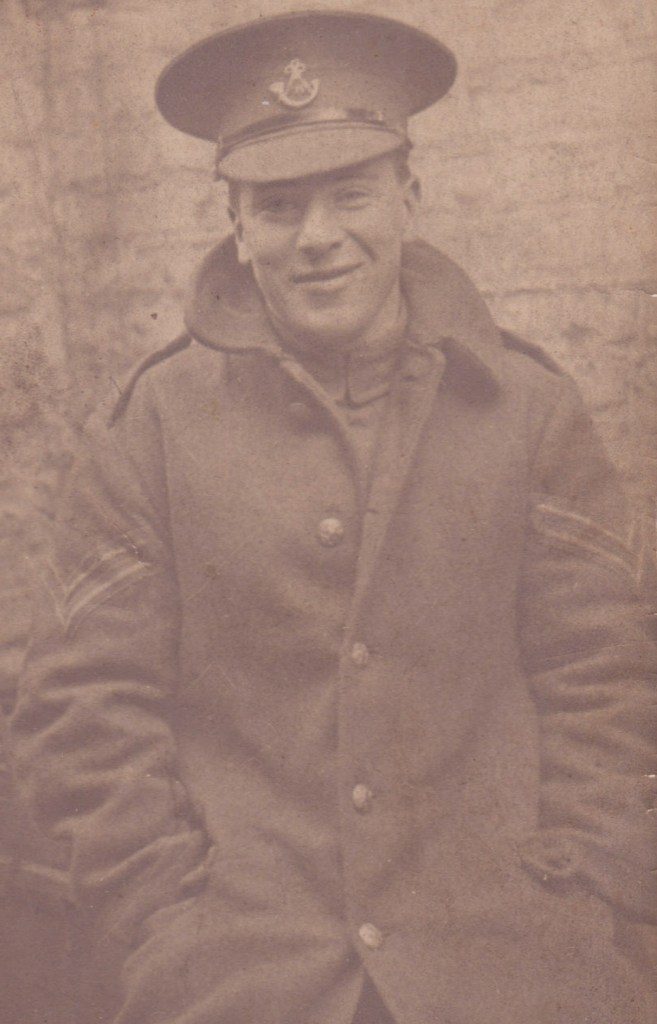
My Great Uncle – James Killikelly My War – Part One.
St. Mary’s College, Hammersmith.
My old Headmaster, H.J. Morgan, prior to my entrance into St. Mary’s Training College, wished me well, and told me that I should find my two years stay in ‘Simmaries’ probably the happiest two years of my life.
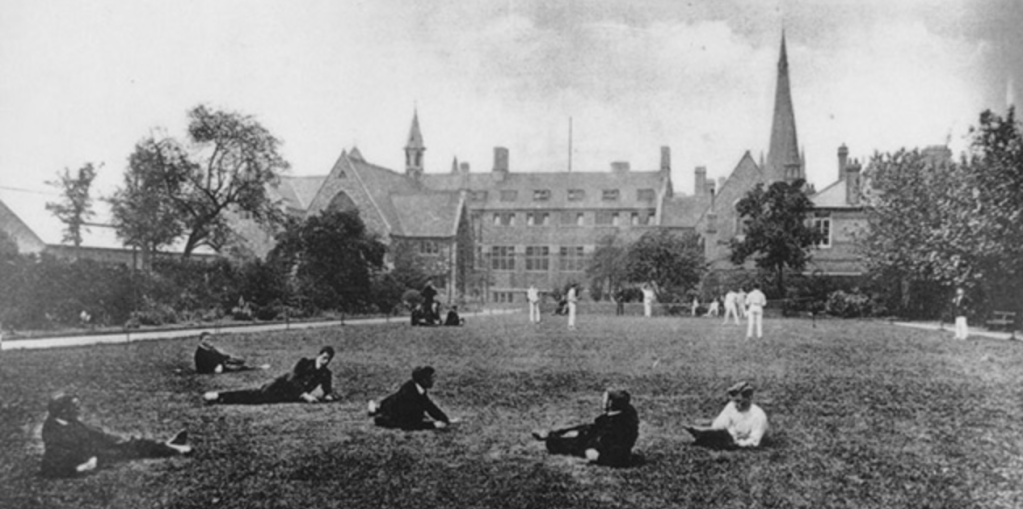
Students at the St. Mary’s campus in Hammersmith during the 1850s. I was never in a position to judge how exact was his prophecy, for my first year at College coincided with the beginning of the 1914-18 war. As young men in civilian clothes, some just under, and some of military age, it behoved us, therefore, to be careful not to inflict ourselves publicly on the general population, at a time when posters proclaimed the fact that our King and Country needed us. Our main place of enjoyment was confined to the indoors, though we did play whatever football we could with the other London Colleges. On occasions we showed that we took the country’s situation seriously, by a series of route marches though what good that did us, I never really found out.
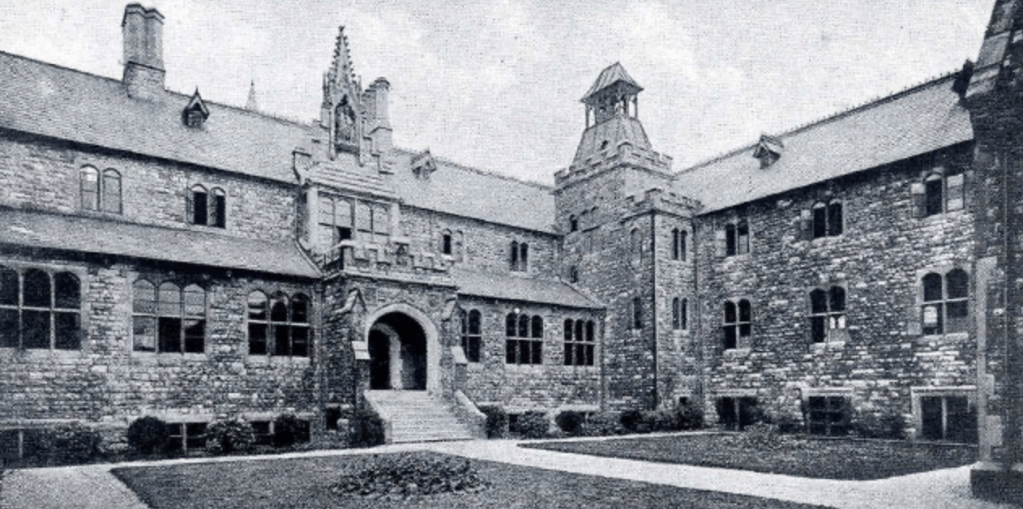
The Quadrangle at the St. Mary’s campus in Hammersmith in the 1850s. Towards the close of my first year, the Board of Education issued a statement that men in training colleges could enlist, and a Teachers’ Certificate would be granted after a two year probationary period following demobilisation. This pronouncement was an important one, as it meant security in our profession, if we were lucky enough to survive the war, no further study, and no examination. Naturally, we had many discussions amongst ourselves as to what we should do.
One day a friend of mine, Tom Hartney, said he had made up his mind, and was going to join the army immediately the Summer term was over. Together we looked through a newspaper which listed the names of all the British Regiments. Tom’s finger pointed to one, and he said “Oxfordshire and Buckinghamshire Light Infantry, that sounds a fine lot – I think I’ll join them”.
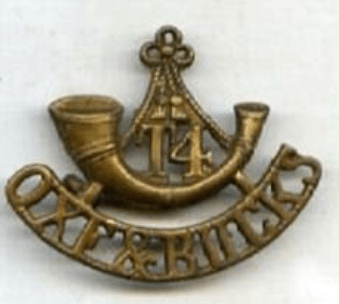
1/4 Oxfordshire and Buckinghamshire Light Infantry cap badge. Summer vacation over, I returned to London to begin my second year’s training. A letter from a place called Bicester informed me that Tom had kept his word, and was now one of His Majesty’s Forces. One weekend he came to visit us at the college, and, full of enthusiasm, he invited me to join him. I agreed, and he promised to send me a railway voucher to enable me to travel to Oxford. When this arrived I summoned up courage to ask for an interview with the Principal. When I told him I wanted to join the army, he refused to let me go. I said that the Board had given us permission to join and had guaranteed our Certificate. He relented somewhat, and then said that my parents must write to him to say that I had their permission to join up. I didn’t fancy this very much, but concocted a letter saying that the Principal had given me permission to join the army, but as a matter of form, he wanted their permission as well.
When their reply was about due, I went to the porter at the Lodge, and showed him my father’s writing, and asked him had a letter come for the Principal in this hand. He said it had, and very shortly afterwards I was knocking at the Prinny’s door. He seemed taken back to see me so soon, but agreed he had received a letter from my father giving me permission. “Can I go then?”, I asked. “Where are you going to?” he said. “Oxford” I replied. “How are you going to get there?”. I said I had a railway warrant, so he gave in, and that evening I had my medical examination, and was accepted as a member of the 3/4 Oxfordshire and Buckinghamshire Light Infantry. The doctor seemed to have some doubts about my age, as I looked much younger than I was. I told him truthfully I was 19, and he took my word that I was. Just at this time, there was a movement, emptying out those boys of 15 and upwards, who had given false ages to join the army.
Oxford.
Tom Hartney had met me at the station, and had taken me to Battalion Headquarters. After I had received the ‘King’s Shilling’ (there wasn’t one really) a quartermaster sergeant issued me with two lots of uniform, a cap and badge, shoulder badges, a pair of boots and socks. These I stowed inside a huge rucksack, and together with my suitcase we proceeded to Tom’s billet. I found out later that Tom had pulled some strings to get me there, for I had been allotted to C Company who were billeted on the other side of the city, close to the railway station. Tom was in A Company, and he was living with four others in a small house in a street off the Iffley Road.
Here, then, I spent the next few months, sharing a bed with Tom, while the other four lads slept on mattresses on the floor of the back bedroom. In some respects I was lucky to find myself in this billet, for besides being with Tom, I gained an immense amount of useful information about how to conduct myself as a soldier, from these ‘old sweats’ of a few months experience. One big drawback was that when C Coy. was lined up as a company, I had to travel across the city to Beaumont Street to take my place on parade, and that meant leaving earlier than the others to make sure I was on time. Fortunately the ‘rookies’ parade took place in the parks at the back of Magdalen College, and, as most of the battalion paraded there, I was able to leave with the others.
I found how useful these ‘old’ soldiers in my billet were, when I arrived back in there, after one parade with a complete kit, consisting of belt, haversack, straps, water bottle, entrenching tool, handle, small haversack, bayonet frog, and the rest. The belt and straps were leather and had all kinds of buckles and straps to which the rest of the paraphernalia had to be attached. The boys gladly showed me all the tricks of the trade, how to fold my greatcoat, and put it in the pack so it was absolutely square, and how to arrange everything so that I felt ‘comfortable’ when I fastened it all about my body. They gave me tips on cleaning buttons, boots, polishing the leather, fastening my puttees, and thus saved me any trouble I might have been in, when inspected by an officer on parade.
We lived with a Mr. and Mrs. Bossom, and on the whole, I suppose, we could have fared worse. The food was immeasurably superior to the terrible meals we got at Simmaries. One meal I always found strange, a bottle of beer and bread and cheese, and, as I didn’t like beer at that time, naturally I never looked forward to this dinner with any relish. Mrs. Bossom was a woman of uncertain age probably in the early thirties, and she was not averse to the high spirited rough play of the four young soldiers, though she always reproved them when they tried to go too far. Mr. Bossom we only saw at weekends, and usually discovered him on his hands and knees, scrubbing the floor or polishing the furniture, and doing the washing. Mrs. Bossom certainly wore the trousers as far as he was concerned. I always associate the song ‘Little Brown Jug’ with Mrs. Bossom on the occasion she invited me to play the piano in the front room. It was many years afterwards when I discovered the reason why, for I was too innocent in those days.
I used to enjoy the rookies’ drill in the parks and tried my best to be a smart soldier. One morning when we were doing rifle drill, an officer approached the squad, and asked the drill sergeant if he could speak to me. I was told to fall out, and it was an embarrassed rookie who presented himself to the officer, for I didn’t know what to do with my rifle or myself. To my astonishment, this officer said he had heard I could play football. He asked me various questions about the teams I had played for, and then told me I had been selected to play for the battalion on the following Saturday. I suspected Tom Hartney had been at work somehow, but he never mentioned it to me, and did not give me any satisfaction when I told him what had happened. Somehow I didn’t feel at all nervous when I turned out on the Saturday, and I suppose I must have satisfied Captain Wallace, an Oxford half-blue, for I kept my place in the side for the rest of my stay in England. I often wondered why on earth he had taken such a chance with a young unknown player. Before I left Oxford, I had the pleasure of playing on the Oxford City ground and the University ground in Iffley Road.
On wet days when it was too bad to do our drills in the park, we were taken indoors and given lectures by two regular sergeants, who had been too old to go out to France with the 1st and 2nd Battalions. While the rain was pouring down we would be given lectures on the history of the regiment, with emphasis on wonderful deeds performed in the Peninsular War, and with Wolfe in Canada. Thus we were imbued with pride in the 43rd and 52nd Foot, and learnt to rattle off quotations such as ‘lightest of line and fleetest of foot, never been surpassed in arms since arms were first borne by men’. We also learned that the two gold braids on the collars of the officers’ uniforms indicated how the regiment pulled the Guards through at the battle of Waterloo. With all this in our minds, we determined to be worthy successors to these wonderful men, and we strutted and marched through the streets with our heads up high.
Each week we had a route march through the country round Oxford. On this day I was up especially early to parade and be inspected in Beaumont Street prior to moving off to join the rest of the battalion lined up before Colonel Stockton in Broad Street. Here the Colonel mounted his horse with the same dog beside him on every occasion, and would call us to attention – ‘Oxfordshires Shun’ etc. A shiver always went up my back when I heard his order ‘Oxfordshires’. Away then we would march, rifles at the ‘trail’, until we got the order, ‘March at ease’, when rifles were slung and songs were sung. Two things always remain in my mind – firstly, the number of dogs that came with us on these marches, and secondly, the way cows behaved as we approached the field they were in. As we drew near, the whole herd came to the gate, and stood staring at us, and then rushed to the back of the field before they came back to the road at the other end of the field, to bid us goodbye. The colonel’s dog disappeared at the end of each march, to reappear the following week standing by his horse in Broad Street.
Christmas came, and shortly afterwards my first inoculation. This was a very painful affair, and we were excused duty for twenty-four hours. My first leave followed, and I went up home to Liverpool to impress everyone with my smartness of step at 140 to the minute. When I returned to Oxford, I learned that we were to leave in a few days for an unknown destination. Before that happened, I had to have my second inoculation, and as this came on the day before we left, I found I had to carry a full pack and kitbag to the railway station, with my body aching from the effects of the second jab. While the train was in motion we looked out for the names of stations we passed, and thus discovered we were going west. Finally we came to a stop at Weston Super Mare, where we were to receive more recruits, and train as a supply battalion to the 1/4th and 2/4th battalions, who had been out in France for nearly twelve months.
Weston-super-Mare.
It was a pleasant surprise to find our new quarters were to be at this charming seaside resort. Luck was with me, when I found myself billeted in a terraced house with a Lance Corporal Powell of A Company, as my fellow lodger. Our hosts were a middle-aged childless couple, and I found conditions with them infinitely superior to those I had in Oxford. A sitting room was placed at our disposal, and here, too, we had our meals served, with the exception of Sunday dinner and tea, which we took with our good hosts, whose name I regret to say I forget. This was a very comfortable home, and I counted myself very fortunate in being allotted to it.
One day I found my name on orders with instructions to report to the signal section. Again I suspected the hand of Tom Hartney behind this, for he had already joined the section, and boasted one stripe on each arm. In command of the signal section was Lieutenant Stevenson, whom I grew to respect and admire as the months went by. He was a professor (of History I think) at Oxford University, and he brought his charm and erudition into the army, where one had got used to barks and commands. Under him was Sgt. Perkins (Polly) who had been wounded in France and hoped he had seen the last of active service by becoming a signalling instructor. He was very fair, and very competent, but always kept a sufficiently respectable distance between himself and his men. I loved this side of my army service, and on the whole, the signals became a happy little family. Lieutenant Stevenson used to take the theoretical side of our instruction using a book called Training Manual of Signalling, T.M.S., which he always called ‘Toc Emma Esses’, and so we came to call him ‘Old Toc Emma Esses’.
Every morning we did our PT on the grass lawns by the promenade. When we had a short break, most of the boys used to rush down to the water’s edge, and stare in rapture at the scene in front of them. Prior to going to Weston, the majority had never seen the sea. These days on the green lawns at the seaside were ideal, and as far as I can remember, we seem to have been blessed with good weather all the time we were at Weston-super-Mare.
The football team was beaten in the first round of a cup competition soon after our arrival in the town, and enthusiasm for a battalion team seemed to be lacking, so for the rest of our stay, no further attempt was made to arrange any inter-battalion matches. By a stroke of good fortune, the secretary of the town team lived in the street where a number of us were billeted. Three of us were invited to become members of his side, and so while the battalion remained in Weston, we played each Saturday when they had a fixture, for Saturday afternoon was always a free half day.
On one occasion we were due to play Bristol University in Bristol and arrangements had been made to travel there and back by coach. So that we would have time to spend the evening in Bristol, the three of us applied for, and received permission to remain out until 10.30 ‘to attend a party’. On Friday evening the battalion buglers went round the town sounding the ‘Alarm’, calling all men to parade at the usual parade grounds. Cinemas were entered and soldiers were summoned by a notice on the screen to leave at once. As far as we could make out, reports had been received of a possible German landing on the east coast, and troops were alerted to be ready to move at a moments notice. After the parades had been inspected, we were dismissed and told to remain in our billets until further orders. Early on Saturday morning a sergeant knocked at each door in our district, ordering everyone to remain in his billet. Nothing further happened during the morning, and we three members of the football team called at the secretary’s house and told him the news. He asked us if we were willing to risk leaving the town and go to Bristol, and when we told him we were (for most of us by this time thought the alarm was only a ‘scare’), he said he would arrange to have the bus brought to the back of our billets, so we could leave by the back door.
Everything went smoothly and we went to Bristol and won 5-3. After the game we had a meal in the city, and then visited the Bristol Hippodrome for the evening’s entertainment. Thus when we got back to Weston, it was after midnight – too late to hand in our passes, even if we had dared to do so – and so we skulked into our digs, and were relieved at any rate to find our fellow soldiers asleep in their beds. On the following morning, Sunday, my two football companions handed in their passes to the orderly corporal at their church parade. I, of course, attended the catholic church, and had no opportunity of getting rid of mine, and wondered what I should do.
I went round to see ‘Orders’ that night – these were posted in convenient places close to the billets – and to my horror saw my name in seemingly large letters, ordering me to report to the Battalion Orderly Room on Monday morning. All I could think of was that our escapade had been discovered, but I was the only one to be found out. Sleep was impossible that night, for no doubt my crime was one of great seriousness. We had never given it a thought that by the time we had got back from Bristol, the battalion could have been on its way to Norfolk or Suffolk, and we three left stranded in Weston, and written down as deserters.
With great trepidation, therefore, I duly presented myself at Headquarters on that Monday morning. When I was bidden to enter, I noticed that the R.S.M. was quite cheerful and actually smiled at me. My spirits rose at once – it didn’t seem as if my head was ready for the block yet awhile, “I notice” said the R.S.M. “that you haven’t done your live firing musketry course. There is a party going up to Kidderminster to-day, and I want you to join it. Go back to your billet and get yourself ready to report in full marching order here at 10.30”. I could hardly get out of the room quickly enough, but I remembered that late pass I had not given up on Saturday night, and I said as calmly as I could, “Oh sir, I was not able to hand my pass in on Saturday”. “Throw it on the table” said the R.S.M. “Yes sir, thank you sir” and out I went into the fresh morning Somerset air.
When I came to my senses, and thought what was in store for me in the next fortnight, I didn’t feel exactly at ease as I might have done. Although I had done rifle drill – ‘slope arms, present arms, trail arms, shoulder arms, etc.’, I didn’t know one end of the rifle from the other, and wondered how I could make up for my ignorance, before trying to put a bullet into a target. On arriving at Kidderminster, we marched to the camp where the rifle range was situated. Fortunately for me, I found the rest of the party a very friendly lot, and after a time I told them of my predicament. After the training they had received they could understand how I felt, and they proceeded to give me a month’s musketry instruction in a couple of hours. Someone has a clip of dummy bullets, and I practised loading not an easy job at all for a beginner. Then I was told about the foresight and back-sight, how to align them on the target so I was aiming at 6 o’clock on the bull’s eye. I had to pretend to fire and then unload, making sure that no bullets were left in the spout by pushing the bolt backwards and forwards. The finer points of triangle of error wind resistance, distances, were left in abeyance for the time being.
Thus on the morrow, I found myself handling live ammunition, thoroughly scared and praying that everything would go well. Our first shots were fired at targets 100 yards away, and the results were signalled back by men in the butts indicating the success or otherwise of each shot. I remember a bull was shown by a white circle rising slowly until it rested flat on the centre black spot of the target. A complete miss produced a flag waving sideways on the target telling the ‘marksman’ it was a washout. Inners and outers had other signals, and I soon got to know them. I had been told by my amateur instructors to take things slowly, making a first pressure before I actually pulled the trigger, and to hold the rifle well into the shoulder armpit. I was also warned to be prepared for the kick of the rifle into the armpit, as the bullet left the rifle.
Things went better than I expected, and at 100 and 200 yards, I found I could do reasonably well. 500 and 600 yards found my weakness and I regretted not having received proper instruction. Worse was to come, however, in the ‘mad minute’. Here we were allowed to load ten cartridges into the chamber, and then to fire as rapidly as possible at the target, ejecting each used cartridge after every shot and shooting the next bullet into the ‘spout’. I managed to get all these ten bullets away, though some of them didn’t hit the target. Then came the job of unloading, and reloading the remaining five, but before I could do this, time was up, and so my effort in the mad minute was a poor one. Further trouble came when we were given moving targets to fire at. I had no idea what the correct procedure was in this case, and although I had a ‘go’, none of my shots hit the small target that bobbed up and down.
Kidderminster was a dull, uninteresting town, and there was little to be done in the free time that was left to us. The fortnight slowly passed away, and I left the firing range with a feeling that I should have done fairly well with proper instruction beforehand. The actual firing itself was very pleasurable, and I was always pleased when further practice came along at varying times during my service. One thing I never liked, however, was the cleaning of the rifle – boiling water had to be used after the firing, and then the cleaning with oily rag, four by two, and pull through. I never seemed to get my gun as clean as the other chaps, and I always dreaded rifle inspection, though strangely enough, I was never pulled up over it.
Back then I came to Weston to enjoy some more football with Ashcombe Rangers without any further qualms. As far as I can remember, we were not defeated in any of the games I played in, and after we had left the town for Salisbury Plain, the secretary came to see us there, bringing silver medals for the three of us – we had won some competition or other – it was a very fine gesture.
So far I have not made mention of church parades. the R.C.’s always paraded on their own, and as there were only some dozen of us at any time, usually the orderly corporal or orderly sergeant for the day would come to inspect us, and then leave us to be marched off by any NCO we had in the ranks, or by the senior serving soldier. At Oxford we lined up at Magdalen Bridge, and went to a church in the Iffley Road, which was very convenient for us living close by. The Catholic Church at Weston was some distance out of the centre of the town, and my memory of our attendance there chiefly concerns seeing two of our officers 2/Lt. Stockton and 2/Lt. Sherrington waiting outside the church to greet two pretty girl members of the congregation each Sunday. 2/Lt. Stockton was the Colonel’s nephew, and 2/Lt. Sherrington, whom I met years after at Battalion dinners, I discovered to be a Liverpool man who played a great part in War 2, organising rail transport. It is worth mentioning perhaps, that on no occasion, at any church, in any town, did the members of the congregation deign to have conversation with us.
Three times I had to see the doctor while I was at Weston. On the first occasion, I had to attend with a number of others to be vaccinated. After vaccination, we were excused all parades for about ten days, though we went for a short walk of half an hour or so each morning, and then retired to our billets to rest for the remainder of the day. Some of the chaps suffered agonies with terribly sore arms, and vied with one another as to whose arm looked the worst. My vaccination did not take, but I still paraded with the squad each morning, and then retired to enjoy the rest of the day. One morning we were told that we should parade next day before the M.O. for inspection. I thought this would be a good time to slip back quietly to the signal section. This I did – nothing was said – and I heard no more from the medical department.
Weston Super Mare had a very fine swimming bath, and I used to go there for a swim whenever I got the chance. During my first year at Hammersmith I became a member of the water polo team, and we trained at the Lime Grove Baths, where there were a series of high diving boards. I once went to the highest board and the distance from the water frightened me. Gradually, however, I worked my way up until I conquered my fears, and got quite a lot of pleasure in being able to dive off the 30ft. board. The bottom of the bath at the point of entry had been deepened so that the water there was 9 ft.6 ins. deep, and this gave quite a good margin before resurfacing. The Weston bath too, had a high board, and one day I decided to try a dive from it. As far as I know, my dive was quite correct, but on entering the water the bottom of the bath seemed to come too quickly up to me, and I hit my head on the tiles. I found out later that the water was only 6 ft.6ins deep at this point. There was a slight moment of feeling dazed, but I recovered, came to the top, swam to the side, and got out. The bath was fairly empty at the time, and no one had seen me go off the board. I quickly got dressed, and went home feeling rather shaky.
My fellow lodger Lance Corporal Powell, happened to be on orderly duty that week and one of his jobs was to take the names of the ‘sick, lame and lazy’ for medical parade later in the morning. I thought I had a good excuse for an extra ‘lie-in’, so I gave him my name that night, and enjoyed the extra hours in bed before seeing the doctor next day. The doctor was very sympathetic when I had told him what I had done, and excused me from duty for the rest of the day. Actually there was little the matter with me.
While we were in Weston we were placed in our different categories from A1 down to C3, to decide how fit we were for overseas service, for by this time we became a draft battalion, and had to be ready to supply the two Territorial battalions in France with men, to make up any loss they sustained. I duly went through all the tests, and was rather intrigued by the remark of the M.O. when he had finished with me.
“You’ve got the constitution of a pig”.
I never knew whether that was a compliment or otherwise. At any rate I was marked A1.
Weston saw a new type of recruit called the Derby men. Lord Derby had devised a scheme whereby men promised to join the army provided that certain circumstances which prevented them volunteering previously were removed. There was a certain amount of ‘eye-wash’ about the scheme, and these men found themselves in the army much sooner than they had anticipated when they completed the forms handed to them. For many years afterwards the Derby group were spoken of in rather derisive terms by those who had volunteered in the early months of the war. The strange thing was, that when conscription came in later on, I never heard any scathing remarks attributed to them, as had been poured upon these volunteers under the Derby scheme. On the whole these Derby soldiers were mature men, much older than the young lads who had rushed to join the colours at the outbreak of war. They were given three months training which was considered sufficient to turn them into competent fighting soldiers.
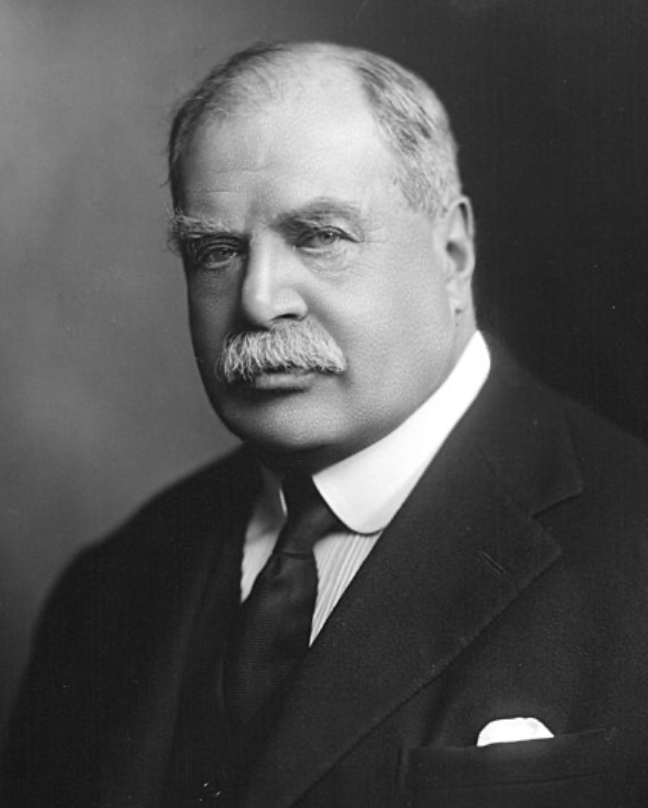
Edward George Villiers Stanley, 17th Earl of Derby, KG, GCB, GCVO, TD, PC, JP.
1865–1948.It was from Weston then that our first drafts went out to the territorial battalions, to fill in the gaps caused by casualties and illnesses – trench feet was a common complaint in the early days of the war due to waterlogged trenches. Our first draft of Derby recruits sent out, spent only a few days in the line before most of them were either killed or wounded, for they had arrived just at the time when some fierce fighting was taking place on the Somme. The result of these losses was a speeding up of the number of drafts being sent out as the weeks went by.
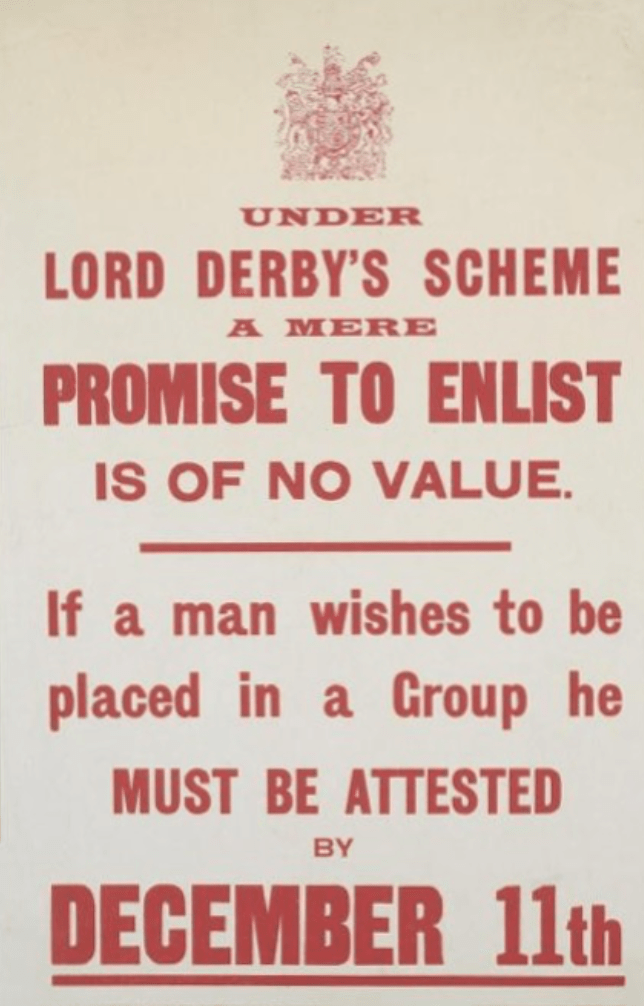
Derby Scheme poster from November 1915. Salisbury Plain
The winter months went by, and rumour had it that we were due for Salisbury Plain – a rumour that soon proved to be true. The Plain had a bad reputation amongst the rank and file, and so there was no eager anticipation for the future move. With the coming of Spring we found ourselves detraining at a small station which had a larger name of Ludgershall. Except for the station, there didn’t seem much else in Ludgershall so we felt really and truly isolated. The nearest town was Tidworth, and further away still Andover, but there was nothing there to entice us away from the camp. The Plain seemed one mass of army camps as far as the eye could see, and the constant meeting of officers and military police outside our own particular camp, did not encourage us to wander too far.
Soon we became aware what real soldiering meant. We slept on the ground on top of waterproof sheets with a couple of blankets, and our haversack as pillow. Rifles had to be stacked on the tent pole, and our first duty on rising, was to roll up the tent walls, tighten the ropes, fold our blankets in the right number of pleats, and hide every personal possession from view of the orderly officer, who came to inspect every tent on his rounds. Washing and shaving was done in the sheds provided, while the latrines were of the most primitive kind – hidden by canvas sheeting were trenches, in front of which one sat on a wooden pole stretching from one end to the other – there was no privacy of any kind.
Buglers came into their own and we were reminded of our various parades from dawn to dusk. “Get out of bed – – – – – – – -“ began the day – “come to the cookhouse door boys – – – – – -“ “Quarter of an hour to get ready in.” “Fall in A, fall in B- – – – -“, “You can be a defaulter as long as you like, as long as you answer your name”, etc. etc. All these were preceded by the battalion call so that there could be no confusion with calls from other regiments in the neighbourhood. Apart from ‘Jankers’, the most irritating call of all was reveille, for despite having to lie on hard ground we were young enough to get used to discomfort, and hated the early morning call to begin the day. It was said that no one ever became a soldier until he answered the confined to barracks call – this meant reporting to the guard room every hour after parades were over. I was lucky enough to escape this indignity all through my army life, though there were times when I might have deserved such punishment had I been caught – thus I was never able to say I was a real hundred per cent soldier.
As the days got warmer we managed to get in some cricket practice, and I was lucky enough to play in one or two games for the battalion eleven. There were no prepared wickets, and the matches were played on matting. I didn’t perform extraordinarily well, but as I was absent for six weeks during the summer, I never really got accustomed to playing on matting.
It was at this time that I lost the companionship of my friend Tom Hartney. He found himself one day on orders to leave with a draft for France. With his departure I found myself very much alone, though I thought it would not be long before I joined him again in the 1/4th battalion. It was not to be, however, for Tom’s stripe was handed on to me, and shortly afterwards I was detailed to attend an instructors’ signalling course at Weymouth.
At Ludgershall, Tom Hartney used to march the dozen or so R.C’s each Sunday to a YMCA tent some distance away from our camp. In this tent Mass was said, the priest using a piano as an altar, an improvisation which I think had had the effect of making the service more devotional. After Mass we marched back to the camp at ease, an no one took much notice of us. My appointment as a Lance Corporal was on orders on a Saturday night, too late for the stripe to be sewn on for the Sunday parade – nevertheless I automatically took charge of the R.C. contingent and marched them off to the YM tent. After Mass as we strolled back to our camp, we heard the sound of a galloping horse from behind us, and then a strident voice called us to attention. We were berated right, left and centre by this red tabbed officer for our slovenly behaviour, and then he lined us up and sent us on our way in soldierly fashion. I was thankful all this time that my new stripes were not on my tunic, for I am sure he would have had them off, there and then. In future I saw to it that we marched to attention, both going and returning from church.
I have said that Tom’s departure left a sense of loneliness in me, but I never for one moment thought I would not see him again. Somehow any letter he might have written to me from France did not reach me, and so I lost contact with him. When I finally went abroad, I wasn’t able to get a lot of information about him, and someone said he had been wounded and left the battalion. It was some years after the war was over, that I was introduced to a chap who, on hearing my name, asked if I had known a Tom Hartney. He had met him in a convalescent camp at Curragh, in Ireland, and Tom had mentioned me to him as a fellow Liverpudlian. I thought then, that I should try to make contact with Tom, and wrote to the teachers’ association in Hull, asking for his school address. This I obtained, and wrote to him, explaining how I had come across his old time Ireland companion, and felt I should like to hear from him again. Tom wrote back, but to me it wasn’t the same Tom Hartney writing, and it seemed as if he did not wish to renew our old friendship, and so I did not bother him further.
Shortly after coming to the Plain, I passed my test as a first class signaller. Signallers on the whole, were not very popular with the other ranks, for we were excused all fatigues and guard duties, and as these were hated by all soldiers, there was little doubt that those who had to do them, felt that these duties should be shared by all, no matter what class they were under. Guard duties, particularly, were detested, for a most stringent inspection was given to the incoming and outgoing guards, and there were some dozen ways of being hauled over the coals during the twenty four hours of duty. My certificate read as follows –
Signallers Classification Tests
Certified that Pte. 5579 Killikelly J. 4th O.B.L.I. has been examined in accordance with para 207 Training Manual signalling (Provisional) 1915 and the results show he had attained the standard of a 1st Class Signaller.
24th May 1916
Francis A. Mason Capt. R.E. Signalling Officer
A Group 3rd Line South Mid. Div.
Shortly after I had received my first stripe, I was told by Lt. Stevenson that he had recommended me to attend an instructors’ course which was to be held at the Southern Command Signalling School, and was to last for six weeks.
Weymouth.
The signalling school was situated at a camp occupied by the Dorset Regiment at Weymouth, and so one morning I left the Plain, not sorry to find myself near the sea again. The camp was, actually, at Wyke Regis, just outside the town, and we took over
some huts on the outside of the Dorset camp. The school consisted of some hundred signallers who hoped to qualify as instructors at the end of the course, about two thirds being N.C.O’s and one third commissioned officers. In command was a Capt. Allott, supported by his Royal Engineers team of two officers and nine sergeants. We were well housed, and well fed, and I found the trestle beds very comfortable after sleeping on the ground on the Plain.
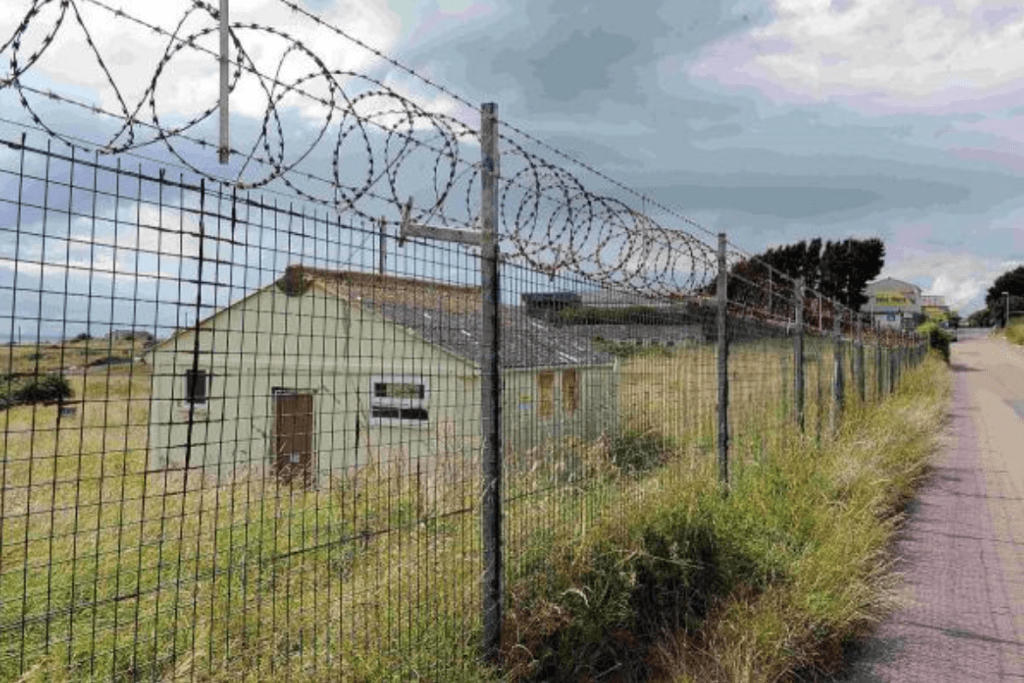
The derelict former Army camp at Wyke Regis, Dorset taken circa 2010. Work started before breakfast with flag drill and we got plenty of exercise doing this for the order was ‘Three times through the alphabet’ and as the flag poles were thicker and heavier and longer than I’d been used to, there were blisters and tired arms during the first few days. We were taken through all the varieties of signal equipment, buzzer work, lamp reading, disc and shutter sending and receiving, and the use of the heliograph. Lectures were given on the theoretical side in the afternoons, and each night we went out to the cliffs on the English Channel to do more lamp reading. This was a very tricky job, especially if the wind was strong, for our eyes watered, and we couldn’t afford to blink in case we missed a letter, and, as the standard was 98 out of 100, we just simply had to hold on, and let the tears flow.
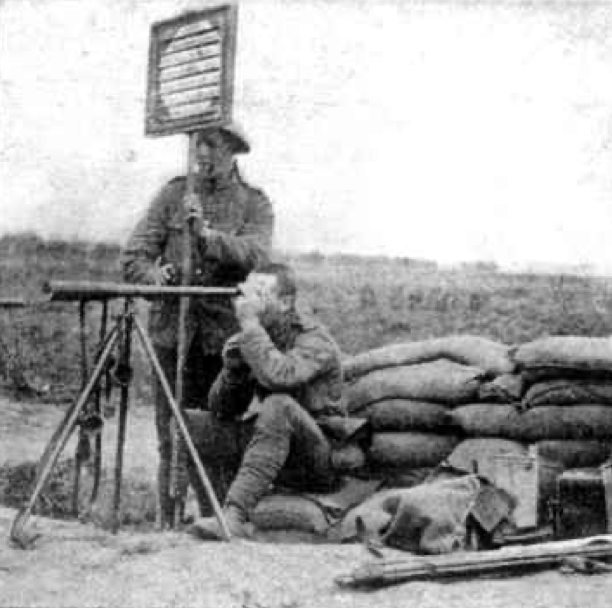
Signalling Post on the Western Front 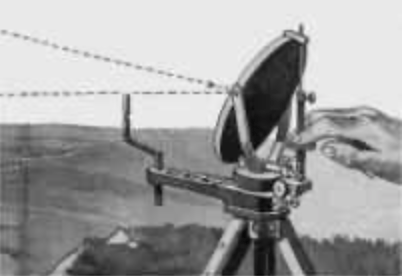
Heliograph Each week we had a written examination and the results were published on a board the following day. I had, of course, been brought up on examinations, and thus this part of the course I enjoyed. Although I was never top, I always found my name amongst the first half dozen, and took little pride in it. The mechanical side of our exercises I didn’t enjoy – I was never sure sure of assembling heliographs correctly and speedily, or aligning lamps and telescopes on tripod stands. Special attention was paid to map reading, and I felt pretty confident I could pass any test in that sphere, but I got a rude shock oneway during the last week of our six weeks’ course, when all the final tests were being made.
Sundays were free days, and I can still remember the delight we always had, when we heard the sounds of the church parade of the Dorsets not so far away. As they marched off to church, the band struck up the Dorset march past – “Oh it’s nice to get up in the morning but it’s better to lie in bed”. We thoroughly enjoyed our extra lie in bed. Later on I went into Weymouth to attend a late Mass on my own.
When our last week arrived we were given tests in sending and receiving in the various methods of signalling. Everything was in code, so there was no chance of guesswork. The instructors were the operators when we read the code messages, and were the receivers when we sent them. One very ticklish job was to discover a man waving a blue flag against a dark background, by means of a telescope, and then to send him a message on a heliograph, after assembling the instrument and aligning it on him. This had to be done in a certain time, and I was very thankful indeed when everything went well for me, and I knew I had been successful. We had to use the helio both with the sun in front of us, and also at the rear. Two mirrors had to be used in the latter case, and of course, it was a bit more tricky.
On another day we were given a map and a bicycle, and told to deliver about half a dozen messages to certain positions marked on the map. I felt very confident about this test, but found myself in trouble right at the start. According to my map I had to take the first road on the left after leaving the camp, but as I progressed, there didn’t seem to be any turning, so after cycling for some distance, I concluded that I had missed it, and returned to make a closer scrutiny of the road. I had noticed a very narrow opening previously, but didn’t for one moment consider it was of sufficient importance to be marked on the map as a road. However, it was the way I should have gone, and at the end of it I found one of the instructors waiting to receive my message, and to time its receipt. By this time I had lost valuable minutes, and finding on my map that the lane led to a stile and a footpath, I thought I could make up some leeway by crossing the fields to reach a road I was due to take after delivering my first message. At each stile I had to carry the bicycle on my shoulder and then climb over. The day was hot, and I was soon perspiring profusely. Eventually I reached the road I was aiming for, and as I was still behind time, began to peddle as fast as I could, to lessen the margin. Some houses came into view on my right, and as I approached, some children came out from one of them and ran right across the road in front of me. I jammed on my brakes – the wheels stopped going round, and I went over the handlebars, landing on both my arms. There was still no time to lose, and I jumped on the bike again, and delivered the remainder of my messages without further delay.
When I got back I found I had sprained both my wrists in my fall, and I dreaded what would happen the next day, for it was flag sending test at eight words a minute. I had never quite got used to the heavy poles, but hoped the wind would be favourable to keep my flag unfurled. Alas there was no wind of any kind, and I struggled as far as I was able in my agony, to send a readable message to the instructor in the distance. I knew when I had finished I had not succeeded, and I felt that this meant the end of me as far as becoming a signalling instructor was concerned. At the end of the week Capt. Allott read out the results. When he came to my name, he said “L/Cpl. Killikelly failed to pass the flag test. Have you anything to say?” I was able then to tell him of my cycling accident, and he looked at me and said “My boy, you should have told us this before the test was made.” That was all – I was granted my certificate and my failure to pass the flag sending test, ignored. Thus I was relieved to be able to return to Salisbury with the thought that I had at least been successful in every other examination I had taken in Weymouth. The certificate read as follows –
W679-6814 5000 4/16 H W V (P43) G 16/521
A.J. School of Signalling
157-16 Southern Command
Weymouth.
This is to certify that 5579 L/Cpl. J. Killikelly 4th Oxford and Bucks Light
Infantry is qualified to act as 2nd Class Instructor of Signalling in the case of an Officer, or as Assistant Instructor of Signalling in the
case of Non-Commissioned Ranks.
Officer i/c P. B. Allott Capt.
22nd July 1916 Command Signal School. S. C
Salisbury Plain (2).
Shortly after I returned to my battalion, I was given another stripe. I now had flags on both sleeves above the stripes to indicate I was an instructor – previously my flags had been worn only on the left sleeve eight inches above the wrist. Another pleasant change was that I was allowed to share a tent with Sgt. Perkins, though he slept on a camp bed, and I still had to lie on the ground itself.
Stripes had the sad effect of making one’s life rather lonely. Sergeants had their sergeants’ mess, to all intents and purposes an exclusive club, and so kept to themselves. Corporals were not supposed to mix socially with the ordinary private in order to maintain discipline, and thus a corporal seemed to be the friend of no one outside his own little sphere.
I soon found myself very busy giving instruction to new members of the signal section. Polly Perkins was expert in organisation, a very good instructor and lecturer, but he was also very clever in handing over a great deal of the ordinary work to me. Not that I worried very much about that, for I enjoyed my job and liked to be on my own doing it. Mr. Stevenson floated in and out, always the thorough gentleman, never interfering in any way whatsoever.
Before we left the Plain, I had an accident playing football, and the immediate after effects produced on of the few distasteful incidents of my army life. For some reason or other, a scratch team was got together to play a side from a draft shortly to go overseas. I played in my usual position of left half, but Captain Wallace decided he would take the centre forward role instead of his usual one of full back. In the second half, he got tired of his new position, and told me to take his place. Opposing me at centre half was a huge fellow, playing in his new issue of army boots. He wasn’t very good, but strong and clumsy. It came about that I received the ball just in front of him, took it up to him, and then went to take it round him. As I beat him, he swung his right foot at me, and connected with my knee, leaving a gash of some two inches long, and one third of an inch wide. I was carried off the field, at the side of which, fortunately, was an RAMC tent. There I was attended to right away, and my leg bandaged. Finally I reached my tent, and my attendants put me on Polly Perkins bed, and then left me. When Polly came in, he wasn’t at all pleased to see me on his bed, and ordered me off it, so for the rest of the day and the night, I lay in my usual place on the floor. I wasn’t really surprised at Polly’s action, as I had got to know him fairly well by this time, but I never forgot it. Next morning I went on sick parade. This was something that I was not used to, and my only experience had been the day after I had hit my head on the bath bottom at Weston.
I lined up with all the others, and when my turn came, I went in with the medical corporal to the M.O’s tent. I started to tell the M.O. my story, when he stormed at me, and called me all the fool’s names he could think of, for wasting his time when he had so much to do. Of course I should have had the dressing and bandage off, and my trousers down long before I reached him. I took the bandage off, and there was the gaping wound. He hardly looked at it, gave me light duty, and that was that. I found that light duty meant peeling spuds in the cookhouse, so I went to the officers’ quarters, saw Capt. Wallace and told him what had happened. He saw me back to my tent, and I stayed there for the rest of the day. Strangely enough my wound healed quickly – it should have been stitched really – and I have the scar on my leg today to remind me of that happening. I need hardly say that the M.O. of that period was not the same gentlemanly character I had met with in Weston-super-Mare.
There were not many outstanding events on Salisbury Plain that I remember. I seem to recall some small attempts at bayonet fighting and performing extraordinary manoeuvres in battalion formation. On the whole I think I was able to pass the time quietly with the signal section, with whom I got on well. I have mentioned that signallers were excused fatigues, but there were occasions when I was posted as orderly corporal, which meant accompanying the orderly officer on his rounds from early morning until late at night, inspecting tents, cookhouse, meals, and in the evening staying for a short while in the canteen. In those days I didn’t care for the smell of beer, so it was easy to refuse those kind souls who say “Will you have a drink, Corporal?” I was glad, however, that I never had to mount guard, for I was sure I wouldn’t have got away with it.
Leave was very hard to come by during these days on the Plain, for most of the time it was the concern of those who were due to leave for France, and was called embarkation leave. It was quite easy, however, to get a weekend pass, but as this meant paying one’s fare, it was not a great concession, besides which it was not worth while to attempt the awkward journey from the middle of the South of England to Liverpool and back in the short time allowed. I did decide one weekend to pay a visit to my training college in Hammersmith. This wasn’t a great success, for most of my contemporaries had, by this time, joined the army as I had done, and there were few familiar faces left. I was grateful to the Principal for giving me free board and lodging during my stay. One event that occurred during that weekend was the dropping of bombs on the city by a Zeppelin. On the Sunday I paid a visit to see the extent of the damage, and saw a huge hole outside the Adelphi Theatre which had been full on the Saturday night the bomb had fallen. There was only one casualty I believe – a call boy who had been sent on an errand, and left the theatre as the bomb dropped.
Cheltenham.
We left Salisbury Plain without any regrets, and took up Autumn quarters in the pleasant town of Cheltenham. Here we occupied large empty houses, of which there seemed to be a great many in the town. I never discovered why this should be so, even during a war. We found comfort where there had been none on the Plain. Looking back I should imagine that we were spaced about eight to a room, with trestle beds and straw mattresses and three new blankets. Each morning the mattresses were folded back, and the three blankets placed on top showing altogether nine edges. There were a number of open spaces in the town for all kinds of drills and parades, and we signallers were always able to find a quiet spot to carry on with our work. I seem to remember a lot of marching through the streets with my squad, before reaching the parade ground, and there always seemed to be lots and lots of officers to be saluted on the way there.
When we reached Cheltenham we found we had been joined by the Bucks. Battalion of the OBLI. With all the drafts that had been sent to France, numbers had grown less in both battalions, so it was found necessary to bring the Bucks. section into the battalion’s third line. Amongst these Buckinghamshire men were a number of good footballers, and when we joined forces, it was found that we could muster a very fine side between us. Thus began a period of enthusiastic support for the football team which, during the months we stayed in Cheltenham, won every match but one, and that was a draw against an RAF side (editors note: the RAF was not formed until the 1st April 1918 so it would have been a Royal Flying Corps (RFC) side that Jimmy played against) which had previously beaten one of the Bristol League sides.
Each Saturday when we played at home (and this was on most Saturdays) the whole battalion paraded outside Headquarters and, led by the brass band, of which we were very proud, marched to the football ground to see the game. The Colonel and his fellow officers were also there to cheer us on. Capt. Wallace was still in charge, and I retained my place at left half. In front of me at inside left was Lt. Jeffries, who had played for the famous Corinthians, and at outside left was Private Tommy Stevens, who had previously been a Manchester City player. Centre forward was Woodward who had played for Oxford City and at right half, and sometimes at left back L/Cpl Briers – both of these were with me in the Ashcombe Rangers game at Bristol when we took a chance in disobeying the order to remain in billets. Occasionally at right half was a tall chap named Gomm who, after the war, became Millwall’s centre half and represented London in combined team games. The goalkeeper was from Aylesbury United but I cannot remember who formed the right wing.
The centre half, Sergeant Lane, who was from Luton, and I, formed, with Captain Wallace, the selection committee, though as we were a successful side, there was very little change each week unless some regular member was not available. On one occasion Captain Wallace informed us that certain members of the side were due to be sent on a draft overseas, and asked me if I could take a couple in the signal section where they would have three months training to become signallers. Another two were given an intensive musketry course, so that, while we remained in Cheltenham the needs of the BEF (British Expeditionary Force) failed to disturb the composition of the team.
My game was considerably improved playing behind Lieutenant Jeffries and Tommy Stevens, and I thoroughly enjoyed combining with them in attacking football. However it was not long before I was brought to my senses when I received a strong ticking off from Captain Wallace, who told me he was very displeased with the way I was playing. “Remember” he said, “you are an amateur – Stevens is a professional – and I don’t want you to imitate him in all he does. You are there to play for your side, and not try to make a fool of your opponent”. It was a lesson I needed very badly, for no doubt I was getting a swollen head in my attempts to gain applause from the crowds on the touchline. I am glad to say I remembered Capt. Wallace’s rebuke all the rest of my playing career.
The people of Cheltenham, understandably, were not very enthusiastic about having thousands of soldiers in their midst, and we were never encouraged to join in any social gatherings in the town. This attitude is probably reflected in the fact that I cannot remember the church we attended, and it is certainly true to say that no member of the congregation made any friendly advance towards us.
Apart from the football, I always associate Cheltenham with the disastrous march past of the Division through the High Street, when General Plumer took the salute. In order to make sure that everything would go off well, we had a rehearsal of the parade on the day before the General was due to come. Opposite the platform on which the General was to stand, was a combined band of the Warwickshire and Worcestershire regiments. The idea was that there would be a regulation distance between battalions, and as the head of each battalion approached the saluting base, the band would strike up the regimental march past of that particular battalion. Everything went well until we arrived at the spot where the change of march was to be made, and as the 52nd Foot march past began, we knew there was something wrong. The battalion in front of us had marched to the usual pace of 120 to the minute. We dragged our feet, we lengthened our stride, but to no avail – at a moment’s notice we couldn’t come down from 140 to the minute to 120. Thus it was a rather pathetic shambles of the 3/4 OBLI that struggled in vain to present a soldierly smartness as we went past that saluting base.
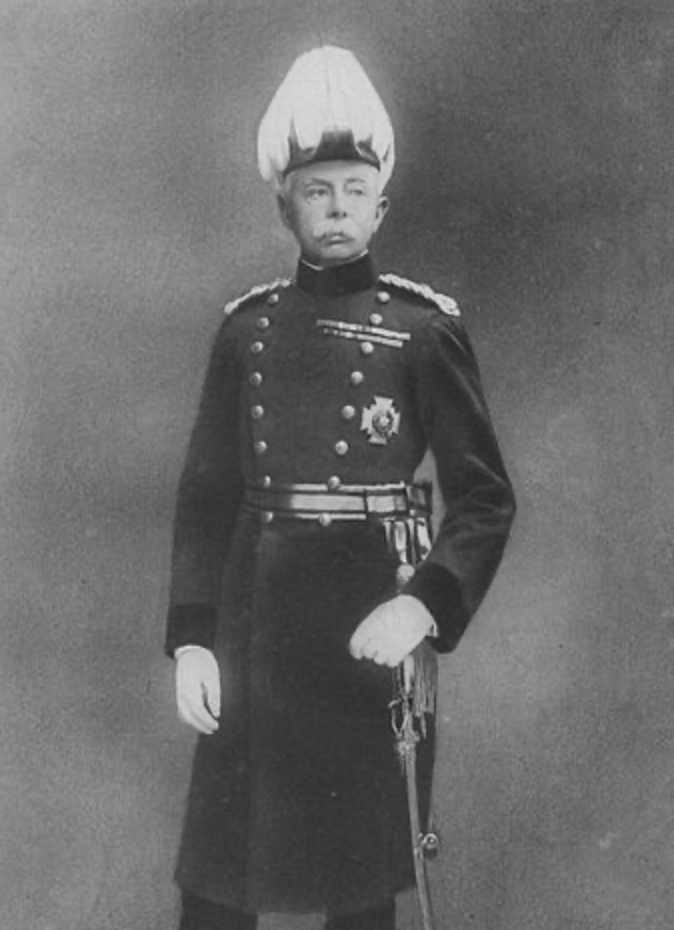
Field Marshal Herbert Charles Onslow Plumer, 1st Viscount Plumer, GCB, GCMG, GCVO, GBE. 13th March 1857 – 16th July 1932. Editor’s note: Field Marshal Herbert Charles Onslow Plumer, 1st Viscount Plumer, GCB, GCMG, GCVO, GBE (13 March 1857 – 16 July 1932) was a senior British Army officer of the First World War. Affectionately known as ‘Daddy’ Plumer to his men, after commanding V Corps at the Second Battle of Ypres in April 1915, he took command of the Second Army in May 1915 and in June 1917 won an overwhelming victory over the German Army at the Battle of Messines, which started with the simultaneous explosion of a series of mines placed by the Royal Engineers’ tunnelling companies beneath German lines, which created 19 large craters and was described as the loudest explosion in human history. He later served as Commander-in-Chief of the British Army of the Rhine and then as Governor of Malta before becoming High Commissioner of the British Mandate for Palestine in 1925 and retiring in 1928.
When the practice was over, the bandmaster of the combined two regiments was told of the mistake he had made, and was instructed that when the Oxfords reached the position when their march past was to begin, the marching speed would have to be raised from 120 to 140. There was no time for any further rehearsal, and so we hoped for the best.
For some reason or other – I never found out why – signallers always led the battalion on a march. Thus it was that as NCO in charge, I was in front of the signallers and, of course, of the battalion on this memorable march past. It will be noted that, as usual, both Mr. Stevenson and Polly Perkins were cleverly engaged in some other business. Crowds lined the wide High Street as General Plumer took his position on the saluting base, surrounded by officers of varying rank. Ahead of us were the Royal Berks, and as we approached behind them, we could hear the closing strains of their regimental march. There was a slight pause, and the combined bands of Warwicks and Worcesters burst forth once again. We, of course, marched with rifles at the trail, which caused a certain amount of comment amongst the spectators. This soon changed to howls of laughter, for instead of speeding up to 140 paces to the minute, the bandmaster had gone well past this rate, and we were soon racing into the back of the Royal Berks, and double marking time in front of the General. It was estimated by our Regimental Sergeant Major, who was in the crowd, that we had reached the rate of 160 steps to the minute. We could hear, amidst the roars of laughter, shouts of “They’re running, they’re running”. Somehow or other we got past the saluting base, and broke away at the end of the High Street to march at our own pace to our Battalion Headquarters. The RSM summed up our own feelings over the disaster when he went to the Warwick bandmaster after the parade was over, and said, “You only did that because we beat you 8-1 on Saturday.”
Although I enjoyed my football, and taking charge of the routine signal instruction in Cheltenham, I led, on the whole, rather a lonely life, for after Tom Hartney had gone abroad, I had no other particular friend, and often wandered about the town in the evening by myself, before going back to billet and bed. I felt this loneliness most of all at Christmas time when most of the men had gone home on Christmas leave. There were no parades on Christmas Eve, Christmas Day and Boxing Day, and these days dragged on interminably, for no effort was made anywhere to make the season a happy one for the troops.
During our stay in the town, I had an interesting period when I was released by the battalion to attend Divisional Headquarters and examine would be signallers who wished to qualify for their flags. In charge of affairs was Captain Mason, Royal Engineers who had signed my own certificate earlier in the year, and I found him very friendly to work under. My lasting memory of the various tests was of the nervousness of many of the men, much older than I was, whose hands shook as they handled instruments to put them into working order. I wanted to tell them I was only a kindly little fellow, without any harm or guile in me, but that sort of thing wasn’t done. Before leaving Cheltenham, Captain Mason thanked me for who I had done and wrote a pleasing testimonial which I never had the opportunity to use.
Catterick Bridge.
Apart from the football, I had no regrets in leaving Cheltenham. There seemed little cause for the whole division to travel some two hundred miles to the north, especially as the only reason for our being was to send men across to France, whenever there was need to fill up the gaps. We found ourselves, then, in Hipswell Camp early in the New Year, to be greeted with heavy falls of snow, and our main exercise was in keeping the camp paths and roads clear, as soon as the snow stopped falling. Hipswell Camp was close to Catterick, and about four miles away from the historic town of Richmond in Yorkshire. We were billeted in huts, some thirty men to each hut, and again slept in trestle beds lined up in two ranks on each side of the hut. In the centre of the hut was a huge iron stove which kept those fortunate enough to sleep near it, quite warm.
Whenever the weather was suitable we carried on with our signal drill, and flag wagging became quite popular for it kept most of the body comfortably warm. The section was enlarged by the addition of a number of men who had been signallers out in France with the first and second battalions, and who were now pronounced fit for service once again, after being in hospital with wounds or illness. Among these were three NCOs from the 2/4th battalion, one a full corporal, and two lance corporals. The full corporal instantly became unpopular with the rest of the men, and as I was in charge of the hut, I had to see he wasn’t allowed to overstep the mark. One of the newcomers was a signaller from the 1/4th battalion, Reggie Pledge more commonly called Dags – why I don’t know. We were later to become great friends in France, and during the years that followed the war. Another signaller from the 1/4th was named Hammond, and of course went by the nickname of ‘Eggs’. He, too, became a familiar face at the Reunion Dinners in Oxford.
At Catterick we seemed to have more route marches than at previous camps – it may be that the fact I had a significant interest in these, brings them more to mind. I have mentioned previously that the signallers always led the battalion in its travels along the roadside, and as Mr. Stevenson and Sgt. Perkins were always conspicuous by their absence on these parades, it was left to me to guide the battalion on the prescribed route. On the morning of the march Mr. Stevenson would give me a map and show me the course of the march, and then leave the rest to me. At the beginning, all went well – we signallers were supposed to lead at a certain distance ahead of the Colonel, mounted on his horse in front of the band, and leading the four companies. The company commanders, too, were mounted, as were the Adjutant and the Second-in-Command, who usually brought up the rear. Sometimes we would endeavour to be out of sight of the Colonel when the halt was called, and the regiment fell out for a rest at the side of (the) road, for the regulation ten minutes every hour. The Oxfords were unique, I think, in forbidding cigarettes to be smoked on the march, although pipes were allowed. If we could get round a bend of the road at a halt, therefore, we could light a cigarette, and have a pipe at hand in case the Colonel happened to close in on us. To achieve this, we sometimes exceeded the prescribed distance in front of the battalion, and for sometime got away with it. One day, however, he rode up and gave me a ticking off, for marching too quickly.
I was in trouble on some other marches, when the Colonel and I did not see eye to eye. On one occasion, we had to pass through Richmond on the first part of the journey, and I took a turning which was to take us out into the country. The Colonel rode up to tell me I had taken a wrong turning, but I disagreed and referred him to the map – there were alternative means of reaching the main road, and I had chosen one of them. He permitted me to have my own way, and shortly afterwards I was proved to be correct. On the second occasion I came a cropper – I took a side road leaving the road we were on, at a very sharp angle, but when I looked round after travelling a short distance, I saw that the Colonel was leading the battalion along the road we had left. Fortunately for us, there was a gate over which we scrambled into a field, and we raced across this and were lucky enough to find another gate giving access to the road, and allowing us sufficient space between ourselves and the head of the troops, who had, no doubt, enjoyed our discomfort.
My mistake was not forgotten when, on another march, I found our way blocked by a snow drift of several feet. I made my way back to the Colonel, and told him what was ahead. He halted the battalion, and came with me to inspect the condition of the road, and when he realised it was impossible to continue further, he decided to turn the battalion round, and to return to the campy the way we had come. So, we signallers, went back to the head of the line, while they turned in fours in the road to retrace their steps. The whole battalion blamed me for the position they found themselves in, and we were greeted with rude remarks while we made our way past the four companies, a way which seemed interminably long. We were not allowed to forget the mistake I had made on that previous march, and there was no chance to explain the snow drifts we had come across.
One evening, much to my surprise, Polly Perkins invited me to spend a few hours with him in Richmond. We went the four miles or so by obtaining a lift in passing transport, and wandered around that historic town. Before going back to camp we decided to have a drink, and went into one of the inns in the main street. As we passed through the door, we found a number of our own regiment at the bar, and were greeted by the voice of Private Tommy Stevens who welcomed us, and invited us to have one with him. We didn’t wish to get mixed up with the crowd, but didn’t like refusing him, and he bought us a drink. When we had finished we bought him one, and then left him there. Stevens, of course, was the professional footballer, behind whom I had played so many games in Cheltenham, and who had been given a course of signalling to keep him a few months longer in England. When he had a little too much to drink, he was apt to become rather noisy, and a bit of a nuisance, but had not so far got into trouble because of it. We left the pub then, and decided to walk back from Richmond to the camp, and arrived there just before it was time to settle down for the night.
We went to the hut where most of the signallers were, and found the place in an uproar. Tommy Stevens had decided that this was the time that he should tell the corporal, whom most of us disliked, exactly what he thought of him. As things seemed to be going too far, I felt that I, being a footballing friend of Tommy, should try to calm him down, so I went to him and told him to stop his noise and get to bed. To my surprise he turned on me, and went on ranting and raving. By this time Polly Perkins had disappeared, and I concluded he had gone to the sergeants’ quarters. The chaps in the hut asked me to go outside and they would calm Stevens down and get him to bed. I did as they requested and went out into the night air. Snow was still on the ground between the huts and it was decidedly cold. I suffered this for some time, and then I asked myself why I should have to put up with the inconvenience for the sake of a half drunken private. My answer was to walk round to the other door of the hut, and let myself in. As soon as I stepped inside, I saw Stevens still raging up and down the gangway between the beds, and as luck would have it, he, too, spotted me coming in, and rushed to meet me. I decided that on no account would I now give way, and stood my ground as he advanced. I looked at his arms – he was only partially dressed – and noted they seemed as thick as my thighs. He aimed a blow at me which I parried – I had done some boxing at school – but then came a flurry of blows from him, and one got through my defence and nicked me on the nose. As a small amount of blood oozed out from the broken skin, realisation must have come to him that he had struck an NCO, and the boys were able to get hold of him and lead him to his bed, where he fell asleep.
Early morning brought Polly Perkins into the hut, and he told me I would have to put Stevens on a charge. I didn’t want to do this, and said the whole business would better be forgotten. What I did not know was that Polly had been to the guard room, and reported Stevens for being drunk and disorderly in his hut, and the guards were outside waiting to put him under arrest. This they did and I was left to make up my first crime sheet. At company headquarters, the charge was made before the Captain of A Company, when Stevens was accused of being drunk and disorderly and striking an NCO. No evidence was given, for the Captain at once said that the matter was too serious for him to try, and we were told to appear before the Commanding Officer later in the morning. It so happened that the Colonel was away from the battalion at this particular time, and the case was brought before the Second-in-Command. When he heard the evidence of witnesses who had seen what had taken place in the hut the night before, and had listened to my story, and noted the cut on my nose, he, too, said the case was too big for him, and he remanded Tommy Stevens for a District Court Martial.
Tommy was taken back to the guard room and kept under close arrest, and we resumed our ordinary duties, wishing that the whole thing had never happened. Moreover, the RSM, who had been present at the hearing, made both Polly and I feel most uncomfortable, when he forecast that the DCM would probably have us both tried for failing in our duty, in that Stevens should have been put in the guard room immediately he had shown signs of intemperance the night before. Each time we saw him, he kept rubbing this in, and seemed to take delight in the thought of both of us being reduced to the ranks. Whether he was pulling our legs or not, I could not guess, but there was little pleasure to be had during the days that followed.
When these had numbered seven, we learned that the Colonel had returned to the camp, and had decided that the case should be retried. Stevens was given the opportunity to get witnesses for his defence, while I had to call those NCOs in the hut who had been there, to give their version of what had happened. I had to open the trial, and told of what I saw when I returned from Richmond, how I had tried to pacify Stevens, gone out to see if things would quieten down, and then returned to meet a still drunken and angry Stevens, who struck me and cut my nose. My nose had by this time healed, and there was no sign of any blow upon it. The NCOs then told their story, and all of them verified the fact that Stevens had struck me. Sergeant Perkins gave evidence, too, to say that he had reported the matter to the guard room, but didn’t say when, nor did the Colonel ask him, so that particular point which had worried us seemed to be by-passed.
Then came the five privates to give what support they could for Stevens. All of them apparently were busy at the time making their beds, and heard no sounds of quarrelling, nor did they see Private Stevens strike Corporal Killikelly. Tommy, when the last witness had been called, asked the Colonel if he could be permitted to speak on his own behalf. When this was given, he said he had known Corporal Killikelly for some months, and had played football with him, and had always had a friendly feeling for him during that time, and the last thing he would have dreamt of doing, would be to strike him. In fact he had met both Sergeant Perkins and Corporal Killikelly in a public house in Richmond that same night, and all had drinks together.
At this, the Colonel sat up – it was the first time it had been mentioned. “Oh”, said the Colonel, looking at me, “It seems to me that you were all drunk. I have listened to this charge very carefully, and have come to the conclusion that there is too much conflicting evidence – the case is dismissed.” There was relief on all sides at his verdict, and we all marched out feeling the sky was bright again. An amusing sequel came a couple of days later, when we played our only inter-battalion match at Catterick. As usual, the Colonel was present with his staff on the touch line – there came a moment when play took place in front of him – I had the ball and Tommy Stevens called for it, “right Jimmy!” I passed the ball to him with “here you are Tommy”, as as the ball sped to him, I looked up to see the Colonel wiping a smile of his face with his gloved hand, and the thought went through my mind ‘The Wisdom of Solomon’.
I have referred to the lack of Christian Charity in the dealings of the members of the various Catholic Churches I had attended, but here in Catterick, I met some of those truly religious people who spend their time doing good for others. A mile or so away from our camp was a wooden building erected and maintained by the Catholic Women’s’ League. On Sunday mornings we few Catholics in the battalion would march to Mass there preceded by a Scottish Highlander playing his bag-pipes. Bag-pipes were never, nor have been since, my favourite musical instruments, but I realised why the Scottish battalions always seemed to march with that majestic swing, whenever we chanced to meet them on the road. It was a great pleasure to march each Sunday behind that lone Scottish Highlander.
After Mass, those soldiers who had been to Holy Communion, were invited by these kind ladies of the CWL to sit down to a beautifully cooked breakfast, for otherwise we should have had to remain fasting until our midday meal. This breakfast was something we did really appreciate. The hut served both as a church and as a recreation centre, for the altar and sacristy were shut off after the service by means of sliding screens. During the week soldiers of all creeds used the room for reading, playing games, and sometimes for concert parties. My last memory of this church was on the day I was due to set off overseas. There was an early Mass each day, so I decided to go to Confession and Holy Communion before I started on my journey to join the British Expeditionary Force. It happened that I was the only person present and the priest asked me if I could serve Mass. It was with delight then that I joined him at the altar to make the responses for the first time since I was an altar boy.
It had been obvious for some time that there would be a large number sent out from Catterick because of the losses sustained by the first and second lines in the Battle of the Somme. Although I was not particularly anxious to get killed, I felt that I would hate, in after years, to think that I had joined the army, and not experienced the full life and dangers of a front line soldier. So when I knew that I was due to leave the peaceful surroundings of Hipswell Camp, to join those members of the OBLI who had survived the miseries and hardships in France, there was a certain amount of satisfaction in knowing that if I came through it all, I could hold my head up high, and know that I had taken my share with those who had gone out there before me.
I regretted leaving Mr. Stevenson who had done such a lot to make my association with the third line signallers as enjoyable as it could be. I never heard of him again – apparently he didn’t go abroad as he was not fit for trench duty – and I often wondered if he returned after the war was over to his professorship amongst the gleaming spires of Oxford. He wrote the following testimonial for me before we parted, but like the one I received from Captain Mason, I never had any opportunity to make use of it.
“Corporal James Killikelly has done excellent work as an instructor in
signalling in this battalion during the last six months. He has enjoyed
a very good education, and found no difficulty in understanding and
explaining to others the more difficult parts of e.g. electrical theory.
In spite of his youth he was able to exercise authority, and was much
respected by the men. I hope that, when he goes to France, he may
find opportunities to use his knowledge and experience.”
G.H. Stevenson Lt.
Signalling Officer
Res. Batt. 4th Oxf. Bucks L.I.
Hipswell Camp, Yorkshire.
And so, after five days embarkation leave, I found myself one day on the station at Darlington waiting for the troop train which was to take us to London. On our arrival there we had to wait some hours before going on to Southampton, and were given permission to spend that time looking round the capital. I was asked by one of the signallers, who were part of the draft, to go with him to see his relations. This little excursion passed the time pleasantly and we both enjoyed the meal that we sat down to there.
We came into Southampton Docks Station at dusk and boarded a troopship named ‘Donegal’. There were, I imagine, some 1500 of us on board, and in the dark night air we set off for Le Havre which meant a much longer trip than Dover to Calais of Folkestone to Boulogne.
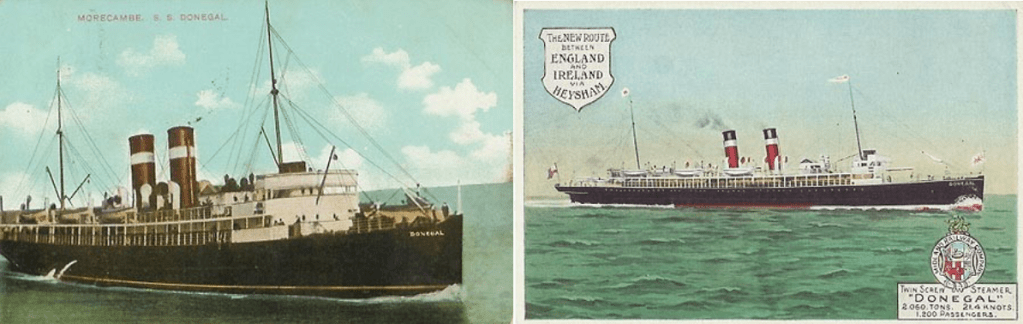
Postcard of the SS Donegal Part Two.
France (Le Havre and Rouen).
As we crossed the Channel, a gale blew up, and the ship began to throw its occupants about. Soon the decks were strewn with seasick soldiers, and before our voyage was over, there could only have been some fifty of us who did not succumb to the ravages of the storm. Bodies were to be found in all sorts of unlikely places, and it was difficult for us to find a clean spot to rest in. In the end the best position seemed to be on the top deck where we hung on like grim death to stop being rolled overboard. On the water itself, I saw for the only time in my life, the beautiful phosphorescent gleam that I had once read about. The cry of one soldier, as he was violently sicker the third or fourth time, indicated how much he suffered. “I hope” he said, “I get killed in France, so I won’t have to come back again on a ship.” I wonder what did happen to him. I do know the fate of the battered Donegal. She was sunk by a German submarine on the return journey – fortunately there were few troops on board, but many of the crew lost their lives.
Editor’s note: The mid-to-late Victorian period saw unprecedented expansion of the railway infrastructure in the United Kingdom. The first railway to reach a port on the North West coast of England was the Furness Railway at Barrow-in-Furness. Railway companies were not empowered to run shipping services however, and the Barrow Steam Navigation Co. was formed to start services from Barrow to Belfast with interests and investments from the Midland Railway and the Furness Railway. In 1904, the Midland Railway’s purpose-built port at Heysham was opened, with direct rail connection and four new steam ships were built to open services to Belfast and Douglas on the Isle of Man.
The Midland Railway became part of the London Midland and Scottish Railway (LMS) company in 1923. Together with the SS Antrim, the SS Donegal was a purpose built passenger ferry operating from Heysham Port to Belfast and Douglas. Built in 1904 by Caird & Company of Greenock on the River Clyde, she was launched on the 30th April 1904, weighing in at 1,885 gross tons the SS Donegal was a twin-screw steamer powered by a triple-expansion steam engine rated at 386 Nominal (or rated) Horsepower. This gave her a maximum speed of 13 knots. Both Donegal and Antrim worked between Heysham and Belfast from 1904 until they were requisitioned for UK Government service in the First World War.
Both the SS Antrim and Donegal were among many passenger ferries requisitioned by the Admiralty during WW1 to act as ambulance or hospital ships, and general transport vessels. During 1915 the ship was outfitted as a hospital ship but was armed with a 13-pounder gun, this would, most likely have been a QF Mark V naval gun which was a pedestal mounted adaptation by Vickers Limited of the Mark I horse artillery gun. So, therefore, they were technically armed transport vessels used as casualty clearing ships. As an ambulance ship, the SS Donegal was configured for a crew of 70 with 610 (wounded) passengers and was utilised to transport wounded military personnel from the Western Front back to Great Britain.
Ambulance ships were classified as hospital ships under the Hague Convention X of 1907, and as such were to be clearly marked and lit to make them easy to identify. Nevertheless, in the First World War the Imperial German Navy attacked and sank a number of British hospital ships. The UK Government then announced it would cease marking hospital ships, alleging that German vessels had used their markings and lighting to target them. It would seem that this policy decision had already taken place by the time of Jimmy’s embarkation and the SS Donegal was operating as a troop transport ship outbound from the UK, and as a hospital ship on her subsequent return journey from France. In fact, during the course of the war, the SS Donegal crossed the channel between Northern France and Southampton many times and on 1st March 1917 a German submarine had tried to attack SS Donegal, but the steamer managed to outrun her.
On 17th April 1917 however, the SS Donegal sailed from Le Havre bound for Southampton with the HMHS Lanfranc and several RN escorts, carrying 610 lightly wounded soldiers and 70 crew. She was about 19 nautical miles south of the Dean light vessel when the German Type UC II submarine SM UC-21 torpedoed her without warning.
According to contemporary reports “the torpedo tore a great hole in the casing, and part of the deck collapsed. Parts of the vessel were blown to atoms, injuring a number of the crew and killing five. The rudder was blown off, and the vessel sank in half an hour. There was no panic. The officers and crew displayed wonderful spirit working like heroes in rescuing the wounded. Fortunately the majority of the wounded were able to walk. The lifeboats were lowered promptly and coolly, and all the wounded were saved except a few who were killed by the explosion.” The SS Donegal sank with the loss of 29 wounded British soldiers and 12 of her crew.
A crew report offers the following view:
“SS Donegal was under escort when the captain spotted a torpedo track some 400 yards or so away to port at 7.43pm, and gave the order “hard to starboard”, but this was too late, and in the words of the captain: “…my ship was struck near the port propeller with the result that the stern was practically blown away and carried with it the 13-pounder gun, which had only been mounted the day before. One of the gunners who was standing by it is missing and must have been killed…”
The vessel began to sink rapidly but HMS Jackal got alongside and took off some 500 troops, with other ships picking up some of the remainder. Three-quarters of an hour after the attack, Donegal lurched to starboard, throwing those left on board into the sea as she foundered, with the loss of 69 crew and 26 of the wounded soldiers. This report seems at odds with several other casualty reporting which suggests 29 soldiers lost and 11 crew.
(Passenger figures vary; Wikipedia highlights 610 wounded soldiers, while His Majesty’s Stationary Office, British Merchant Shipping (Losses) WW1 suggests as many as 639)
One of the numerous acts of bravery in the face of the sinking is that of Lieutenant H. Holehouse, to whom the Royal Humane Society awarded its bronze medal with the citation:
Holehouse, H., Lieutenant, R.N.R. Case 43264
“At 7.30 p.m. on the 17th April, 1917, the S.S. Donegal was torpedoed at sea, and a wounded soldier was seen in the water, it being nearly dark at the time. Lieutenant H. Holehouse, R.N.R., jumped in and brought the man to his ship, but when got on board he did not recover.”
Two of SS Donegal ’s crew had served on together on previous ships. Archie Jewell and John Priest had served on RMS Titanic and survived her sinking in April 1912 where Jewell had been one of Titanic’s lookouts (although not on watch when she struck the iceberg) and Priest had been one of her stokers. Both Jewell and Priest then served on Titanic’s White Star Line sister ship HMHS Britannic, and survived when she was sunk in November 1916.
Priest had also been on the liner RMS Asturias when she foundered on her maiden voyage in 1907, and on RMS Olympic when she was damaged in a collision with HMS Hawke in 1911. Priest then served on the armedmerchant cruiser Alcantara when she and the German armed merchant cruiser SMS Greif sank each other in February 1916. When SS Donegal sank, Priest survived yet again but Jewell was killed. In 1917 Priest was awarded the Mercantile Marine Ribbon for his service in the war.
More than 2,500 merchant ships and auxiliaries were sunk during the war, by far the greatest majority by U-boats. “The Cross of Sacrifice: The Officers, Men and Women of the Merchant Navy and Mercantile Fleet Auxiliary 1914 – 1919” contains the names of all who died serving in the merchant marine (MM) and in auxiliaries, armed merchant cruisers, hospital ships etc. with the date of death. In each case the name of the ship is given and the individual’s function on board and the preview of the volume includes a number of those lost on the SS Donegal:
CLIFFORD William John (29), Greaser, MM from Belfast
COWLEY Andrew (33), Wireless Operator, MM from Derby
DAWKINS Charles James (31), Fireman, MM from Southampton
FARNAN John William (28), Fireman, MM from Southampton
HAMMOND Thomas (30), Able Seaman, MM from Southampton
HILL Nelson (22), Able Seaman, MM from Bogside Island Magee
HUGHES Robert (40), Carpenter, MM from County Down
JEWELL Archie (28), Able Seaman, MM from Bude
RICHARDS Samuel (32), Fireman, MM from Southampton
THREFALL, Thomas (31), Fireman, MM from Lancaster
each of whom is remembered at the Tower Hill Memorial in London. Peter McFADYEN (26), a Leading Deck Hand in the Royal Naval Reserve, is remembered at the Portsmouth Naval Memorial. The story of Archie Jewell can be found on the internet at: http://www.100firstworldwarstories.co.uk/Archie-Jewell/story/
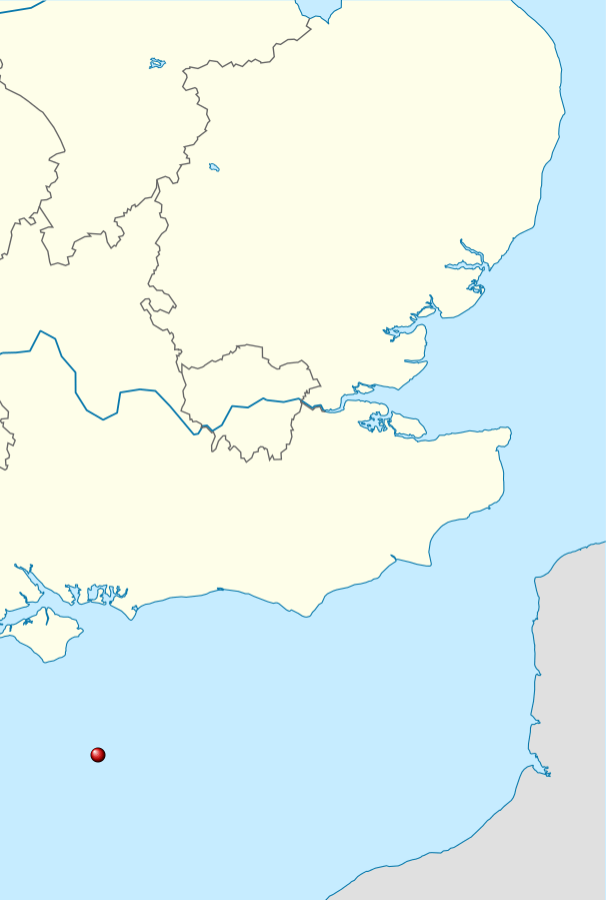
Approximate position of the wreck of SS Donegal in the English Channel Today, the SS Donegal lies intact on her port side in about 45 to 50 metres (148 to 164 ft) of water.
It was a great relief to find ourselves on dry land the next morning, and marching up the hill outside the town of Le Havre to a camp where we were herded fifteen to a tent. Here we stayed a couple of days, and then sailed comfortably down the River Seine to Rouen. This trip took place during the hours of darkness, so we had no chance of viewing the countryside of La Belle France.
We had been warned of Rouen, and its Bull Ring, where fighting men were put through their paces by stony-faced Sergeants and Sergeant Majors, who appeared to enjoy making our initial experience of life in France as miserable as possible. I had known that as soon as I arrived in France, I would be reduced to the ranks, but had decided that my stripes would remain on my arms as long as it was possible.
Editor’s note: ‘Bull Ring’ is a colloquialism referring to British Army training camps such as those at Rouen, Harfleur, Le Havre and Étaples. Newly arrived soldiers to the Western Front, and soldiers transferred to a Bull Ring from the front-line for refresher training, would spend time in these camps before being deployed to the front to reinforce their ‘fighting spirit’. These camps were pretty notorious, particularly the one at Étaples, where a series of mutinies occurred in September 1917. Poet/soldier Wilfred Owen, resting at Étaples on his way to the front-line, described the context of these mutinies perfectly:
“I thought of the very strange look on all the faces in that camp; an
incomprehensible look, which a man will never see in England; nor
can it be seen in any battle but only in Étaples. It was not despair,
or terror, for it was a blindfold look and without expression, like a
dead rabbit’s”.
It was in these camps that as many as 100,000 soldiers at a time were housed, and prepared (if that could be truly possible) for life in the trenches. Soldiers would be given lectures on how to deal with such things as lice, trench foot and poison gas attacks
My demotion was quite understandable, for it was not ethical for a newcomer to a battalion, that had spent many months in the fighting line, should be placed over men who had served in the war zone while he was being trained in England. At the same time I felt that my two stripes might save me a number of unpleasant tasks while I stayed in the neighbourhood of this inhospitable camp in Northern France. This proved to be a wise decision, though I wasn’t always lucky in escaping doing jobs that we hadn’t exactly joined the army to perform. Another sad thing about this loss of rank was the fact that, with it came a loss in pay, and the most annoying part was that I was never officially told I had to revert to the rank of private, or that I must lose my corporals pay – I was just a number – 202101.
As I said before, these base wallahs, fairly put us through our PT, Musketry Drill, Bayonet Fighting, Bomb Throwing, and all the rest of it that is supposed to make a good soldier. We were glad therefore, when we heard that we were due to leave Rouen, and join the troops at the Front. On our last day at the Bull Ring we completed our drills, and began to march away to return to our camp. As usual these instructors lined up at the side of the road to see that we marched correctly. I was at the rear of our little squad of Oxfords, still wearing my two stripes. We were at the trail as usual marching to attention, when a sergeant major started making disparaging remarks about the swagger of the OBLI. After we had passed him, I turned round and made a rude gesture at him with my thumb against my nose. It was a sudden impulse, and of course, I should never have allowed myself to lose my self-control. The sergeant major turned purple at this affront to his seniority, and rushed into the roadway and grabbed me by the shoulder. “I’ll have those stripes off you, you so and so, and so and so”, he yelled at me. I just smiled at him – we wouldn’t be going back to the Bull Ring again, and the stripes were due to come off at any time, besides which I had some twenty or thirty witnesses to testify against him, for he was totally in the wrong for behaving as he did while we were marching in good order.
On the following day, most of our party began their journey to the battle zone, but it seemed that there was no immediate demand for signallers, and some half-dozen of us were left behind. There were no more drills to be done, but we soon found out that we were not to be left to enjoy the air of France in complete idleness. We spent some days down at the docks in Rouen unloading cases of food – bully beef – tins of soup – and other commodities we became familiar with later on. These cases weighed in the region of half a hundredweight (editor’s note: just over 25kg), and there were some tired bodies and arms at the end of the day. On another occasion we were taken to an Australian bakehouse where loaves were made to be sent afterwards towards the front-line. The ovens consisted of baked clay, and inside these a fire was built – the cinders raked out, and the unbaked loaves were distributed round about, and then the oven was sealed up with wet clay. This was broken up again after a certain timed the loaves beautifully baked were shovelled out by means of a long-handled flat tool. Twenty five loaves were placed into a sack, and these sack were hoisted on to our backs – we were given a push and downhill we went until we reached the roadway where the sacks were loaded into vans to be taken to various destinations. At the end of the day we had reached the limit of our endurance, and later on we were thankful we were never called upon again for this slavery. These loaves were made at the rate of one loaf between two men per day, but when we reached the trenches we found that by the time the loaves had reached the same spot, the ratio had become one loaf between five men. Much exchange and barter had gone on before the fighting man had received his ration – a scandal that was to go on right through the war.

The docks at Rouen It was Rouen that brought home to me what suffering a man would have to endure, if he fell foul of the powers that be, and received a sentence of field punishment. Just outside our camp was a small party of some forty or fifty young negroes, and every evening at six o’clock we would see them leave their tents, and proceed to a number of poles stuck in the ground; there to be tied up by their arms and legs for an hour. From the distance they seemed quite young, eighteen or nineteen, and seemingly quite inoffensive. I often wondered what crime they had committed, to be rewarded this way when they had travelled so many thousands of miles from Africa, to help their British overlords in a war that was no concern of theirs.
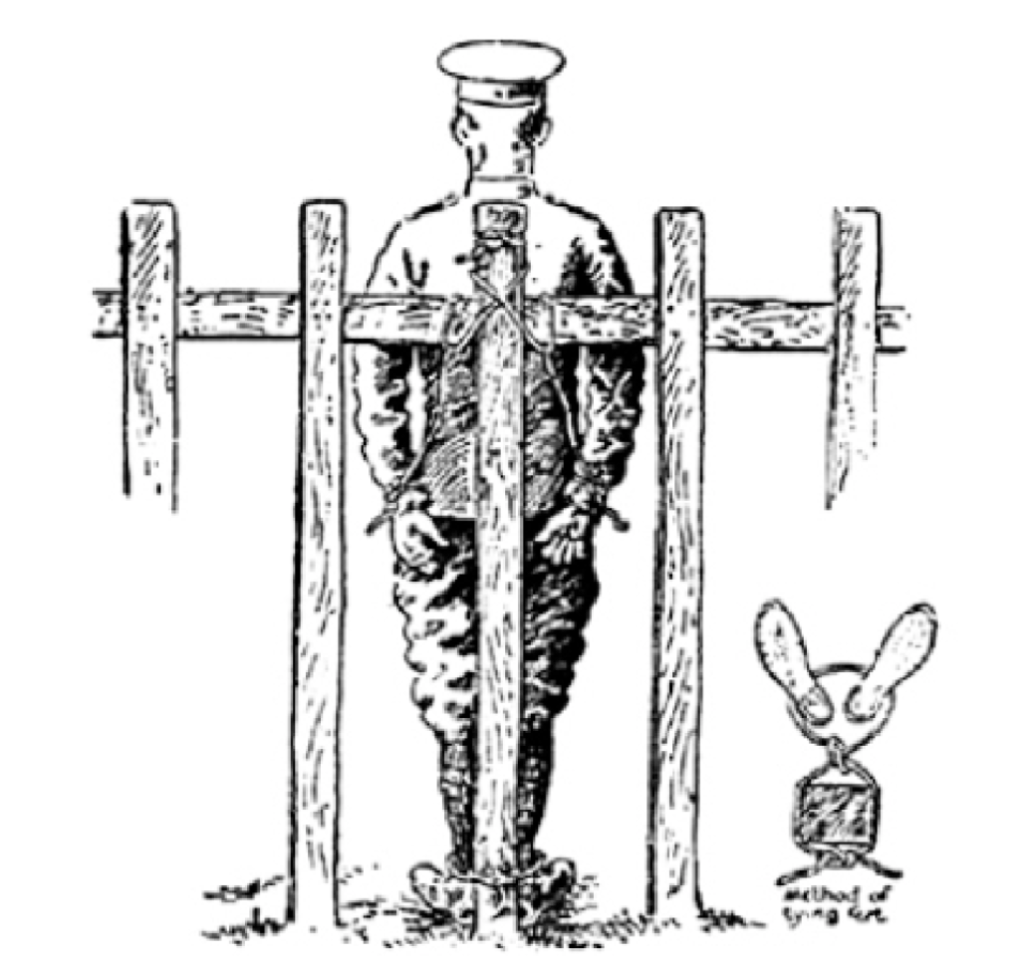
Official British Army illustration of the method to be employed when administering the tying-up element (‘crucifixion’) of Field Punishment No. 1. But it was at No. 1 Field Prison (editor’s note: Jimmy may be referring to No 2 Military Prison, Rouen here; there was a No. 1 Military Prison but this was located at Blargies North Camp, in Abancourt, approximately 34 miles to the North East of Rouen. Irrespective of which prison Jimmy was referring to, British Military Prisons in France were places of degradation, brutality and torture) that I got the greatest shock of my young life. We were detailed for guard duty for twenty-four hours at this prison, and on our duty every two hours out of six, we had to walk on top of a wall surrounding the camp. At one point we passed a building with iron gratings, and each time we went past, we would hear below us the rattling of chains and plaintive voices crying “Have you got a fag chum?” Even if we had been able to risk it, I didn’t see how we could possibly have got one to them.
In the evening came the sound of men’s feet running towards the camp. The gates were thrown open, and at the double came these men who had been working at the docks. I noticed that all the badges indicating the regiments to which they belonged, were missing from each one. That had to be a quick look, for without pause each man ran to his prison hut, removed his top garments, and again at the double, removed the dirt he had accumulated at the place where he had been working. Once dried, he ran back, put on his clothes, and then for the first time was allowed to rest while he consumed a scanty meal given to him. These men were the lucky ones, for they did have the freedom of their limbs – their crimes were less, I suppose, than the poor souls who lived their lives chained up.
Three times a day these chained slaves were brought out from their barred cells from which we had heard their moans, and piteous pleas for cigarettes, while we patrolled above them. Each man was given a heavy cannon ball, his chains removed, and then for one hour he put the weight above his head, marched three steps, placed the ball on the ground, stood to attention, picked it up again, and marched another three steps while his jailor bellowed out “Down, up, down, up, one two three, down, up, down, up”, and so it went on for an hour. This took place three times a day. No matter what they had done, whilst serving King and Country, one couldn’t help but feel pity for these wretched men – there was no pity in the eyes of their warders, who, I noticed, were all Scots.
Bapaume.
When the order came to leave Rouen on our way to join our fellow Oxfords, it was good to feel that all being well, we should not see that town again – for my part this proved to be true. We marched to the railway station, and there were introduced to the famous or infamous ‘forty hommes eight chevaux’ trucks or wagons which had been placed at the army’s disposal for moving the troops.
Editor’s note: Jimmy is referring here to the forty-and-eights, Quarante et huit in French, typically written 40/8 or 40&8, which were French 4-wheeled covered goods wagons designed to hold 40 men or eight horses. Introduced in the 1870s they were drafted into military service by the French Army in both World Wars. They were also used by the occupying Germans in World War II, followed by the Allies.
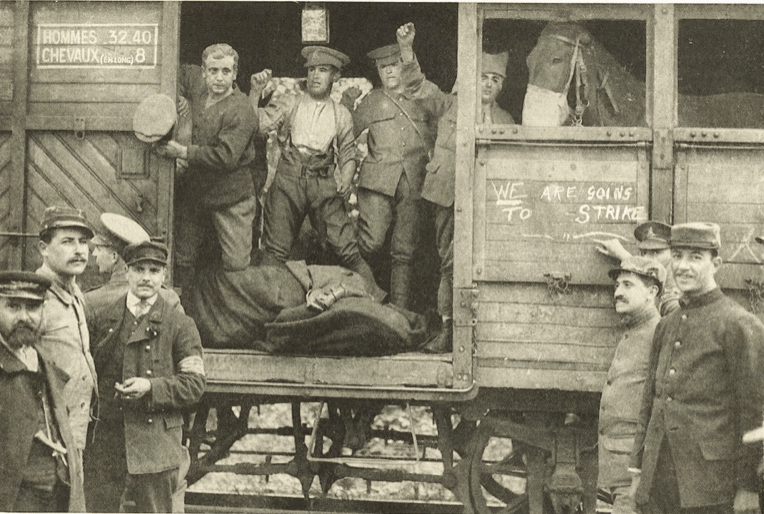
The 40/8, one of the ubiquitous railway wagons which transported many British troops closer to the front-line. On we went then, through Northern France in the greatest discomfort, until we finally detrained at Albert, there to be greeted with all the ravages the countryside had sustained during the early part of the war.
We marched along a road with its shattered tree stumps on both sides, having previously viewed from the distance, the well known hanging virgin of the Cathedral. It was said that when the statue finally fell the war would end. Church towers had been the target of gunners of both sides, for these towers and steeples made wonderful observation posts in a flat countryside. As we travelled along the road we saw as far
as the eye could reach, nothing but destruction and desolation, and the air was filled with a smell, which remained with us during all the days we spent away from civilisation.

The ‘Leaning Virgin’ of the Basilica of Notre-Dame de Brebières, Albert. Editor’s note: During the First World War, the statue of Mary and the infant Jesus, designed by sculptor Albert Roze and dubbed the Golden Virgin on top of the Basilica of Notre-Dame de Brebières was hit by a shell on the 15th January 1915 and slumped to a near-horizontal position. The statue remained in this precarious position until further shelling in 1918 destroyed the entire tower. The British said that whoever made the statue fall would lose the war, whilst the Germans thought the opposite. In fact a number of legends surrounding the Leaning Virgin developed among German, French, and British soldiers. The Leaning Virgin became an especially familiar image to the thousands of British soldiers who fought at the Battle of the Somme (1916), many of whom passed through Albert, which was situated only three miles from the front-lines.
After several hours we reached our destination, a camp on the edge of Bapaume, a town which had often been in the news, and which had been captured not very long before. Bapaume seemed important enough even then, for I was to hear and see my first German shells falling on the railway station there. They appeared quite near to me, but as no one in the camp worried about them, I concluded there was little danger of them falling any closer.
We stayed in the camp for a couple of days doing nothing, and this gave one or two of us the opportunity to wander about the Somme battlefield in the near neighbourhood. My feelings could only be described by the thought that went through my mind ‘How could anyone survive, after being subjected to the utter destruction that went round about them?’ One could see that amongst the shell holes, there had been trenches of a kind, but these had been levelled to the ground by the constant pounding by the guns of both sides.
Demicourt.
It appeared that our stay in the camp was due to the fact that the battalion had been in the front-line when we arrived, and we would be sent to join it when its turn was due for a rest period at Velu Wood. The enemy had retired to new positions on the Hindenburg Line, and the British found themselves in comparatively war-free ground, and had to make provision for attack of defence. As far as I could gather the Oxfords held the line for twelve days, each company in turn taking the front trenches for four days, and then occupying support trenches for four days. Then we would retire to sunken roads to act as reserve troops to the battalion which had relieved us. Following this would be a period of rest in tents for another four days, when back we would go to take up our original position in the front-line facing the German troops on the other side of ‘No Man’s Land’.
In Velu Wood – actually we were in tents on a grassy plain – we played football in between spells of light drills. I was attached to A Company, and with these games, soon got to know my fellow companions. I had taken off my stripes as soon as I left Rouen, and wore only a single set of flags on the lower part of my left arm sleeve. Here, almost at once, I began to enjoy a companionship which had been sadly lacking in the latter part of my service in England. After four days we moved forward to the front line, and A Company was posted to trenches immediately opposite to the enemy. Each morning and evening we stood to, at dawn and dusk, so that we should be ready to repel any attack that might be made. I made bold to peep over to see what No Man’s Land looked like, but it was quite uninteresting, apart from the barbed wire in front of our own trench, there was little to see but a stretch of green grass, and a road
on our left running apparently right into enemy territory. It seemed that the Germans on our sector were a considerable distance away, and during the following nights a trench was dug some 400 yards in front of the one we occupied, and when it was completed, it was taken over as the new front-line. On both sides of the trench were small enclosures, called in derision ‘funk holes’, and into these we curled ourselves up at night time, and strangely enough fell asleep quite easily.
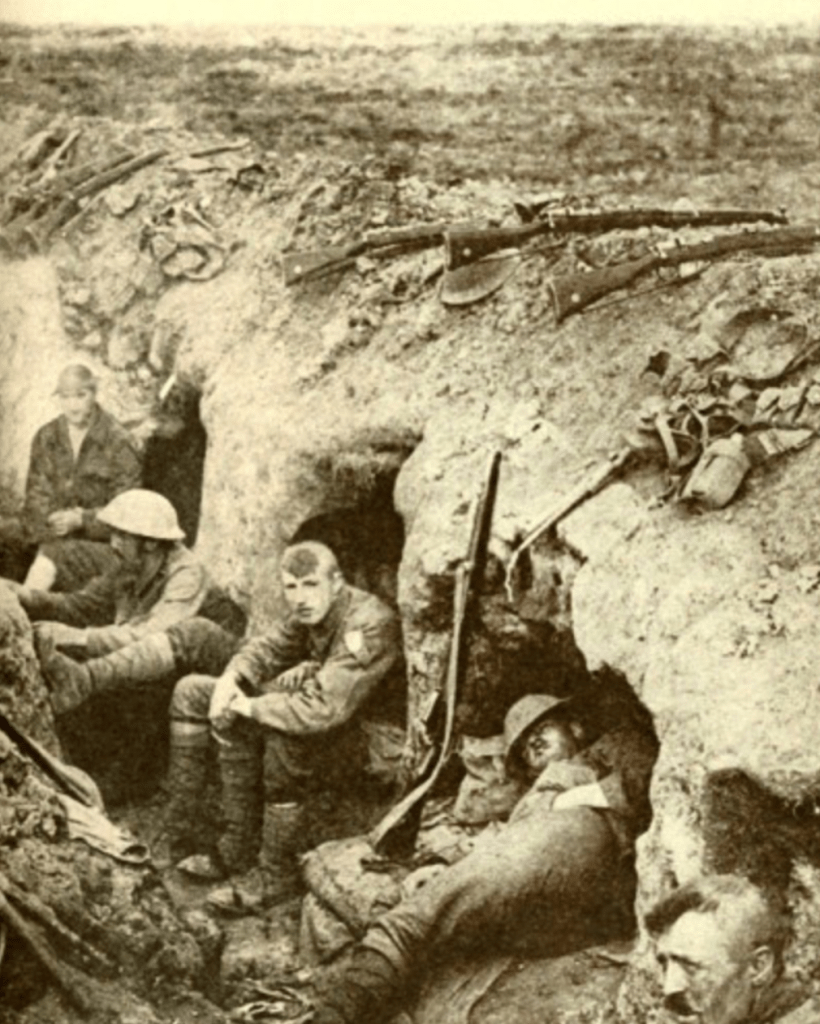
‘Funk Holes’ scraped out of the side of a trench. Many stories went the rounds during these days of daring pilots in those flimsy aeroplanes, and we, too, could boast of our own ‘Mad Major’. Every morning he would appear and head for the enemy line, where he was greeted with bursts of shrapnel. These puffs could be seen exploding just in front of him, but just as it looked as if he would run into them, he would turn at right angles to the right or the left, leaving those puffs building up in the direction he appeared to be going. Then a new lot would precede him in his new pathway, and the same comedy continued. This morning performance enlivened our dull sojourn, for I was lucky enough to have my baptism of trench warfare on one of the quietest fronts in France. Of course there were the odd shells passing over – strangely enough there was more danger to life and limb when we were in support or reserve, for then we were nearer to our own guns who had their own private battle with their fellows on the other side. On one occasion when we were in dug-outs in the side of a sunken road, a heavy shell landed near to us, and bits of it flew in our direction. Fortunately they were expended when they reached us, but there was a sort of a thrill to get hold of a piece of hot metal and realise it had come from a German gun.
After one or two turns in the line, I was instructed to join A Company Signals, and here I met Lance Corporal Robinson, who was to become a life-long friend. With him were Polly Perkins and Dags Pledge who had left Catterick some days before I had done. Polly had lost two of his three stripes, but was not in charge, and except for the fact that he had one stripe on his arm, he occupied the same position as I did under Lance Corporal Robinson. The other member of the squad was Arthur Kirby, who was somewhat older than us, and who, we learned later on, was a gentleman farmer in Buckinghamshire. Thus began a happy team of signallers, and I took pleasure in the fact that all I had learnt in England was not to be wasted, when I found myself sending and receiving messages which actually meant something. Lines from Company Headquarters went to Battalion HQ – we were known as PA (Pip Ack), and the battalion code name was RUN. The station was manned throughout the whole twenty-four hours while we were in the line, but in reserve, often enough, runners were used between companies and headquarters. During the night when it was quiet, there would be little need for messages to be sent. Battalion HQ would ring each company in turn at various intervals, both to test the lines and to see that the operator had not fallen asleep. Morse only was used and speech in the line forbidden. HQ would send out . – – . .- (PA) and we would answer . .-. . (‘ere) – the H was left out. The HQ would send – – – – . – (OK), and we would reply . – . – (RT – right). We would then get on with our reading or letter writing, whichever was in being. We did four hours duty through the night, and then wake up the next on duty – an unpleasant task, for he would be fast asleep, and not likely to take kindly to being shaken into wakefulness with a long term of silent duty in front of him.
Attached to Company HQ were the runners – men sent with messages from the Company Commander to platoon officers occupying various positions in the trenches – the Captains batman – and the stretcher bearers. I can remember how thankful I was to be able to mix with such grand fellows as Joe Fisher, Fred Adams, Sam Pearce, Bodger Goodgame, and Jack Life, four of whom had been with the battalion since it first came to France in March 1915. I seemed to have made more friends in a week than I had done all the months I had spent in England.
So we went for some weeks, backwards and forwards – in the line, in support, in reserve, and best of all, in the tents in Velu Wood, where we were able to shave, wash and clean ourselves in comfort. I have only vague memories of the meals we got in the front-line, for there were no communication trenches, and rations had to be brought down at night along the Bapaume-Cambrai road, I can only visualise bully beef, biscuits, pork and beans. In support and in reserve we got tea from the cookers in the sunken roads, and we always saved some in a cigarette tin for shaving and a shaving brush wash. This was the time when I became more subject to the attentions of the lice, which first got acquainted with me in the camp at Rouen. They were to remain with me until I was discharged from the army in 1919. Of course there were times when there would be a little relief – out of the line we got pleasure in hot baths and clean clothes – but back they would come, and each day was spent in fighting these dreadful pests.
Editor’s note: Soldiersin the trenches suffered from lice. One soldier writing after the war described them as “pale fawn in colour, and they left blotchy red bite marks all over the body.” They also created a sour; stale smell. Various methods were used to remove lice. A lighted candle was fairly effective but the skill of burning the lice without burning your clothes was only learnt with practice. George Coppard described how this worked: “The things lay in the seams of trousers, in the deep furrows of long thick woolly pants, and seemed impregnable in their deep entrenchments. A lighted candle applied where they were thickest made them pop like Chinese crackers. After a session of this, my face would be covered with small blood spots from extra big fellows which had popped too vigorously.”
In his autobiography, Harry Patch explains the problems he had with lice on the Western Front: “The lice were the size of grains of rice, each with its own bite, each with its own itch. When we could, we would run hot wax from a candle down the seams of our trousers, our vests – whatever you had – to burn the buggers out. It was the only thing to do. Eventually, when we got to Rouen, coming back, they took every stitch off us and gave us a suit of sterilised blue material. And the uniforms they took off, they burned them – to get rid of the lice.”
Where possible the army arranged for the men to have baths in huge vats of hot water while their clothes were being put through delousing machines. Unfortunately, this rarely worked. A fair proportion of the eggs remained in the clothes and within two or three hours of the clothes being put on again a man’s body heat had hatched them out.
At Passchendaele Lieutenant Robert Sherriff described his men going into battle: “At dawn on the morning of the attack, the battalion assembled in the mud outside the huts. I lined up my platoon and went through the necessary inspection. Some of the men looked terribly ill: grey, worn faces in the dawn, unshaved and dirty because there was no clean water. I saw the characteristic shrugging of their shoulders that I knew so well. They hadn’t had their clothes off for weeks, and their shirts were full of lice.”
Lieutenant John Reith was very successful in dealing with lice. According to his diary: “No lice had so far come my way, but I was always in fear of them. On going into trenches I used to spray about a gallon of lysol over my bunk below the parapet and generally about the hut; now, with the receipt from home of a box of mercurial ointment, I took for the first time to wearing my identity disc, drawing the string through the ointment. I had heard that this was a louse deterrent. It made one’s neck dirty but there was never a louse found.”
As well as causing frenzied scratching, lice also carried disease. This was known as pyrexia or trench fever. The first symptoms were shooting pains in the shins and was followed by a very high fever. Although the disease did not kill, it did stop soldiers from fighting and accounted for about 15% of all cases of sickness in the British Army.
At Hermes, Demicourt, Beaumetz, and Velu Wood, we spent some two months holding the line, with the continuous bombardment of guns reminding us that there was a real war still going on a few miles to the north at Arras. This does not mean to say that we escaped scot free, for our casualties numbered seven killed and thirty one wounded, while there were, besides, two taken prisoner during a night raid on an enemy post.
On the evening when we, as a division, were due to be relieved on the Demicourt front, the enemy sent over gas shells, and I remember getting very excited taking down a real war message – warning of a gas attack from the other side. Usually we found notices at various points at the front reading ‘Wind Safe’ meaning that the wind was a westerly one, and it was only on rare occasions that it read ‘Wind Dangerous’. The wind must have been an easterly one this day, for after a Liverpool regiment had taken over from us, we kept smelling the gas sent over for a considerable distance while we marched away to pastures new. Later we learned that the Germans had attacked the Liverpools that same night, and inflicted a number of casualties on them.
Bailleulmont.
We marched for three days, sleeping at night in bivouacs some ten feet long, six feet wide, and four feet high, with our stretcher bearer friends as companions in the tight squeeze. Finally we caught up with civilisation again at Bailleulmont, after the battalion had been in the ‘wilderness’ for over four months. A Company was billeted in a farmyard, and a lot of us found comfort in the hay of a large barn above a cowshed. In this little village we went through some strenuous training for a big ‘push’, due to come of sometime in the near future. We signallers refreshed our memories with flag (white and blue) sending, daylight lamp work, hand shutters, venetian blind signalling, and of course some speeding up in buzzer work. It was at one of those sessions that I got a wonderful surprise. While we whereat work, a message came through that I was wanted in the road outside the field we were working in, and when I got there I found no less a figure than Father J. M. Woodlock S.J, once my class teacher at St. Francis Xaviers College, then Mr. Woodlock, and now Chaplain to the 48th Division to which our regiment belonged. He must have learned from someone that I was a soldier in the 4th OBLI, and had travelled quite a considerable distance to see me. It was a great thrill for me, for when he had taught us at SFX he had been, in my eyes, one of the greatest persons in the world.
Part of our training at Bailleulmont consisted of exercises in which we practised our proposed attack on the enemy line. At this period our company commander, Captain Boyle, had gone on leave, or on a course, and we were left to the tender mercies of a young lieutenant, Mr. Crew. Captain Boyle was a strict disciplinarian and ruled his company with a rod of iron, so when we found that Mr. Crew was much more easy going, we took chances that we would never have dreamt of taking with Captain Boyle.
When these practice attacks were made, we had to rise at 0430, and march off to some old trenches that had been in German hands before he retired, and there we would advance on an imaginary enemy, killing and taking prisoners at our ease, using flags as machine guns and sending messages back to headquarters telling of our captures. What good it did anyone, I never knew, but it looked as if we would have no difficulty in capturing the 1500 yards of enemy occupied land when it came to the real thing. We got tired of these long exercises lasting from 0430 until 2200 in more ways than one, and knowing that as signallers we might not be missed, for we belonged both to No. 3 Platoon and to Company Headquarters, and one officer, either at HQ, or in the platoon, if he thought of us at all, might imagine we were somewhere else. We therefore decided, one night, to take a chance, and on the following morning when the buglers sounded the fall-in at 0430 we buried ourselves in the hay in the barn, and trusted that no one would miss us.
No one did miss us, but after a time we found the day a long one, for we couldn’t risk leaving our shelter, and we wondered if it had been worth taking such a chance.
Our ordinary parades as signallers had the great effect of bringing together those we had only come in contact with previously at the end of a telephone line. Now we met them all as individuals and thus my circle of friends grew so much greater. The important men who controlled the destinies at Battalion Headquarters were interested in me when they heard that I was from Liverpool. They wanted to know if I knew Cinders. Cinders apparently was a person named Ashplant, who had left the battalion to take a commission. He was one of a large number of students who were being trained for the teaching profession at Culham College, just outside Oxford. While they were there they had joined the Territorials, and so as soon as war broke out, they automatically became part of the army which Kitchener was calling for. George Ashplant I met after the war in Liverpool, and he became a great friend of mine.
I enjoyed this life in Bailleulmont, for we had lots of time in between training to play games. One afternoon I was busy trying my hand in a scratch cricket match when I was told that I was wanted at Battalion Headquarters. When I got there I was informed I had been chosen to play for the battalion football team in the first round of the Fanshaw Cup against the holders the Worcesters, and that I was to join the party at once to travel to the Worcesters ground some miles away. It so happened that my tummy had been troubling me during the day, and I had to excuse myself to go to the toilet, and kept the team waiting in the GS wagon that was taking us to the match.
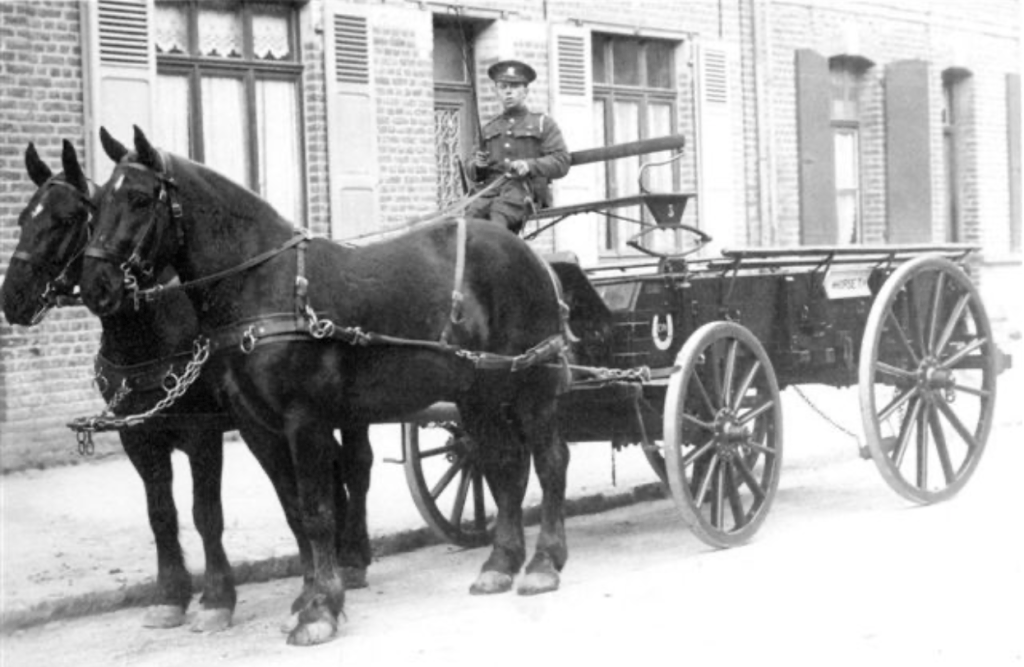
Example of a GS (General Service) Wagon. I remember Captain Boyle getting most anxious because of the delay, as time was getting short, and as soon as I emerged into the open again, I was pushed into the back of the truck, and off we went. We journeyed on through the old front-line, along roads made uneven by shells and lorries, so that my stomach got worse and worse as the back end of the truck rose up and bounced down the whole of the way. Finally we reached the ground and started the game. I don’t know how well or how badly I played, but we lost 3-1, and so our cup dreams ended. I learned afterwards that this Worcester side had been kept together by giving the players fairly safe jobs in the transport lines, and they had won the cup each year.
Lieutenant Crew, who was in charge of A Company while Captain Boyle was away, was the first Catholic officer I had come across in the battalion and we, some half a dozen or so, used to meet him every Sunday morning to march to the local church to Mass. As there was so few of us, he knew how many should be present, and so there was no roll call. On most Sundays, however, he would notice that a certain chap named Callaghan would be late on parade, and he would send one of us to Calaghan’s billet to bring him. That was how I got to know Callaghan, though I never actually spoke to him. It was some twelve months later, in Italy, that I found out that Callaghan certainly knew me.
Houtkerque, Belgium.
We stayed a little over two weeks in Bailleulmont, and though we never got to know the people, they were friendly enough in a distant way, and I suppose considered us in just the same way as the Germans, who had probably occupied the village in the first months of the war – just pests of foreigners who had come to their country to spoil forever the placid life they had led. Still we were sorry when orders came for us to entrain for our incursion into Belgium, staying at one or two places before we finally marched to billets in the small town of Houtkerque. Before we arrived there, we met up with the 6th Battalion OBLI and to celebrate our meeting we had a football match with them. I remember this well for we won 1-0, and I had the pleasure of scoring the only goal – a chancy shot which swerved in the breeze, and curled in-between the crossbar and the upright. Not so very long ago I met an officer of the 6th Battalion who had played against us in this match, and was pleased to recall it.
We had not been long at Houtkerque when we realised that something serious was in front of us. We were inspected by the Corps General, who gave orders that our hair had to be cut, and so the battalion barber became busy and clipped our heads leaving only a slight fringe in the front. We paraded again in front of the General, a man of few words, and took our caps off. He turned to our Colonel and said “I gave orders that the men’s hair be cut – see that it is”. I was so near to him that I heard these words. So the barber began again, and this time our fringe disappeared and we presented the appearance of a lot of convicts, completely bald. No doubt there was sense in the order, for the forthcoming battle would produce a lot of head wounds, and the doctors at the Casualty Hospitals had complained of the difficulty of dressing these wounds when dirty matted hair had soaked into them. Still we were not very proud of our appearance and once we had escaped the surveillance of this General our hair grew again, though naturally under ordinary army regulations it had always to be kept short.
One person, in particular, felt that this hair cutting was beyond a joke. One of our signallers, Lance Corporal Len Senior DCM, of Battalion HQ had just been informed that his commission had come through, and he was to return to England to take it up. It did not, however, prevent him giving a little party to his friends, one of them being Lance Corporal Robinson. Apparently a number of bottles of champagne were opened, and the contents drunk, for Henry came back into our tent, lay on his back and just laughed for the next four hours. Perhaps I should say a few words here of ‘Henry’ to explain his title. We learned that his real name was Percival Harold Robinson, so Reggie (Dags) Pledge and I, who were avid readers of the books of P.G. Wodehouse, decided that his name should be Phillip Henry, and when we were asked why, we answered “We called him Phillip Henry because his name is Percival Harold, and of course the Phillip has two ls and is pronounced slowly” – a lot of nonsense really but it somehow made sense to us. So to this day Lance Corporal P.H. Robinson is known affectionately to me as ‘Henry’. Why Reggie Pledge was called ‘Dags’ I never found out.
Before we left Houtkerque, all the Catholics in the Division were invited to attend a service given by an English Chaplain in the local church. This took place one evening at 6 o’clock, and the priest told the men who filled the church that, as it was impossible to everyones confession individually, he had been given a dispensation to give a general absolution to us all. He asked us therefore, to examine our consciences, and to tell God that we were sorry for all the sins we had committed. He then gave us absolution, and somehow I could feel a wave of contentment and happiness spreading through that Belgian church. The chaplain (it was not Father Woodlock) then told us that we could all come to the altar to receive Our Lord in Holy Communion, despite the fact that most of us not long before had had our tea back in camp. I often look back on this scene when my thoughts dwell on it, and feel that, for most of us, it must have been the greatest reception of these Sacraments in or lives. There must have been many present, though, for whom this was their last Confession and Holy Communion.
Ypres.
We said goodbye to Houtkerque, and moved nearer to the battle zone of Ypres, to a place called St. Jans-Ter-Biezen, just behind Poperinghe, a place already famous because it saw the beginnings of Toc H (Talbot House) a place of spiritual refreshment for soldiers of all religions. It was also universally known, because its railway station was the recipient of the attentions of Big Bertha, a legendary gun which had shelled Paris.
Editor’s note: Poperinghe is located about 8 miles to the west of Ypres. Today the region is famous for the production of hops and provides approximately 80% of the hops grown in Belgium. The town is known as hoppe stad in Dutch, which is a play on words, hoofd stad means ‘capital’, so it translates to ‘Hop Capital’. During the Great War, the town was just behind the front-line and was one of only two not occupied by the Germans. It provided a place of relative safety, and was known by the troops as ‘Pop’, it housed a number of Field Hospitals and Talbot House which Jimmy refers to here. Talbot House remains an international Christian movement which was founded in December 1915 in Poperinghe, the organisation was named after Gilbert Talbot, who was the son of Edward Talbot, then the Bishop of Winchester, who had been killed at Hooge in July 1915. Talbot House was styled as an ‘Every Man’s Club’, where all soldiers were welcome, regardless of their rank or faith. The original building in Poperinghe is now a museum.
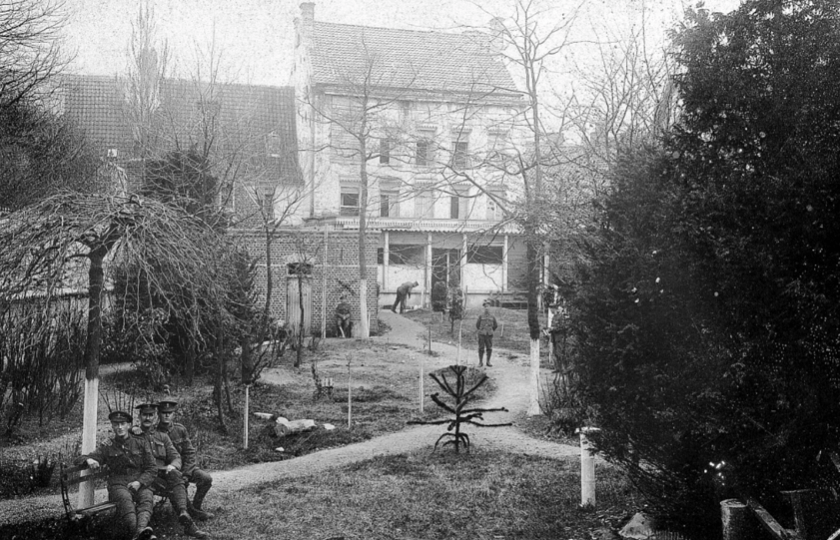
The rear of Talbot House in 1916 
The rear of Talbot House today 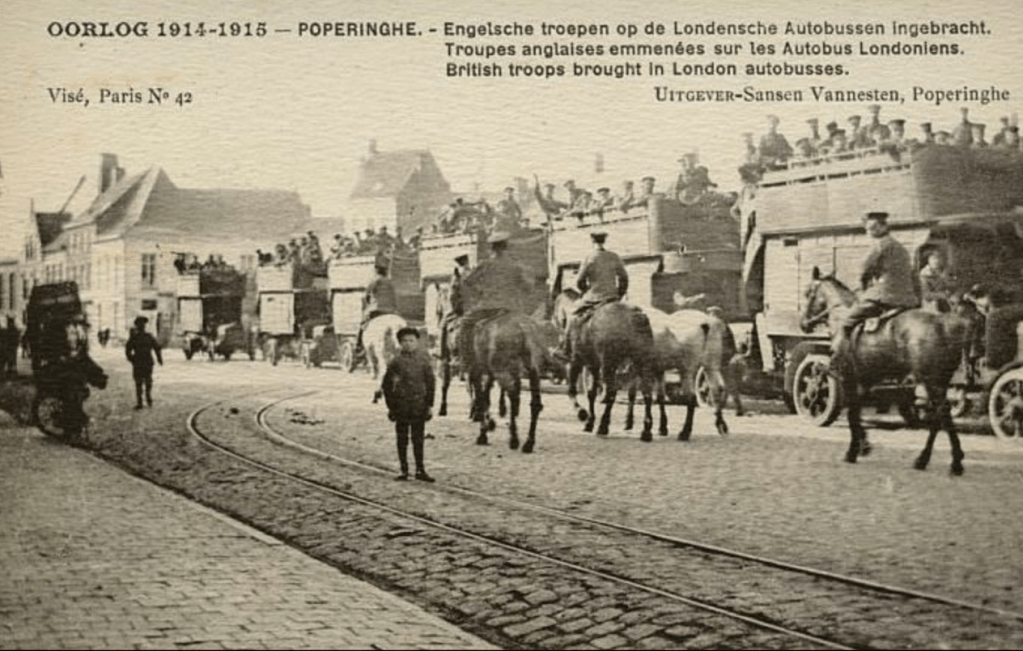
British mounted troops and soldiers in London buses in Poperinghe The railway station which Jimmy refers to in Poperinghe was one of the most strategically important on the Western Front during the Great War as it was used both by the military and by refugees of Ypres who fled the continual barrage of the city. Its importance therefore, made it a regular target of German artillery. The accuracy of artillery guns during this period was poor, and this explains why a great deal of Poperinghe was destroyed or damaged by shellfire, gunners would aim at the station but the rounds frequently overshot or fell short. The frequency of the station being targeted led to rumours at the time that the stationmaster had been executed as a German spy. To soldiers going on leave, the station, for all its danger, was a very welcome sight. Those who were returning to the Ypres Salient would have, no doubt, thought very differently about it. It is worth explaining here what is meant, in military terms, by the word ‘salient’, basically, it is a battlefield feature, a bulge in the front-line that projects into enemy territory. The salient is surrounded by the enemy on multiple sides, making the troops occupying the area vulnerable.
Jimmy mentions the mobile German artillery piece nicknamed ‘Big Bertha’ made by the steel-making firm of Krupp. This was a 42cm (17 inch) howitzer which fired shells, in pairs, weighing 816kg (719lb) each. This gun had been located in the vicinity of the Houthulst Forest, to the north of Ypres during April 1915. The artillery shelling of the ancient city of Ypres during mid-April was intended as a diversion to draw the attention of the Allies away from the German front-line to the north of the Ypres Salient. The sound of ‘Big Bertha’s shells flying through the air was described as “a noise like a runway tramcar on badly laid rails”.
On the following day the big attack was made by the Guards Divisions which was successful at first, but later got bogged down. So four days later, we moved on through Poperinghe to Dambre Camp, near Vlamertinghe, and on the following day relieved the 39th Division in the front line along the Steenbeck river, a small stream a few feet wide, but enough of an obstacle to cause trouble. I found I was not to go with the battalion, but to remain at the transport lines. A number of officers and men too remained behind, and were known as the ‘five per cent’. This five per cent was, I learned, a regular feature of any battle plan, and was put in operation so that there would be some part of the regiment left, if it so happened that the officers and men up at the front were either wiped out or, as could possibly happen, surrounded and taken prisoner. This five per cent stay at the transport lines was, I discovered, not to be a picnic, for as soon as night fell, we were visited by enemy bombers, our only cover the tents we were in, but luckily the bombs were meant for ammunition dumps in the neighbourhood. Still there wasn’t any fun listening to these things whistling on their way down to earth.
After this performance we loaded the GS Wagons with sacks of rations for the troops in the front-line, then travelled on behind them up the wooden Poperinghe-Ypres road until we turned off to the left at Hell Fire Corner to reach Admirals Road just behind the eighteen pounders of our Royal Field Artillery. There were many Hell Fire Corners on this front for Jerry (as we always called the Germans) took a delight in trying to catch a convoy of ration limbers at any cross-roads.
Editors’ note: the best known Hellfire Corner was at a junction along the road from Ypres to Menin – the infamous Menin Road. One section, where the Sint-Jan-Zillbeke road and the Ypres-Roulers railway crossed the road made it the most dangerous place in the sector, as German positions overlooked this spot, and their guns were zeroed in on it. Supplies for the Allied armies operating in the Ypres Salient passed along the road and anything that moved across it was fired upon.
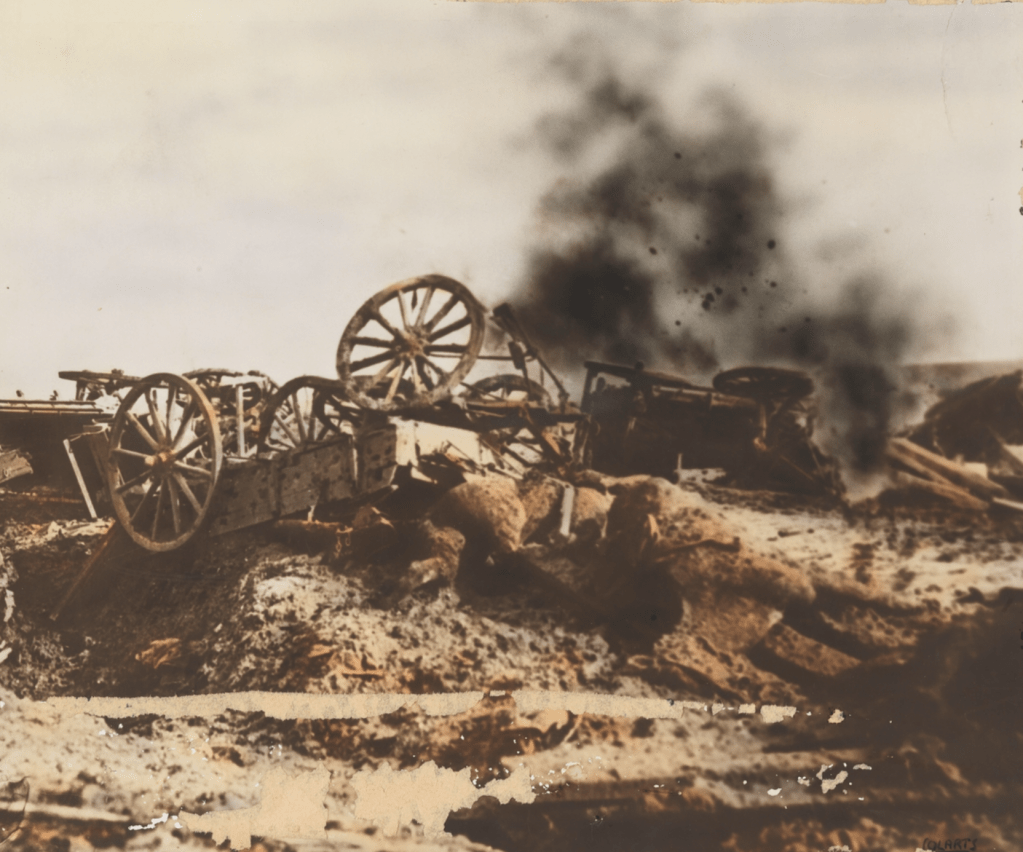
Hell Fire Corner on the Menin Road, third battle of Ypres 1917 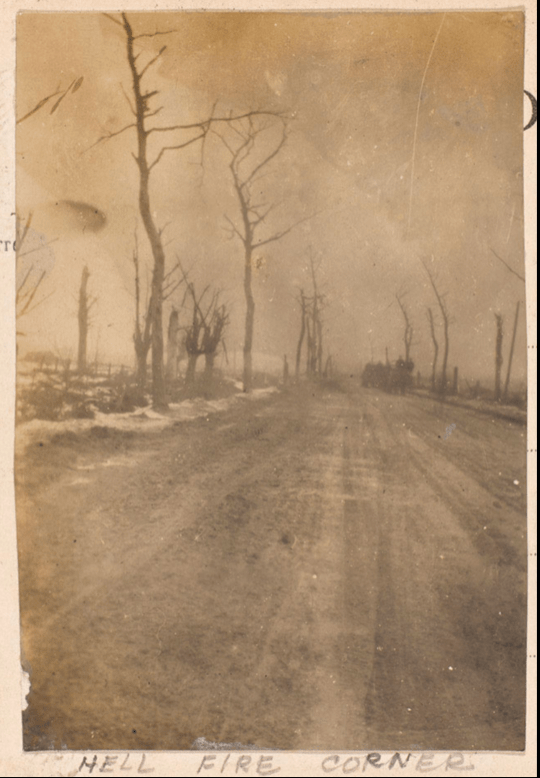
Hell Fire Corner circa 1918 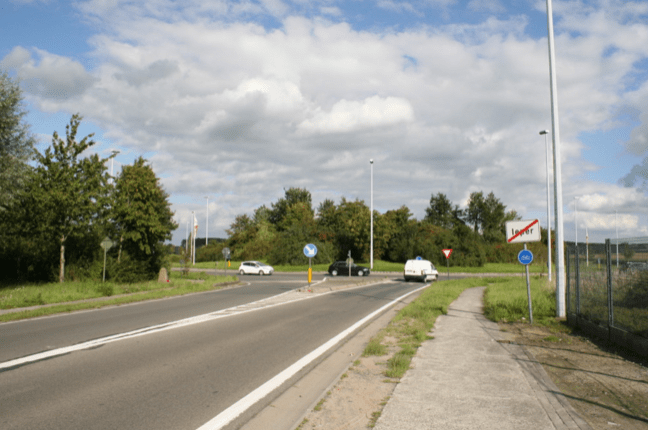
Just another busy roundabout, Hell Fire Corner today Here then we unloaded the wagons, and handed the sacks over to the fatigue parties who had come up from battalion headquarters. This happened each night during our stay in the transport lines, except for one night when we were given spades to dig trenches for the proposed Divisional Headquarters Signals so that these Royal Engineers Signals could bury their telephone lines. By this time the ground had hardened a little from its morass of previous days, as the rain had ceased, and the digging was fairly easy. Unfortunately our little party found a huge dead German at our end of the trench, who had sunk in up to his armpits and no effort of ours could move him, so we had to suffer his presence during the four hours we were digging.
When the battalion was relieved and we met them again at Dambre Camp, we were saddened to learn that a number of our friends had become casualties during their occupation of the line in Kitcheners Wood, due mostly to tremendously heavy shelling. Two of A Company Signals had been wounded and had been taken to the base hospital – Polly Perkins and Dags Pledge. They were finally conveyed to England – Dags to a hospital in Bournemouth, where he lost his leg. He wrote to me from Bournemouth – quite a cheerful letter – in which he said that in the next bed to him was an old schoolfellow of mine from Liverpool – Reg Sutherland – who had his foot off.
Altogether during its short stay in the line, the battalion had lost 2 officers and 30 other ranks killed and 3 officers and 55 other ranks wounded. (I should say here, that I have obtained the casualty figures, and the spelling and sometimes the names of the towns and villages from the War Record of the 1/4th Oxford and Buckinghamshire Light Infantry compiled by our second-in-command Major Pickford DSO, MC). One of those killed was Lance Corporal Burton of D Company Signals, who had become a great friend of ours during those peaceful days at Bailleulmont. He was such a gentle and kind person, that we all knew him as ‘Girlie’ Burton, a name which to us expressed the great regard and affection in which we held him.
Colonel Bartlett had gone down with an illness of some kind – his deputy Lieutenant Colonel Stephens together with the Adjutant, Captain Enoch, were both wounded so altogether the battalion was a much weakened one when it arrived back at Dambre Camp. Here we stayed for a few days, and even in this relatively safe place under canvas, we were subject to the night bombing and occasional long distance shelling – one shell actually landing between two company cookers without doing much damage except making a huge crater. The air about us was very active, and we saw a number of planes spinning uncontrollably out of the sky, and burying their noses deep into the earth. Just above us, too, were a number of observation balloons in which were a couple of men spotting activity in the German lines. One balloon must have been annoying the Germans considerably – they probably had something they didn’t want observed. At first they sent over a succession of shells bursting into shrapnel in the air, but this was unsuccessful, and the balloon remained floating in the sky. Then out of the blue came a fast-moving German plane firing incendiary bullets which we could see streaking away towards the balloon. Inevitably, in the end, the balloon caught fire, and the two observers jumped out, and as their parachutes opened they floated towards the front-line as the westerly wind bore them down in that direction. The Jerry pilot was not satisfied, however, and he pursued the two helpless men, firing at them with his machine gun, then wended his way back to the German lines. The British planes came afterwards, but too late to do any good. We felt that the German airman should have been satisfied with his success with the balloon, for it seemed a dirty trick to try to kill the poor helpless men whilst in their parachutes. Perhaps he thought they might have some information to give when they landed, but to us watchers, it seemed poor sportsmanship even in these days of horrible warfare.
In order to pass the time while we were at Dambre Camp, we would sometimes get a pass to go into Poperinghe. There were always plenty of trucks passing up and down the Vlamertinghe-Peringhe road, and there was little difficulty in getting a lift on one of these if one was sprightly enough to clamber up on the back as it slowed down for us. It was always good to be able to go into shops and estaminets and to mix with a few civilians once again. My chief memory of ‘Pop’ was a visit to the famous Toc. H. which history has handed down for future generations to admire and revere, and of course a visit to the Catholic Church didn’t do any harm.
On the 15th August, 1917, we handed in our packs and fitted ourselves in fighting order – our haversacks with iron rations attached to the straps on our backs. A great treat in the shape of sausage and mash was given to us and we left Dambre Camp in the early evening to proceed to an open position on the western side of the Grand Canal. There we were to wain until darkness fell, for movement, from the eastern side of the canal was easily observed by the enemy. We had not been long assembled in our little groups when we observed a battle going on overhead between six of our planes and six of theirs. It was a thrilling sight – but finally one of our planes suddenly left the fight, out of control, and spiralled down to earth close to where we were sitting. There was a great rush of our men towards the plane, and too late came the shouts of officers for us to lie still. The damage was done, and as the German airmen followed the crash of the British plane down to earth, they could not fail to observe the movement of so many unthinking soldiers as they started off towards the crashed fighter. It was not long before we got the benefit of the folly of these troops of ours, and the shells came hurtling over in our neighbourhood. Fortunately, however, they were a bit off the mark, otherwise we would have paid dearly for our free grandstand seat at the exciting dogfight up above.
When darkness came on we moved up to the canal bank, and as we saw the inviting dugouts on the side of the water, we would willingly have changed places with their occupants. We crossed over a pontoon bridge and then each company moved in single-file on to the duck boards – the only means of a secure foothold up to the front-line. The heavy shelling of the past few weeks had destroyed all the drainage of the land, and shell holes became full of water, and the ground all around a morass. As we walked along these duck boards, no more than a foot wide, it was imperative to keep one’s eyes on the middle of the back of the man in front, for one slip to the side could mean death by drowning or suffocation, as it was impossible for the slow movement
along these boards to be checked at any time, unless the whole company stopped. These duck boards had been painted white so that the leader could follow the track, but this meant that they could also be photographed from above by German reconnaissance planes. It was not unexpected then, as we moved up, we were greeted by spasmodic shelling, but we were luckier this time than the battalion had been on its previous taking over the line, a week or two ago, when there were quite a number of casualties on the way up.
Colonel Bartlett had returned to the battalion to take the place of the wounded Colonel Stephens, and as there was no Adjutant, our company commander, Captain Boyle, had taken over this duty and thus we, in A Company, were led by Lieutenant Crew. On the way up, Lieutenant Crew seemed to sense when the shelling would commence, and would hold us up from time to time, and as we crouched on the duck boards, we would hear the shells dropping in front of us. The enemy, of course, had good warning that we were taking over this night from those planes that had spotted us some hours before, though probably he knew all about it beforehand. We weren’t sorry to arrive at our starting-off point, marked by tapes on the ground, and there we waited for dawn when the preliminary bombardment would take place. Just before the light came into the sky, our guns opened and the enemy positions were pounded time and time again, until it seemed impossible for anyone to survive. At a signal from the company commander, we moved into position to make our attack. I was loaded with gun and bayonet, and also shared a white and blue flag, a shutter disc, and a red venetian blind affair, with Arthur Kirby. Besides this impedimenta, I carried a basket containing a pigeon, to be let out when other means of communication failed. Somehow as I moved, my legs began to sink, and I found it impossible to draw them out of the mud. I fell flat on my face, the basket and the pigeon going with me, and as I clawed, the basket was of some help to enable me to gain an upright position, and I finally got to my feet again. By this time the line was moving forward – I found myself on the right of Mr. Crew, with Arthur, the Company Sergeant Major, and the officer’s batman Johnny Bossom, and the four stretcher bearers, Henry, by the way had been left behind on five per cent.
As the barrage lifted, we advanced in-line with bayonets fixed, when suddenly a terrific burst of machine gun fire was directed at us, and men were falling in all directions, Lieutenant Crew amongst them – we found out later that he was only wounded, though at first we believed him killed. As we dived to the right we found a fairly dry shell hole to shelter in as the bullets whistled round us – my poor pigeon, however, had a watery grave, as someone knocked the basket out of my hand, and it sailed into another shell hole, this one full of mud and water. In our shell hole were the Company Sergeant Major, Johnny Bossom, Arthur Kirby, and myself. We looked towards the German lines and saw a number of them running from whatever cover they had taken during the barrage. The four of us fired at them, but although the Sergeant Major claimed a victim each time he fired, I didn’t see one of them fall. The firing from our shell hole attracted a return from a machine gun, and we could hear the bullets whistling over our heads. The Sergeant Major talked a great deal about getting headquarters informed of the state of things, so I proposed I should send a message back by means of the shutter disc. He wrote me one out and I faced the disc in the direction where I imagined battalion headquarters to be, and sent the message twice, though I had little hope of it being read.
While this was going on I saw Jack Life crawling up to attend to a wounded man, but as he reached him a snipers bullet hit him and he died almost immediately. Fred Adams then made his way to the spot and lifted Jack up, but he too was hit – he saw me and called my name, but he fell back dead. It didn’t seem that one could remain long in this place and stay alive. A shell dropped just in front of our shell hole, and the explosion sent one of our company high up in the air – he seemed to float, and then started to fall with his face staring at us – I felt that if he dropped on us I would lose my control, but fortunately he came to earth in front of our shell hole.
The Sergeant Major was still moaning about not being able to tell headquarters of our disastrous failure to capture our objective. We were supposed to advance 1500 yards up the Passchendaele Ridge, but I doubt if we had got 500 yards from where we had started at daybreak. If I hadn’t lost my pigeon I might have released it with a message attached to its foot, and this might have satisfied the Sergeant Major. In the end, however, Arthur said he would try and make his way back to Battalion Headquarters and I inwardly curse the Sergeant Major for accepting his offer, Arthur climbed out of our hole and started to run in the direction of HQ, but he had hardly gone a yard or two when he was hit and we knew he was killed – I could cheerfully have killed the Sergeant Major for sending him to his death, for at the time I had become a different being with my brain quite numbed.
Editor’s note: There appears to be a disparity in Jimmy’s recollection of the first name ‘Fred’. Having researched the available data it would appear that the deceased was actually Frank. Jimmy’s use of the name ‘Arthur’ instead of Albert is explained later in the text. 203916 Private John ‘Jack’ Life, 200529 Lance Corporal Frank James Adams and 202248 Private Albert John Kirby of the 1st/4th Battalion Oxfordshire and Buckinghamshire Light Infantry died in the service of their King and Country on the 16th August 1917. They are commemorated at the Tyne Cot Memorial in West-Vlaanderen, Belgium. The memorial is sited around the eastern boundary of Tyne Cot Cemetery, which is the largest Commonwealth cemetery in the world, it bears the names of some 35,000 men of the British and New Zealand forces who have no known grave, nearly all of whom died between August 1917 and November 1918. Their name liveth for evermore.
The battle that Jimmy had taken part in, and so eloquently and horrifically described, became known as the Battle of Langemarck. It was the second Anglo-French general attack of the third Battle of Ypres against the German 4th Army. Due, in part, to an unusual amount of rainfall in August, and the relentless shelling which had destroyed the local drainage systems, the ground was transformed into a muddy, flooded morass. Total casualties and losses in this battle alone during the period between the 16th and the 28th of August was 36,190.
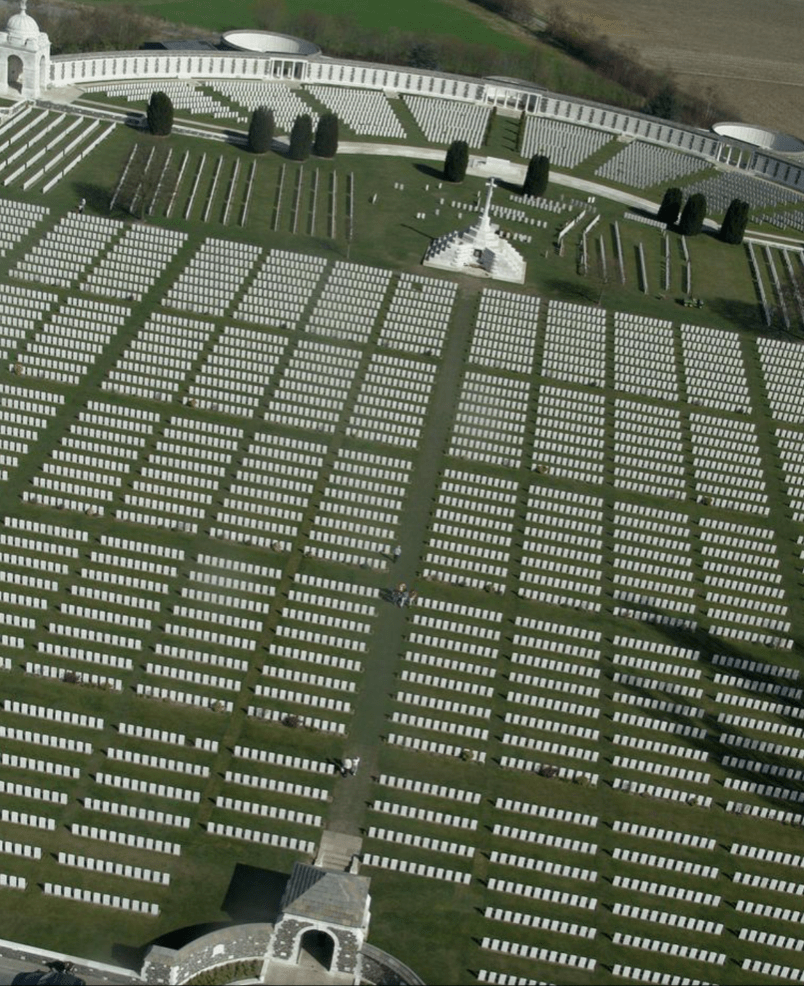
Aerial view of Tyne Cot Cemetery, the memorial is the curved structure at the top of the image 
The Tyne Cot Memorial where Private John ‘Jack’ Life, Lance Corporal Frank James Adams and Private Albert John Kirby are commemorated This was our last attempt to do anything but sit there in the shell hole, pulling our legs out of the slime and mud as they gradually sank lower and lower. Towards late afternoon we heard sounds approaching us from the rear, and discovered that the Worcesters had been sent to complete the task we were supposed to have done in the morning. Some of them spotted us in our shell hole, and told us in no uncertain terms what they thought of the mess we had made of our attack. We watched them advance a few yards past our position, and then the merciless machine gun opened fire on them and down they went. They had been led by a captain who had strolled past us with walking stick in hand, as if he were out for an evening walk. He had gone down with the rest of his company when the machine gun had opened up, but after a lull he rose to his feet and with his stick waved his men on to advance. Down he went with a bullet in him – his sergeant then took over, and he too was hit – a brave corporal then tried to encourage his men, but he met the same fate – that was the end – there were no more rude remarks about the Oxfords, as some of these lads came tumbling back into our shell hole, one with a bullet in his back. We bandaged him up and told him what a lucky fellow he was to be going home to Blighty.
Darkness was falling and the Sergeant Major decided he was going back, so he climbed out of the hole, and zig-zagged his way towards where we had started that morning. Johnny Bossom and I followed him shortly afterwards, and we came across some of our lads outside a captured German pill-box. Bodger Goodgame, one of the stretcher bearers, took me inside and told me he had seen the body of Arthur Kirby, and that the Worcesters burial party had taken him away. When I saw the thickness of the concrete walls of the pill-box, I realised how easy it was for a man with a machine gun to hold up the advancing line of an opposing army. Of the two A Company stretcher bearers left, Sam Pearce got the Military Medal and Bodger was mentioned in despatches for the work they had done.
At length came the order to move out, and once again we walked through the blackness of the night along the duck boards, patched up round the shell holes that had broken them in places. The smell of death covered the whole area, and remained with us all the time we spent in that battle zone. Finally we reached the haven of the canal bank, and rested our weary bodies here until daylight appeared. Then we crossed the bridge and moved with less discomfort to our old tents in Dambre Camp. There we met the survivors of the other companies and the signallers at headquarters, who were surprised to see me for I had been reported killed. The cookers had been busy before our arrival, and we were given a mess tin full of delicious soup before we went to our tents, took our boots off and fell asleep. I looked at my feet before lying down – they were white and shrivelled and I felt I had just missed getting that horrible disaster known as ‘trench feet’. We didn’t seem to have been asleep long before orders came that we were to parade for inspection – rifles cleaned – boots dubbined – and clothes and puttees free from the mud that we had sat in. This was a wise move, as our minds had been dulled by the events of the past hours, and we had to do something to prevent apathy setting in. After the parade we marched to an Army Service Corps camp where our packs had been taken, to bring our own and also those of the men who had been killed or wounded. Here we saw for the first time the old London buses which had been given great publicity in the newspapers for the wonderful job they had done in taking the infantry up to the front-line despite the heavy shelling by the enemy. This was pure journalism as far as we were concerned, for in all the months we stayed in the Ypres sector, there was not one bus placed at our disposal for that purpose. In fact there was nearly a riot when these Army Service Corps wallahs (or Ally Slopers Cavalry, as they were rudely called by us fighting soldiers), refused to have our packs put in their buses, because they were contaminated with lice. They thought a second time when they saw our angry faces, and allowed us to desecrate their beautiful buses. It was at this period I took advantage of the excessive kit to change my leather equipment for webbing.
Back in camp we found that there was an over abundance of rations, as casualties had been much higher than anticipated. This had its repercussions, for on our next time in the line, allowance was made for a high percentage of casualties, but as we had very few, we were on starvation diet for two or three days. On the 16th August we lost 65 killed and 105 wounded, all company officers except two becoming casualties. I wrote to Arthur Kirby’s people in Buckinghamshire, and told them of his death. Later on, I received a very nice letter in reply and we learned for the first time that his name was Albert and not Arthur. They enclosed a cutting from the local paper, which included a copy of the letter I had sent. Arthur – we always continued to call him Arthur whenever we spoke of him – was a grand fellow, very straight and above board. He never drew his army pay, but had whatever money he needed sent out from his bank. This led to a number of people borrowing from him when they were hard-up between pay-days, which, out in France, naturally were infrequent. Thus when he was killed, there must have been many owing money to him. Each day he received the Observer direct from his newspaper office in London, and as this was paid for yearly in advance, his sister, when she wrote to me, asked if I would care to have it sent in my name. Thus for the rest of the time I was in the BEF I received Arthur’s paper. There was one occasion many months later, when this paper led to what might have been an alarming incident when we were in trenches on the bank of the River Piave in Italy. After the war was over, I received an invitation to pay a visit to the farm at Brill in Buckinghamshire, where I met with a friendly welcome and stayed a few days.
We rested at Dambre Camp for some days, and then proceeded to the front-line again to support an attack on the enemy position. On this occasion we marched for the only time through the battered town of Ypres to St. Julian, recognised only by a long broken wall – the rest of the village having been shelled to the ground. Round and about were the wrecks of our tanks which had not proved a great success in the attack because of the mud. This attack which we were supposed to support had not been a success too, and we were not required. Several Germans came towards us with hands above their heads giving themselves up, but some of our lads, thinking no doubt of their friends who had been killed a few days before, began firing at them. Captain Boyle, who was leading us, turned round in a rage, and threatened to shoot the next man who fired. Eventually we settled down in the shell holes round about, Henry and I being in the next one to Captain Boyle. Ours wasn’t a good choice, for a poor dead soldier was lying at the bottom. We got our entrenching tools and covered him over, having previously searched in vain for his identity – he was one of the many who was cited as being buried in an unknown grave.
We were lucky this time in having only a few casualties, ten killed and eighteen wounded, and soon we were relieved as a division by the 58th Division, and proceeded via Dambre Camp back to Road Camp at St. Jans-Ter-Biezen, where we received reinforcements to make the battalion up to strength once more. A Company signallers took in Bert Pratley, Reggie Hunt, and Jim Beer, to replace the three we had lost. Training was carried out here, and we received some badly needed pay to buy luxuries in the shape of egg and chips, cigarettes and chocolate. Close by were a number of Chinese who were used as labourers in making roads – they too, had been paid on the same day, and it was laughable to see them spending the whole lot at one fell swoop. There were many stories of these Chinese battalions, but how many were true I couldn’t say.
Editor’s note: While the Pacific theatre was a major and well-known battleground of the Second World War, it may come as a surprise that Asian nations also played a role in the Great War. Both Japan and China actually declared war on Germany hoping to gain regional dominance. While China never sent combat troops into battle, Chinese labourers comprised the largest non-European workforce during the First World War, tasked with everything from digging trenches to manning factories. China’s involvement in the war was, therefore, influential, impacting far beyond the war, and going on to shape the country’s future indelibly.
We next moved further away from the line, and spent some enjoyable days in a pretty little village called Bonningues, not far from Calais. Here we could forget the war for a week, doing further training and playing football and cricket. After a week we marched to a neighbouring station and entrained to a village close to Ypres. From here the Division relieved the 58th Division, and we had three more spells in the front- line without making any attacks ourselves, but being in support on each occasion. A Company was sent up one night, and we had company headquarters in a captured pill-box. I was the only signaller taken up and on arrival was told by the Sergeant Major (not the same one who was with us when Arthur was killed) that my retinas were with No. 3 Platoon, and said he would be visiting there shortly and would take me to collect them. It was pitch black, but as he had supervised the position when we first took over, he knew his way. I got my rations and returned to my post outside the pill-box – the officers and the Sergeant Major remained inside. Shortly afterwards the Sergeant Major came out and said that the company commander wanted a message taken to No. 3 Platoon and as I had been there with him I was to take it. Off I went in the darkness in the direction I presumed the platoon to be, but after a time I felt I should have met up with them, so I concluded I was lost. I wandered and wandered and then heard some voices – I stood still and listened – they didn’t sound like English voices, so I turned my back on them, and hoped I would have the luck to bump into our lads, for I was now getting a bit panicky. I heard voices again and this time I was lucky – it was No. 3 Platoon – I really had found them. I delivered my message, got my bearings on Company HQ, and was relieved when I got back without any more misadventures.
I dozed off during the night outside the pill-box, and when dawn came I was given a message to send back to Battalion HQ by means of a daylight lamp I had brought with me. I hadn’t much faith in this – it had only a limited field of vision, but I sent the message twice and hoped for the best – I didn’t think the company commander (it wasn’t Captain Boyle but his second-in-command) had much faith in me either, for shortly afterwards he sent a runner with the message. When he returned, he reported that my signals had not been received, so I wasn’t entrusted with any more messages. The runner stayed with me outside the pill-box, so I did have company for the rest of the day. Apparently we weren’t wanted any more, and the company was recalled to stay with the battalion in support trenches a mile or so back. Here i got a piece of shell through the flap of my gas mask which, of course, I had in the battle position on my chest – the hole it made stayed with me until I handed the mask over on demobilisation.
Our last venture into the line was in October when A Company, under Captain Boyle went up in daylight to take over after an attack had been made by one of the 143rd Brigade battalions. We walked up in single-file led by Captain Boyle, and as we signallers and stretcher-bearers were always in touch with the company commander, Henry and I followed right behind. In the distance in from of us we could see that the Jerries were sending shells at intervals in the neighbourhood of a small wooden bridge over a stream we had to cross. Fortunately it was raining and the mist helped to cover our movements somewhat. We kept our eyes watching the shells burst, and trusted that we would arrive on the spot during the period the guns were having a rest. We, in front of the company, got there at the right time, but the tail-end arrived just as a burst came over and we suffered a few casualties. As we reached the spot where we were due to take over, we spread out and took what cover we could. Henry and I and some others decided that a shell hole near one of the tanks which we thought was abandoned, would be a good place to sit in. Joe Fisher, an old stretcher-bearer friend joined us and showed us in his hand an officer’s water bottle which he had found. When he opened it, he found it was full of strong rum. He passed it round and we felt the warmth of it coursing through our cold bodies – I’m sure it gave us strength and support to carry on. We had been in this shell hole some time when, to our amazement, the tank began to move back to our lines. We had supposed it to be like the rest strew about the desolation, out of action. Joe Fisher and Henry, wiser than some of us, told us to get as far away from the tank as possible. We split up and found refuge in another hole taken over by Captain Boyle. It was not long before the Jerries spotted the moving tank, and sent some heavy stuff after it. We learnt later that two of our lads who hadn’t left the shell hole when we did, were killed by concussion when the heavy shells fell near them. What happened to the tank I never found out.
The place Captain Boyle had taken over was much worse than the hole we left. My legs were constantly disappearing in the mud, as was my rifle, so I spent the next few hours sitting beside the Captain making sure that both my rifle and myself didn’t sink. As evening approached Captain Boyle ordered us to stand to – clean out our rifles and stand up facing the enemy lines – I wearily started to take the slime off the butt of my rifle, when I heard the most terrible language emanating from the mouth of the commander – “Clean the part that matters most – the barrel and the magazine, and make certain you have a bullet up the spout”. When it got dark we settled down again and waited for dawn when we stood to’ once again.
The day dragged on – there was little doing – I suppose the Germans were as miserable as we were. Late in the afternoon Captain Boyle said to me “Where are your pals?” I told him I didn’t know as they had gone on before me, and I hadn’t seen them when I eventually joined him. He then told me to go and find them. I didn’t fancy this for I felt if any sniper was observing our position he would certainly have a pop at me. Still I had to go and I hunched myself up, first of all making sure I would be able to find the spot I had left, and then wandered from shell hole to shell hole. There were some big ones about, and most of them were filled with dead Germans. I suppose the enemy hadn’t had time to take them back when our last attack had been made and they had retreated to another position. It was a sight that didn’t make me feel any less miserable – in the end I decided I had had enough, and found my way back and told Captain Boyle I couldn’t find anyone. As dusk came on we were told to move out, and went back to hand over our position to a London regiment. As we lined up I was joined by Henry and Joe Fisher who told me they had spent the time since they left me inside a tank which had been damaged by shell fire and abandoned. It was no wonder I couldn’t find them. These Londoners were dressed in short khaki drill trousers, for they had come from a place much further south in France, and were still wearing their summer uniforms. When they asked us where the trenches were, and we told them to help themselves to any shell hole they could find, we had some sympathy for them, but we had had four months of it and couldn’t take much more.
We were not to know then that this was the end of out tour of the Ypres sector and Passchendaele, but we trudged on through the rain which had hardly ever left us during these spells of duty in the line, and arrived back in Dambre Camp utterly worn out. We went to sleep in our clothes in order to dry them, and nothing disturbed us for some hours. It was wonderful to be young in those days for otherwise the constant living in the mud and slime must have told on us. After a few more days in Dambre Camp we marched back to Road Camp, and then on to Poperinghe Station where we were packed into a train heading back into France. So we said a hearty farewell to Ypres and its surrounding devastation, though we were not certain then that we were to see it no more. We had been lucky in our last spell in the line for we had made no direct attack on the enemy, and consequently our losses were not as heavy as they might have been. In the last month we had lost one officer and thirteen other ranks killed and forty other ranks wounded. Altogether during our occupation on the Passchendaele Ridge, our casualties totalled 347, a pretty big slice out of the numbers in one battalion.

Soldiers at rest among the devastated landscape during the Battle of Passchendaele France (Vimy Ridge).
The train moved south and we came back into normality for a few days, spending nearly three weeks out of the line doing ordinary training and enjoying a game of football once more. Someone arranged a competition in a battalion inter-platoon knock-out. We signallers and the stretcher-bearers were attached, as always to No. 3 Platoon – there were four platoons to each company and four companies (A, B, C and D) to the battalion, so the draw was an easy one to make. We were drawn against No. II Platoon, and draw was the right word, for while the competition was in existence we never progressed any further, neither platoon claiming any superiority over the other. I never heard how the other games got on, but in the end we forgot about it all in the excitement of the rumours that were going around.
While these matches were being played we had two spells in the line, first of all near the well known town of Lens, and secondly on Vimy Ridge itself, with a third spell in support at Mont-Saint-Éloi. These places had long been held by the Germans, and it was only after the unforgettable attack by the Canadians that these strongpoints had been captured. When we took over we could not help but compare the methods of the German army in digging-in, with that of the British. We had always been content with a dugout, mainly sheltered by means of a tin roof to keep the rain out, but hopelessly inadequate to withstand shell fire. The Germans, however, dug deep and their dugouts were fifteen to twenty feet deep, while we actually came across a corps headquarters which was three storeys deep, a mansion built downwards instead of upwards. After sampling these dugouts, we felt that they had many disadvantages, the main one being that it tended to make on ‘windy’, so that once we were down deep in the earth, we didn’t want to come up again in case a shell came over. Here we met with a new type of shell – the Minenwerfer – it was fired from near the German front-line and could be seen trundling its way towards our trenches, where it crashed with a terrific bang. Previously our knowledge of German shells was confined to the ‘whizz-bang’ – the name being enough to describe it – the ‘five nine’, so called because of its diameter, and the heavy stuff which we could hear going back to the gun positions, stores, ammunition dumps etc. and sounding like slow-moving trains.
Editor’s note: The Minenwerfer (or ‘mine launcher’ in German) describes a variety of short-range mortars used by the Imperial German Army. They were employed by engineers to clear obstacles such as bunkers and barbed wire in areas that the longer range artillery could not target accurately. The illustration below, shows a 7.5cm version, however there were other calibers of Minenwerfer, including 17cm and 25cm types.
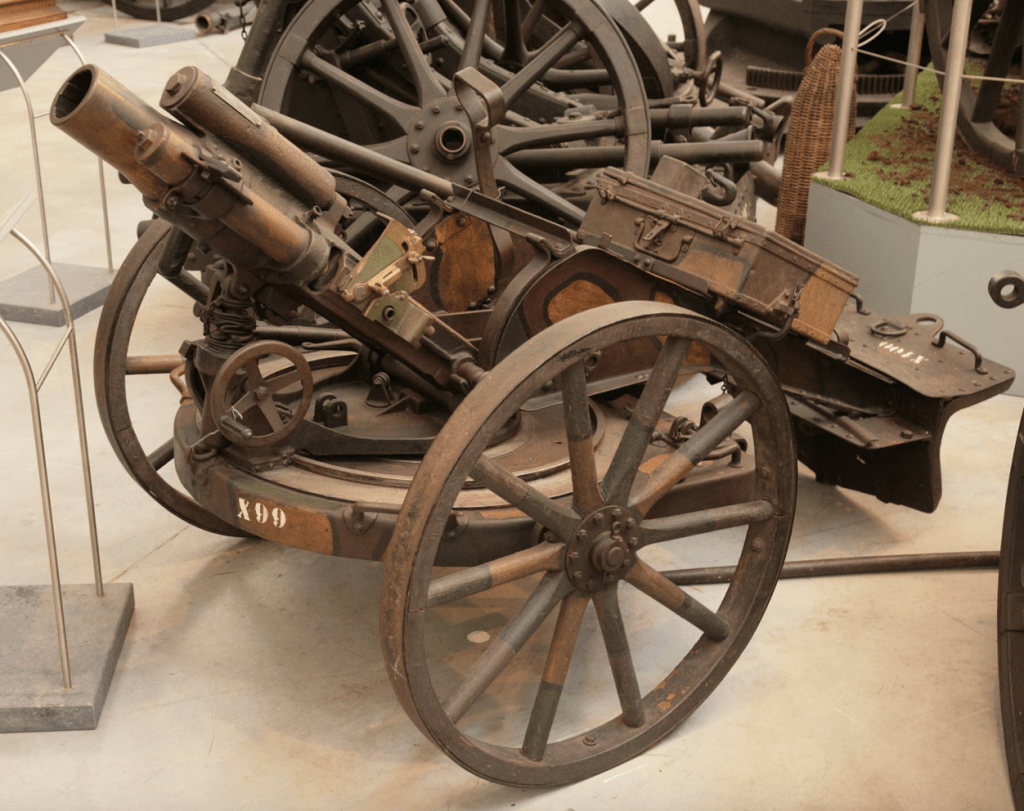
Preserved German 7.5cm Minenwerfer These German dugouts had one big disadvantage in that the opening faced the German line, for naturally when they were constructed they were built on the side of the trenches nearest to the British lines. Consequently, it was possible, though not probable, that one of these ‘minnies’ could sail through the opening, and find its way to the bottom of the dugout before exploding. These ‘minnies’ too, had the annoying effect of destroying our wires to battalion HQ, and we had a visit from HQ linesmen who had come over the top after repairing a break. They informed us that we must ring up HQ at shorter intervals, and when no answer was received, to go out and find the break. It was not long after this, that we had a succession of ‘minnies’ sent over, and sure enough there was no reply when we tried to contact HQ signals. Bert Pratley and I went out and followed the wire to find the break. Somehow or other the line led us into the trenches of the battalion on our left, the Sherwood Foresters, and there on top of one of their dugouts we found a fair sized hole, and one end of our broken wire. Our job then was to find the other end so that we could join them up again, and to do this we had to climb out of the trench and search for it. We must have made some noise doing this, for out of the dugout came a couple of the Sherwoods, and asked us in no polite language what we were doing there. We told them what we were after, but this didn’t appease them, for they accused us of trying to attract the attention of the Jerries, who had a short while before, sent over a shell which had just missed going down their dugout. We didn’t argue with them, but we found the other end of the line, brought them both back into the trench, and joined them onto another length of wire to complete the operation. That done, we left hurriedly without saying goodbye to our dugout friends from the Midlands.
Later we were to receive a sample on top of our own dugout. We had got used to the fact that when a shell burst close by, the draught blew out our candles, and we automatically lit them again. This one, however, was much too close. Johnny Bossom was making some custard for Captain Boyle – signals and officer’s servant were always to be found somewhere in the neighbourhood of the company commander, and on this occasion our station was in the same dugout. A ‘minnie’ landed on the roof of our dugout, but as there was a kind of chimney from the bottom of the dugout to the roof for ventilation purposes, the disturbed earth came down the chimney right into Captain Boyle’s custard. We had heard the Captain use some choice language at times, but what he called those German gunners who had spoiled his custard, surpassed anything we had heard before. Some time after the ending of hostilities, Henry and I learned that Captain Boyle was a most devout lay preacher in Crewe.
Apart from the Minenwerfers, our sojourn on Vimy Ridge was comparatively quiet, and certainly a much more comfortable one than our tour of Ypres. Altogether we lost three other ranks killed and twenty-one wounded, and these turned out to be our last casualties in France for great things were to happen.
Part Three.
Italy.
There were very strong rumours going about that we were due to leave France and go to Italy. These were strengthened when orders were issued saying that severe punishment would be given to any man found indicating in his letters of a possible move. Our letters home were always read by the officer on duty for the day, and had to be signed by him to confirm that they contained no information that would be valuable to the enemy, such as the part of the line we were occupying, or casualties received or, as it was at this particular time, the possible move from one front to another. At this time the Austrians had been making strong attacks in the mountains on the Italian army. There were stories being told of the collapse of the Italians, and of soldiers running away from the battlefield. To prevent the occupation of Northern Italy by the Austrians, it had been decided to send a number of British Divisions to Italy to hold up the advance of the Austrian Army. Naturally this would mean weakening the strength of the BEF in France, and so every precaution was taken to prevent the enemy getting any information. It was never disclosed that they did learn what was going on, but it is a fact that shortly after our train rumbled on towards the south of France, a British attack at Cambrai with hundreds of tanks was beaten back by the Germans, and from that time onwards they assumed a position of superiority once again on the Western Front.
Editor’s note: The battle of Cambrai took place between the 20th November and the 7th December 1917. After initial success on the first day of the battle, the unreliability of the British Mark IV tank, as well as German artillery and infantry defences turned the tide the way of the Imperial German Army, there followed the biggest German counter-attack against the BEF since 1914. Overall British casualties and losses amounted to circa 44,000 troops and 179 tanks.
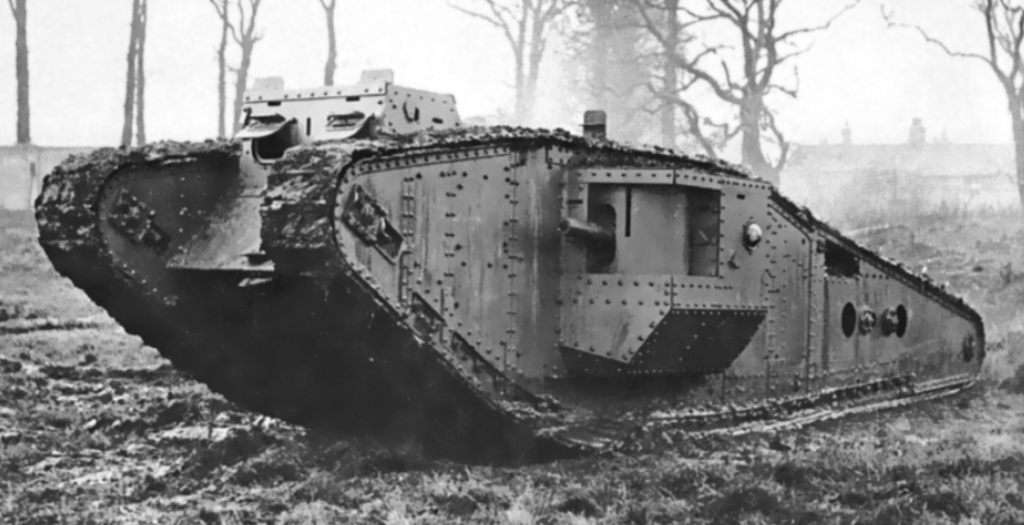
British Mark IV tank Before we left the Vimy sector, one very interesting event took place in the formation of a battalion band, and in the months to come we were to feel grateful and proud when we had to do those long marches on the bad roads of Northern Italy. We had the pleasure, too, of being given a show by the Divisional Concert Party – The Curios – this, in fact, was the only time I actually saw them.
Although we did not know it at the time, the battalion was divided into two parts, and made the journey into Italy by two trains, one going via the French Riviera, and the other through the Mont Cenis Tunnel. These trains, naturally, were very long, as they had to carry, besides the men, the horses, cookers, limbers, and GS wagons, and everything else that constitutes the make up of a regiment at war. We men, of course, were bundled into the famous ‘forty hommes’ wagons, which jolted, stopped, and started a million times on the journey. Still it was all better than the mud and smells we had been living in for six months, and we took these minor discomforts in our stride, and proceeded to enjoy the countryside of France. Often we would sit, dangling our legs over the edge of the train, and sometimes we would jump off, and run alongside the train to stretch our legs when it slowed down almost to a halt. At other times we would be pushed into a siding and left there for an hour or two – it was not to be wondered at then, that we stayed in the train for five days before we reached journey’s end – our train journey’s end that is. We passed through countryside which had not been affected by the fighting, and therefore we found the country folk interested in us, as they waved to us and we responded a hundred fold.
The weather was fine and warm for the time of the year – we were, of course, approaching the Mediterranean – and then came the highlight of the journey. Instead of the polite waving of the French peasants, we found a tumultuous greeting from some people who cried ‘Welcome’ to us in English – then we knew we had reached the French Riviera, and saw the famous names, Cannes, Nice, on the station platforms. It was a wonderful experience. We crossed the border into Italy, greeted this time by a different kind of waving from the Italians, who seemed to be beckoning us into their country. Our train finally stopped at a station called Cerea. Before we began our journey we had been warned that this station might be in the hands of the enemy, so it was a pleasure to see the station intact, and no signs of the Austrians anywhere. Later on we were informed that the advance of the Austrians had been stopped on the mountains, and the whole of the plain of Lombardy was still in the possession of the Italians. We had been five days on the train and were glad to have completed the journey, but we did not realise that there were many days of marching in front of us, and we would be nursing blisters and sore feet for some days to come.
Thus we started off on our journey towards the Italian Alps, and after three days came in touch with the other half of the battalion (which had come through the Mont Cenis Tunnel) at a place called Asigliano, where we rested for two days. Usually we spent the night in school classrooms or village halls with the floor as our bed. Henry and I shared our blankets which were carried for us in the horse-drawn GS wagons. We had two each, one of which we placed on the floor and the other three on top of us, with our packs or coats for pillows. When we settled down we would raise our feet in the air, and allow the blankets to fall around them, so that we were comfortably tucked in. At Asigliano there was a field which would have made a wonderful football ground but for the fact that there were two large trees in the middle. The battalion’s love for football was shown when these two trees were dug up by a fatigue party, and the holes filled in so that even though we were only at the place for a couple of days, we were able to have some fine football matches.
After leaving Asigliano we marched on day after day for six days, but aided considerably by our bugle and brass bands. We were proud of our marching, and when, now and again, we came across some Italian troops, we showed them how good we were. The Italian soldiers, in our view, were the sloppiest lot we had ever come across. They were badly dressed, couldn’t march, and we caught up scores of them who had dropped out by the roadside, because they couldn’t keep up with the others. Their horses and wagons were in a shocking state, the horses particularly being thin and looking half-starved. Our horses, on the contrary, were lovely looking specimens, sleek and well fed. Men in charge of horses always had instructions to see to the horses first and put themselves last – “We can get more men, but we can’t get more horses.” Referring once again to our marching, it was always a marvel to me what a tremendous influence the battalion march-past had on soldiers, who a few minutes before had almost been dragging their weary limbs along the road. At the end of every march, the Colonel would find some spot in the centre of the village we were to stay in, and then turn his horse to face the oncoming troops, who, marching to attention would give him a smart eyes left, as they reached the spot. Something stirred inside our breasts, and we forgot our bleeding blisters and aching limbs in the pride of our regiment.
At the end of six days we rested in a small village where, at last, we were paid. Up to that time everyone was broke, and a number of men had sold various articles of use to the Italian people. When it was announced that a kit inspection would take place, there was a certain amount of consternation, and friends from one company would try to borrow money from another company, trusting that the times of inspection would be different. One of my friends in HQ company had been in the habit of borrowing my field dressing, and did so on this occasion. I had got rather tired of lending it to him, so I decided I would ask for a new one at this inspection, so that he could keep mine and not bother me again. I certainly chose the wrong time to declare ‘my’ loss,, for, everyone who was short in his kit, was put on a charge. There were too many razors missing – of course these were the best things to sell to the Italians – real Sheffield steel cut-throat razors. Despite the fact that most soldiers used safety razors of their own, the old ‘cut-throat’ issued by the army had to be carried and shown on each inspection, together with the knife, fork, spoon, etc. etc.
So for the first time in my life I had to appear before the company commander on a charge. As it wasn’t probable that I had sold my field dressing, I got a reprimand and was dismissed. That afternoon Henry and I and two others went into the village to spend our money. In an estaminet we met an Army Service Corps chap who said he would post any field cards we wanted to send. It was so long since we had written home that our relations must have been worrying about us, especially as we had been forbidden to give them any indication that it might be some time before we would be able to write to them again. These cards was the saving grace when we were not in a position to write a letter, and printed upon them were phrases such as, “I am quite well”, “I have been admitted into hospital”, “I am sick and am going on well”, “I have been wounded and hope to be discharged soon”, “I have been sent down to the base”, “I have received your letter/telegram/parcel dated…”, “Letter follows at first opportunity”, “I have received no letter from you lately/for a long time”, Signature… Date… We crossed out the words or phrases not required, and hoped it would not take long to arrive at its destination. So when we handed these cards over to our good Samaritan we looked for a place to have a drink to celebrate. Of course the Italian estaminets didn’t sell beer, so we bought some wine – Marsala – and started to drink it like beer. It was n’t too bad until we got back to our quarters, and then the wine began to take effect. After giving a vivid description to two sergeants of my visit that morning to the company commander, I spent the rest of the day fast asleep.
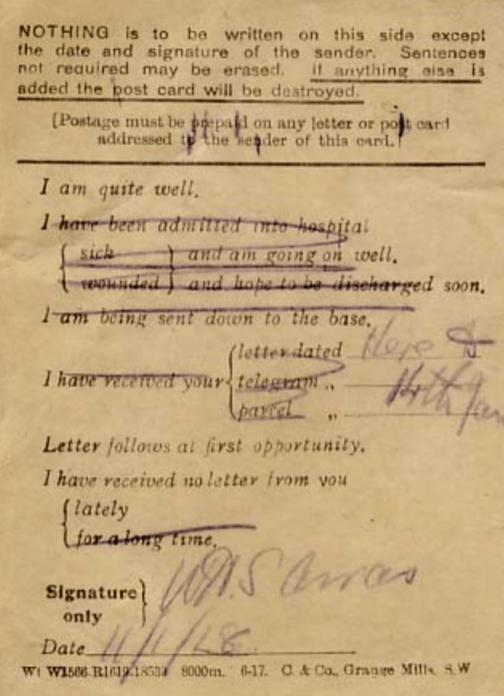
Example of a First World War Field Service Postcard Tezze.
We carried on our marches along the badly made Italian roads until we reached the small town of Tezze. In the distance we could see the foothills of the Italian Alps, and behind them the mountains themselves. It was rather queer to realise that up in these mountains the Austrians and Italians were facing one another in grim warfare. It seemed however that the Austrians had given up their attempt to drive the Italians off the mountains, but when we eventually got up there ourselves, we could never understand the reason why. Actually they had only another four miles to go and they would have the Italians at their mercy. Still it was good to know that for the moment we weren’t wanted , and we wondered what would happen to us. We certainly did not want to go back to France again.
In Tezze we stayed for a month doing all kinds of training and playing plenty of football. Part of our training was to prepare ourselves for inspection by two British Generals, one of whom was General Plumer. We became expert at rifle drill, forming close column of platoons, companies, and the rest, and in the end we were not sorry when the inspection was over and done with. No. 3 Platoon was billeted in an old barn, under which was a cowshed. Half a dozen of us used the outside of the barn, some twenty feet long and six feet wide, three sides of which were open to the air. Straw under our feet kept us fairly comfortable, though the first few days in Tezze found us very cold at night, and we had to break the ice in the farm pond to obtain water for washing each morning. The farmer’s family too, used the cowshed during the day time to keep themselves warm, for such things as coal fires were unheard of in this part of the world. As the days grew longer the weather improved and we felt we had struck a very good ‘war’ indeed. In the town we were more or less ignored by any Italian soldiers we came across, but made very good friends of some French Alpini troops stationed nearby. They were small but stocky, and we heard some quite amusing stories of their adventures in the fighting line, when they took little notice of their allies, the Italians, under whose command they were. We, British troops, consisting of some five Divisions, I think, were also subject to the High Command of the Italian Army. It was in Tezze that we spent Christmas, and I think everyone who was there will remember the excellent Christmas dinner given to us by the officers of the battalion. (Editors note: Jimmy’s recollection of five British Divisions being committed to the Italian theatre was quite correct; the British Expeditionary Force (Italy) as it was known, consisted of the 7th, 5th, 23rd, 41st and 48th divisions under the command of General Plumer).
River Piave.
We were not to go up the mountains after all, though most of the officers spent some days visiting the position there. It seemed as if the Italian general had decided to use us on the Piave front first of all, and so our marches began once again as we wended our way towards the Adriatic. On our journey there we halted at half a dozen different places, and finally ended up in some trenches on the banks of the swift flowing river Piave.
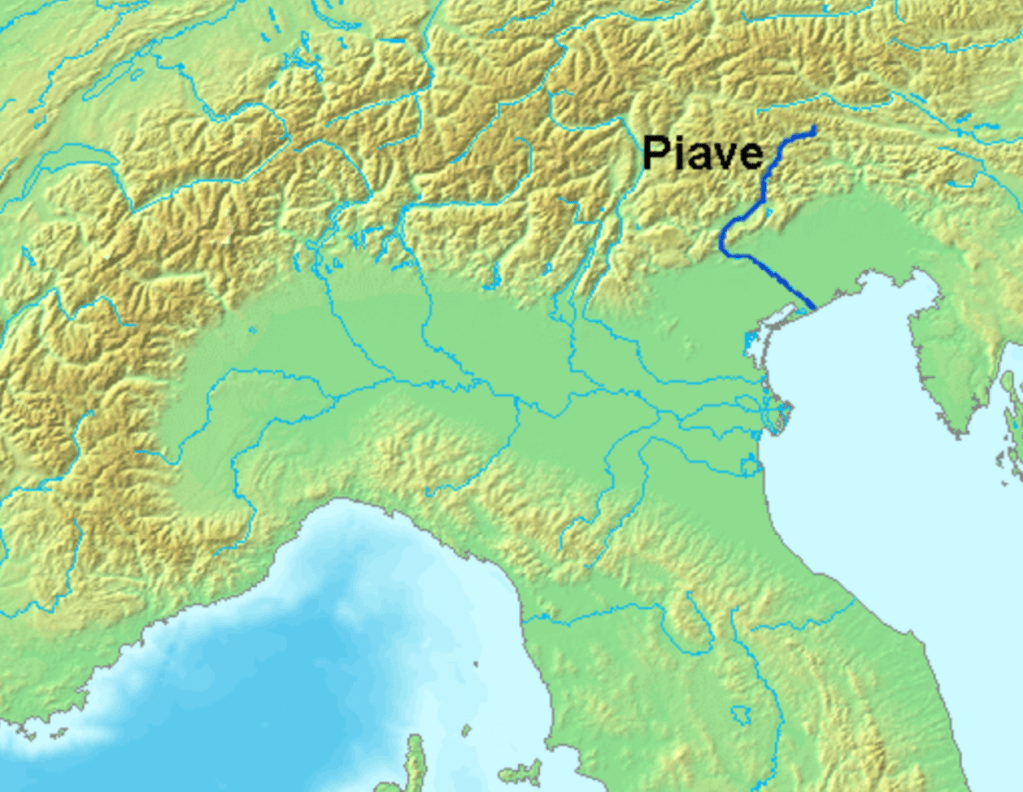
The course of the River Piave, which was also the main defensive line of the Italian army between 1917-1918 The Austrians were on the other bank, but the fast current of the river was a sufficient barrier to prevent any crossing. A call for volunteers, who were good swimmers, was made in our battalion. Although I could swim, I didn’t feel I could place myself in that category, and so kept quiet – the advice always given to a young soldier was in my mind – ‘Never volunteer for anything.’ Those who had done so made several attempts to ford the river, but only succeeded in reaching an island close to our side, and so the idea of trying to make contact with the enemy was finally given up.
One incident during our stay in these trenches always remained in my memory. After Arthur Kirby’s death I mentioned that I was sent, direct from the publishers, the newspaper the Observer. Our company sergeant major also received the paper, but on one particular day, when we were in the front line, his paper didn’t arrive, and he sent his batman to ask me if I would let him have mine. I handed it over and thought no more about it. That same day, in the evening, I was on duty in the signals dugout when the sergeant major’s batman called again, and said the sergeant major would like to see me. I asked Bert Pratley to take over and went along the trench to the sergeant major’s dugout. He invited me in, thanked me for the paper, and asked his batman to make some hot rum. This was wonderful stuff, and I sat down and enjoyed the full cup which was handed to me. Army rum was very potent stuff – even the tiny tot we were given at times took some drinking – but this hot cup-full was my undoing.
I thanked the sergeant major, took my paper, and went out into the cold evening air of the trench, and staggered along to our little signal dugout. I pushed Bert Pratley out of the way, told him I was on duty, but Henry got hold of me, and gave me my supper – half a cold Macconachie. That was enough, and I went out to the trench to be sick. When I came back I fell flat on face, and stayed there until the next morning. What would have happened if an officer had found me I hate to think – for to be in such a state in the front-line trench with a war on must have constituted a crime of great magnitude.
The British Army issued its rum ration in ceramic jars that usually held one or two gallons. The jars were stamped ‘SRD’ which stood for ‘Supply Reserve Depot’, the troops often joked that this stood for either, ‘Service Rum Diluted’ or even more cynically, ‘Seldom Reaches Destination’ As far as we were concerned, however, compared to France, this wasn’t a war at all. Nobody fired a shot, no guns were heard, and peace seemed to reign over all. We did three weeks occupation of the Piave right bank, and then said goodbye to it to begin some more marching, until we came to rest in the end in a little town called Santa Maria de Non. This was a lovely little place, and I fell quite in love with it, the nae itself, and the good peasants, who treated us so kindly. We became friendly with an Italian family, very poor, but very charming, and we accepted their gifts of polenta and vino, neither of which we liked but couldn’t refuse. The polenta was made out of maize flour and seemed their staple diet while the red wine was very vinegary. In return we offered them our white bread and tins of bully beef which was, to them, luxury indeed.
It was at Santa Maria de Non that I felt troubled at not being able to go to Confession and Communion. Since we had left France, there had been no sign of a Roman Catholic chaplain, though of course we had been able to get to Mass when we were in any Italian village or town. When we arrived in Italy each battalion had assigned to it an interpreter – ours was a very smart Bersaglieri complete with broad brimmed hat and feather. (If previously I have called the Italian soldier a sloppy, untidy individual, I must say here that this description did not apply to the Bersaglieri, who were idolised by the people, and were a credit to any army.) I asked our interpreter if it were possible to go to Confession at the little church in the town, as I wished to make my Easter Duty. He said he would see the parish priest and make what arrangements he could. Next morning I was in the Confessional box, saying the Confiteor in Latin, telling my sins in English which the priest couldn’t understand, and completing it all with an act of Contrition in English, and waiting for absolution which I received in Latin from the priest. After that I went to Holy Communion, and left the church perfectly happy.
Editor’s note: The Bersaglieri are a special infantry unit of the Italian Army, ‘Bersaglieri’ means ‘Marksmen’ in English. They were always a high-mobility unit and are distinctive by the wide-brimmed hats they wear decorated with black capercaillie feathers, today however, this is only worn with their dress uniforms. The feathers are usually now applied to their combat helmets. Another distinctive aspect of the Bersaglieri are the fast jogging pace that they keep on parade rather than conventional marching.
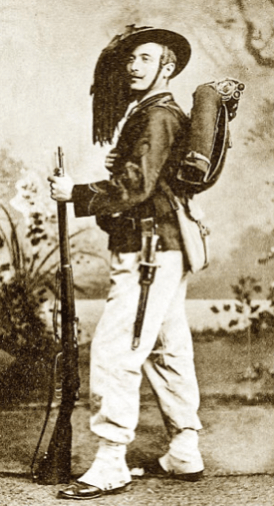
A Bersaglieri soldier in 1900 On the Sunday afternoon at Santa Maria our band entertained us and the people of the town, in the square, and it was there that I heard for the first time O Sole Mio, which after the war was made famous by the recording sung by Gigli. Santa Maria had therefore many memories for me – I never found out what the ‘de Non’ meant – and I was sorry in later years that I had not gone back to revisit it. No doubt I would have been disappointed, so perhaps it was better left as a dream.
Editor’s note: The words ‘de non’ that puzzled Jimmy derives from the Latin ‘ad nonum’ indicating a location nine miles from Padua.
Our next move was to Galsignano where there were some hills, and there we practised some hill climbing to get ourselves fit for our trips up the mountains which seemed to be about due. My chief recollection of this training is of a monotonous knee bending and stretching three hundred times each morning in order to strengthen the muscles we would be using on the climb. While we were at Galsignano, a party of us got leave to go into the town of Padova (Editor’s note: Padua in English) by the usual method of getting a lift on a lorry. I, more than the others, was delighted to get this chance for I don’t suppose Saint Anthony of Padua had entered their heads when they applied for permission.
Asiago Plateau.
From Galsignano then, in the middle of April, we began to move towards the Asiago Plateau, and after five days marching reached the foothills at Valle di Sopra. We had a short rest there, and then took to the mule tracks about ten o’clock in the evening, climbing for twenty minutes, and resting for ten, until we finally reached the top, leaving much of ourselves behind in liquid form, for although it was night time, it was extremely warm work. We stopped at some huts at a place called Granezza, a spot we later on grew to know very well. The transport lines were established at a place further down the mountains having come by road, and from there pack horses carried equipment and rations the rest of the way to the camp. We didn’t see much of Granezza on that particular occasion , for the next day we took over the front-line facing the town of Asiago which was in the centre of the plateau and occupied by the Austrians. Granezza itself was some 4500 feet high, and to our amazement possessed a wonderfully level football ground, perhaps the only level couple of acres on the mountains. At the side of the ground was a small hut which was used as a chapel on Sundays, 8 o’clock for the Church of England, 9 o’clock for the Roman Catholics, and 10 o’clock for the Non-comformists. Before Mass our Chaplain used to sit at one end of a form and we would slide along to him to make our Confession. When all were heard, Mass would start, and we would be out before ten, to leave the hut free for the others to have their service. This of course only occurred when we were out of the front-line.
We seemed to have the best of the situation on the mountains, for while the trenches we occupied were in a forest of fir trees, the Austrians were exposed on the Asiago Plateau, and could only move at night time. Of course they also occupied the mountains which rose up on the north side of the plateau, and there, their heavy guns were set up. Everything was very quiet on this front, but our policy was to show the enemy that we meant business, and thus the peace which the Austrians had grown used to, was severely shattered, and the town of Asiago could hardly be called a haven of rest. The line hereabouts was a very peculiar one, for we later found that Granezza itself was much nearer to the Austrian front-line than the forward positions we had moved into. This was due to the fact that the line curved considerably at one point, and there the Austrians were only two and a half miles from the edge of the mountains we had ascended. Later on we discovered that the Austrians, from some of their observation posts, could see the colours of the jerseys when we played football in Granezza. This was told to us by Austrian prisoners whom we held after the Armistice. When asked why they didn’t send some shells over, they replied they hadn’t any to waste – I could hardly imagine the Germans of Passchendaele missing such a golden opportunity of showing their hate.
In the forest we could move about during daylight, and our first turn of duty in the line was a very pleasant one, and again we could hardly believe our good fortune in escaping from the miseries of France and Belgium, especially when we learnt from the papers of the German advance to the old front of 1915. I have spoken previously of the poor state of the Italian roads when we did our marching on the plains, but up here in the mountains we had to admire the skill of the Italian engineers, who had built wonderful roads up almost impossible precipices. Their trenches, too, through solid rock, were marvels of ingenuity, while at times, one could observe tunnels pierced through the rock face, offering shelter from any heavy shelling that might arise.
Our first spell in the mountains passed off without incident, and we rejoiced in the wonderful weather and were glad to get down to the ordinary business of signalling by telephone, without being disturbed by the constant breaking of communications through Minenwerfers pounding over us. Still we were not sorry to be relieved in the middle of May by the 23rd Division, and to return to civilisation on the plain of Lombardy. We marched in stages and came to rest in the town of Brogliano, where we were issued with sun helmets and new khaki drill uniform.
Football with the 145th Brigade.
While we were on the mountains, I was taken out of the line with George Daniels of A Company and sent back to the transport lines. There we were told that we had been selected to play for the 145th Brigade in a cup competition given by the Italian General under whose command the English Divisions were placed (editors note: The General to whom Jimmy is referring here was Marshal of Italy, General Armando Diaz OSSA, OSML, OMS, OCI). For two or three days before the first round was played, George and I were treated by the transport people as VIPs, and they even brought us our breakfast to bed each morning. We played the football match on the ground at Granezza and won it, and then we rejoiced with our friends in the front-line again. The conditions of the competition were that all games should be played on the mountains, but it turned out later on that the final had to be played down on the plains. We managed to reach this final, and it was while we were back on the plains that I was sent for to attend Battalion Headquarters. In the meantime, however, we had to withstand an Austrian attack on our position on the plateau, of which I will speak later, and in this battle Daniels was awarded the Military Medal. In addition he was given a stripe to go with it and thus became Lance Corporal George Daniels MM.
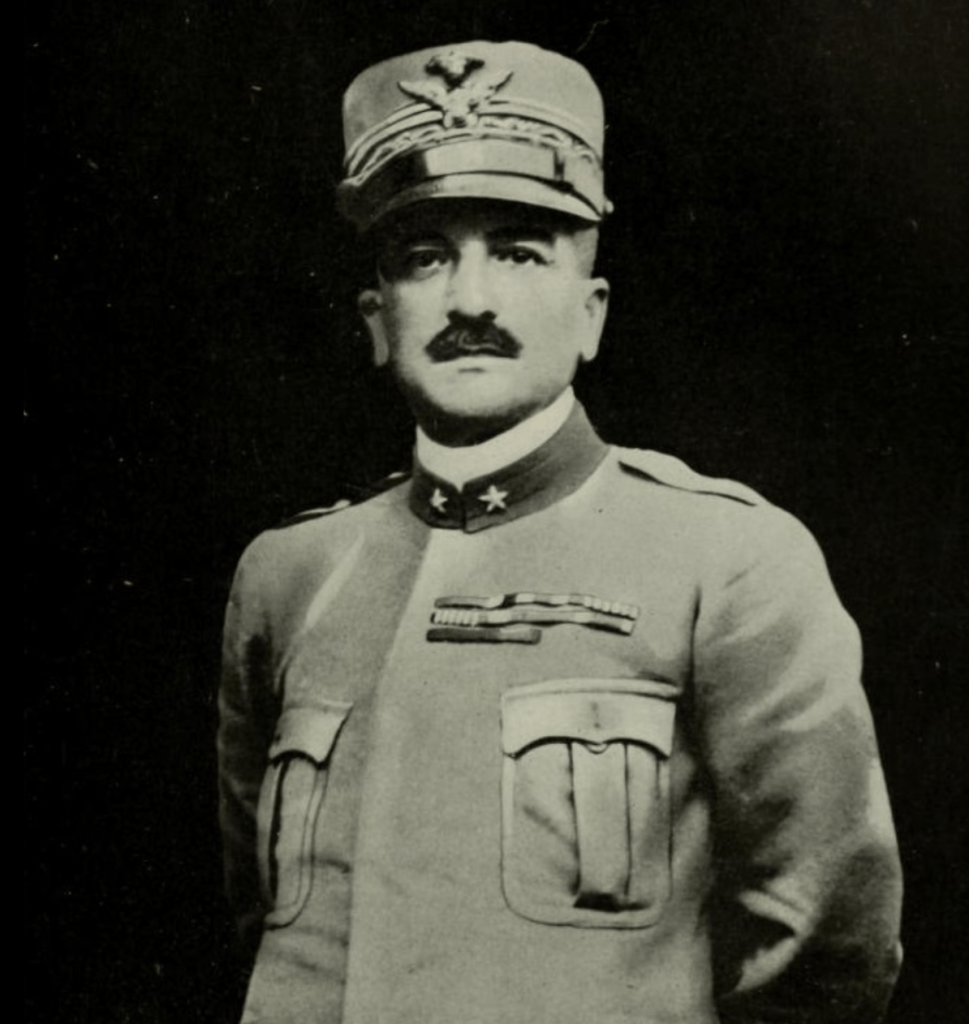
Marshal of Italy, General Armando Diaz OSSA, OSML, OMS, OCI, (5th December 1861 – 28 February 1928) George was one of the great characters of this world. As a footballer some 5’ 6” tall, and less than 10 stone in weight, he looked the most unlikely player to be a full back, but there was no question of his brilliance, and he was able to hold up any forward line against which he played. I operated in front of him at left half, and no doubt was able to take some share in the reflected glory. It was as a man, though, that George was unique, and he was forever getting into trouble. As the only two members of the Oxfords in the brigade side, it was natural that we should feel close to one another, and he used to regale me with many stories of his life in the army, even before he joined our battalion. It was no surprise, therefore, when I reported to Battalion Headquarters, before I proceeded to join the Brigade team for the final training, to find the Regimental Sergeant Major outside HQ with a sad tale to tell. George was in trouble again, and there was considerable doubt whether the Colonel would allow him to play. The RSM left me outside, and went back to the orderly room. Some time later he came out to me again – “It’s alright” he said, “the Colonel’s let him off”. Then I got the story – “What am I to do with you?” said the Colonel to Lance Corporal Daniels. “Here you are, chosen for the Brigade team, and bringing honour to the battalion, and yet at the same time causing annoyance to me and the officers in your company. I am at a loss to know what to do”. “Take these”, said Lance Corporal Daniels, and he tore from his sleeve the stripes of his rank, and thus demoted himself to Private once again. With a sigh the Colonel agreed, and George came out to join me, and off we went to the village where Brigade HQ had its being, and where we were to train for a week.
George was later on to gain a second Military Medal for bravery, and even the presentation of that ribbon was to produce a typical Daniels story. Medals themselves were presented only in England, but the ribbon was pinned on the recipient’s uniform at a special parade by a visiting General. George’s MM ribbon had come off with his stripes – he didn’t like decorations of any kind – and so when he advanced to receive the ribbon of the bar to the Military Medal, the General read out the citation, “Private George Daniels, bar to the Military Medal”. George’s chest was devoid of any decoration – “Where is your other ribbon?” said the General. “Wore out” said George. Without further remark the General pinned on the new MM and bar ribbon and George retired. The parade over and George back among his friends, off came the new ribbon, and no one saw it again.
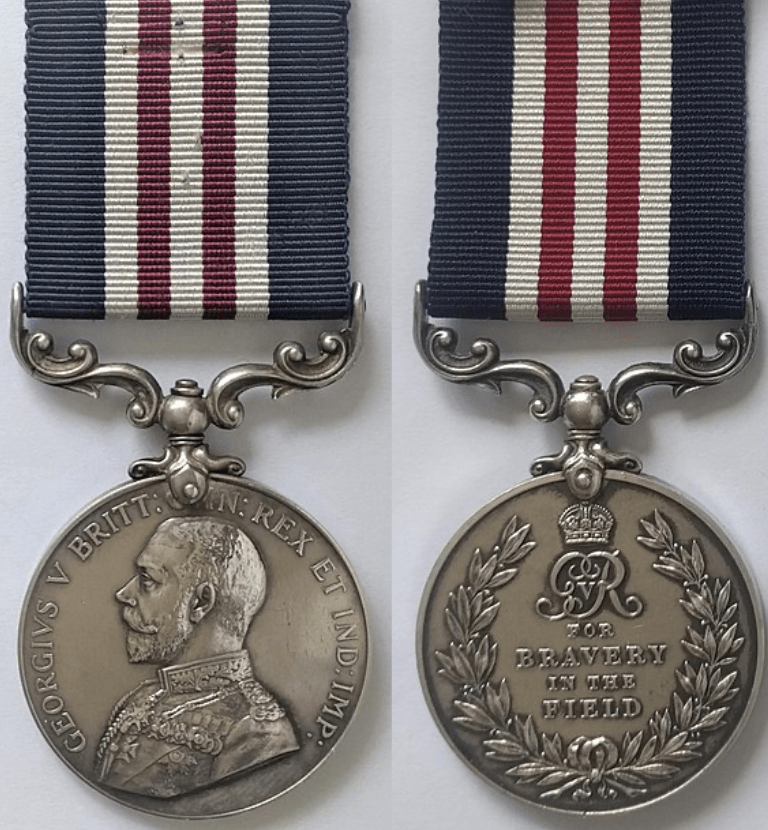
The Military Medal, awarded for acts of gallantry and devotion to duty under fire The last time I saw George was after the Armistice when he was being marched to BHQ by a sergeant who had put him on a charge. The night before, George came into his billet after roll call, and was marked absent. The next morning he was taken before his Company Commander, who awarded him one day’s CB, when George had defended himself by saying he was on the lavatory when roll callas held. One day’s CB meant that he was not really being punished, but that the charge was upheld, and he had been found guilty. George, however, refused to accept the punishment, and so was put under arrest, and taken to the Commanding Officer who gave him the same punishment. George had made his point, caused as much trouble as he could, and was satisfied. We were playing with a football as George passed us still under escort, on his way back to the company. “Let’s have a kick?” he said to the sergeant, and the kindly sergeant, knowing George, gave him five minutes with us, before he took him once again under his wing. (Editors note: CB in British Army terminology means ‘Confined to Barracks’, it is colloquially known by soldiers as ‘jankers’. It is an official punishment for a minor breach of discipline, as opposed to the more severe punishment of ‘detention’ which would be given for a more serious or criminal offence).
To return to the cup final – we enjoyed our week’s trading at Brigade HQ under the eye of our captain Sergeant Wilson DCM, MM, of the Royal Berkshires, who had played for Reading in peace time. He was a very fine chap and made our training a holiday. The match was timed to start at 2000 hours as it was so hot during the day, but as evening approached, heavy rain began to fall, and this continued all through the game. We lost the final 1-0, but the outstanding memory of this match to me was the sight of our Divisional General standing on the touchline throughout the play while close by was his car into which he could easily have escaped the rain.
I have written about the Brigade football competition as a complete story, but from the first round to the final some two months elapsed, and during that period much was to happen. We moved up the mountains once again from Brogliano, and relieved the 23rd Division who had previously taken over from us. In the meantime I had been transferred to Headquarters Company, but whether this was considered to be promotion of not I never knew. It certainly did not bring me any more pay, nor seniority, but I got to know the signallers of HQ so much better. In command was Sergeant Garrett, known as ‘Whipper’ to his friends. Corporal Cecil Launchbury, Lance Corporal Seloc Coles, Lance Corporal C. C. Gray MM in charge of the linesmen, Charlie King, Joe King, Dummy Pettitt, Bunny Hunnyball, Ike Ingham, Joe Grimshaw, Harvey White and Harry Gilliver. They were a fine lot of chaps, and I felt I was lucky to have been chosen to serve with them. Quite a number had been at Teacher Training College at Culham, just outside Oxford, and while there had joined the Territorials as part of their training. Thus when war was declared in August 1914, they automatically became part of the fighting forces, and after service in Writtle, Essex, they left England with the battalion to become part of the BEF in France in March 1915.
Austrian Attack.
Thus when we took over the front-line again in the mountains, I had to take part in sending messages by ‘Fullerphone’ in Morse to Brigade itself and to our own four companies. In receiving from Brigade, I found that messages were speeded up, and I had to adjust myself accordingly, particularly as signallers in Brigade were Royal Engineers and probably had worked in the Postal Service in peace time. This applied more so to Division, and on the rare occasions I had to contact them, I was utterly lost both by the speed and the abbreviations they used. For example, ‘td’ for ‘told’, ‘wd’ for ‘would’ etc. However, I was not left long to contact Brigade by phone, for we had been in the line only a few days when we were awakened on the morning of the 15th June by a most tremendous bombardment of our position. Fortunately, we were situated in a kind of sunken road, and this helped a great deal, but poor Ceci Gray was killed early on when examining our lines to the various stations. Ceci (C. C.) was a very fine chap, and everyone thought the world of him, and his death was a sad blow. He had gained his Military Medal during our attack at Ypres, for his great work in trying to keep communications going while wires were being destroyed by shell fire. I hadn’t got to know him very well during my short time on HQ but I felt his loss none the less.
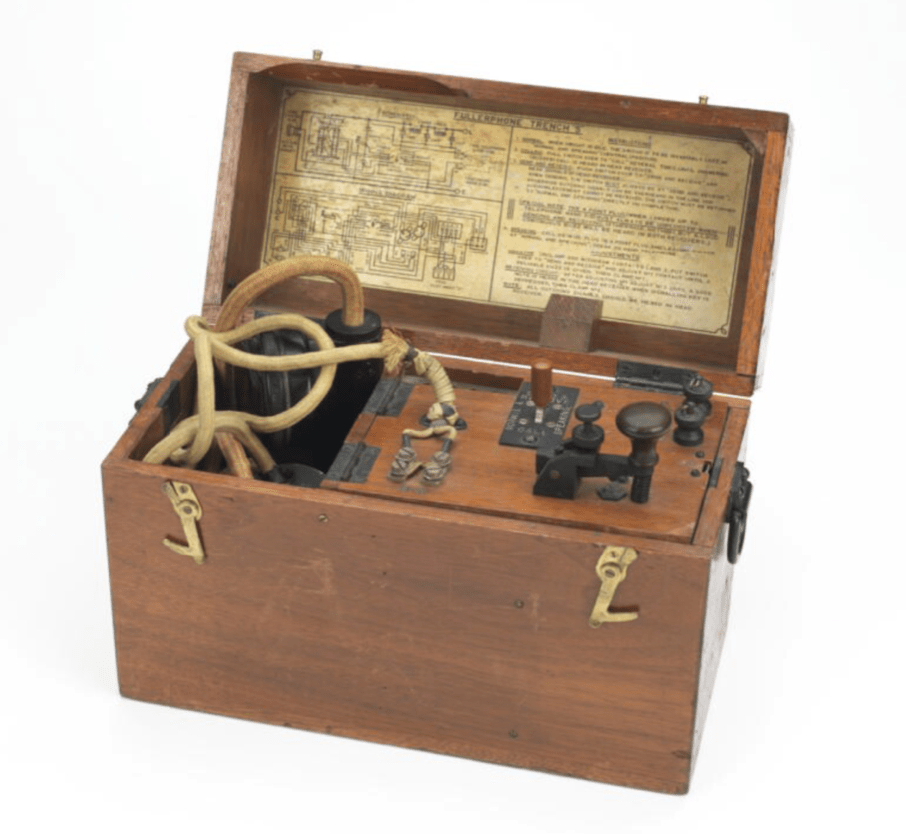
An example of a First World War Fullerphone Editor’s note: The Fullerphone was a First World War, British Army field telephone. It was devised in 1915 by Captain (later Major General A. C. Fuller) of the Royal Engineers’ Signal Service. They were a Direct Current (DC) Morse telegraph system, used in the trenches for communicating between Company and Battalion Headquarters. An important feature of the Fullerphone was that its transmissions were almost immune from being overheard, making them particularly suitable for use in forward battle areas.
We were very short-handed at the time of the Austrian attack on our position, for Whipper Garrett was on leave, and Ces Launchbury was on a signals course, so Seloc Coles (Seloc is Coles spelt backwards) was in charge of communications on this day. We did have a Signals Officer appointed some time before, but he always went in the line with his company. I had known him better as the second Catholic officer we had had in the battalion. Unfortunately he, too, was killed on this day, his name was Lieutenant Buttery.
Seloc Coles took charge of the situation we were in by sending Joe King and me to try to get in touch with Brigade by means of a signalling lamp. These lamps had a very limited range, and we weren’t very optimistic about our success. We took up our position on the highest possible site available and began calling Brigade. To our astonishment we got an answering call from a spot some two miles back, and for the next three hours spent our time sending and receiving messages. I always smile when I remember the first message we received from Brigade. “You will be attacked at dawn”. Somehow we had an idea we were being attacked and didn’t want anyone from far back to tell us so. Apparently a prisoner had been captured by a patrol during the night, and while being investigated he had revealed the enemy plans.
It was rather awkward running the station with only two men, for one had to read and the other write down, but as there was no one to take the messages back to the Commanding Officer we had to suspend operations after we had received a number of messages. Besides which Joe, a brilliant reader of Morse on the telephone didn’t like the lamp – they hadn’t had much practice while they were in France – and so I had to do all the reading which became a bit of a strain after a time, especially as the bombardment was still going on. Joe took the first lot of five messages in, and received some from the Colonel to send back to Brigade. While he was gone, and Brigade told to wait, I was able to look at the country around me. On my right was a road leading from the front to the Casualty Clearing Station in the rear, and down that road I could see a Royal Army Medical Corps ambulance going up and down with the wounded, while the road was being pounded by heavy shellfire. In the distance was a huge billow of smoke rising into the sky. I learnt later that an ammunition dump of ours at the crossroads called Handley Cross had been blown up. I often wondered later on if the driver of that ambulance had ever been rewarded for the wonderful job he did.
Anyway Joe and I continued our contact with Brigade for three hours, when we were glad to be relieved. When I got back to the sunken road, I saw quite a number of Austrians who had been captured, being taken back behind our lines. For the most part they were quite young and seemed a nice lot of chaps – probably scared, for they had always been told by their German allies that the British never took prisoners – they killed anyone unlucky enough to be captured. Somehow or other I lost Joe and found myself with seven others (orderlies, officers servants, and cooks) in a tiny bit of a trench, about five foot deep, covering a glade in the wood. No sooner had I got in this trench, than I heard a voice shouting “Jimmy, Jimmy”. Some yards away were a couple of our men lying on the ground, and one of them was calling me. I went over to them – both of them were wounded and I recognised one of them as Mike Callghan, the A Company Catholic, who was so often missing on church parade when we were in France. He told me he was paralysed and couldn’t move and begged me to get a stretcher for each of them. I went back to the sunken road and fortunately found some stretcher-bearers who came and took both of the wounded men away. I was sorry to learn later that Callaghan died of his wounds, but there was some consolation to know that he wanted me when he was in trouble.
I went back to the little trench and later on we were visited by Major Pickford who handed us some extra rounds of ammunition. “Don’t waste any” he said, “Use it carefully” – and at that moment some Austrians came into view from among the trees in front – “Steady” said Major P. “Five rounds rapid fire”, and forty bullets went from our rifles at these poor chaps. I must say I shot high, for in this position it seemed like murder. Our trench was now a target for a machine gun which opened up on our right, hidden in the trees which surrounded our glade which we were covering. It appeared to me that these gunners left their machine guns at times and returned to fire a few rounds – I remember feeling a whistle of wind passing my temple and fancied it must have come from a bullet quite close to me – I wondered if that machine gun could be captured by someone creeping through the undergrowth and waiting until no one was in attendance – at any rate the idea passed the time away for me. Later a solitary Austrian came into view – to me he seemed to be wandering about as if her were lost – we decided to hold our fire, and let him come nearer and then make him put his hands up, but one silly fellow fired at him and he fell with a look on his face as much as to say “What did you do that for?” Two of our party ran out and brought him in, and went through his pockets, but the rest of us left them to it – I noticed that again there was no firing from the machine gun.
During the late afternoon my theory was put to the test by Regimental Sergeant Major Buckingham, who had collected a party of details from HQ, lined them up in an attacking position on the ground, and then gave the command ‘Charge!’ Unfortunately, as they charged the machine gun opened up, and the attack came to nothing as they took whatever cover they could. (My idea had been to do the job quietly and sneak up to the gun). For this and other good work with the battalion, Regimental Sergeant Major Buckingham was later awarded the Military Cross.
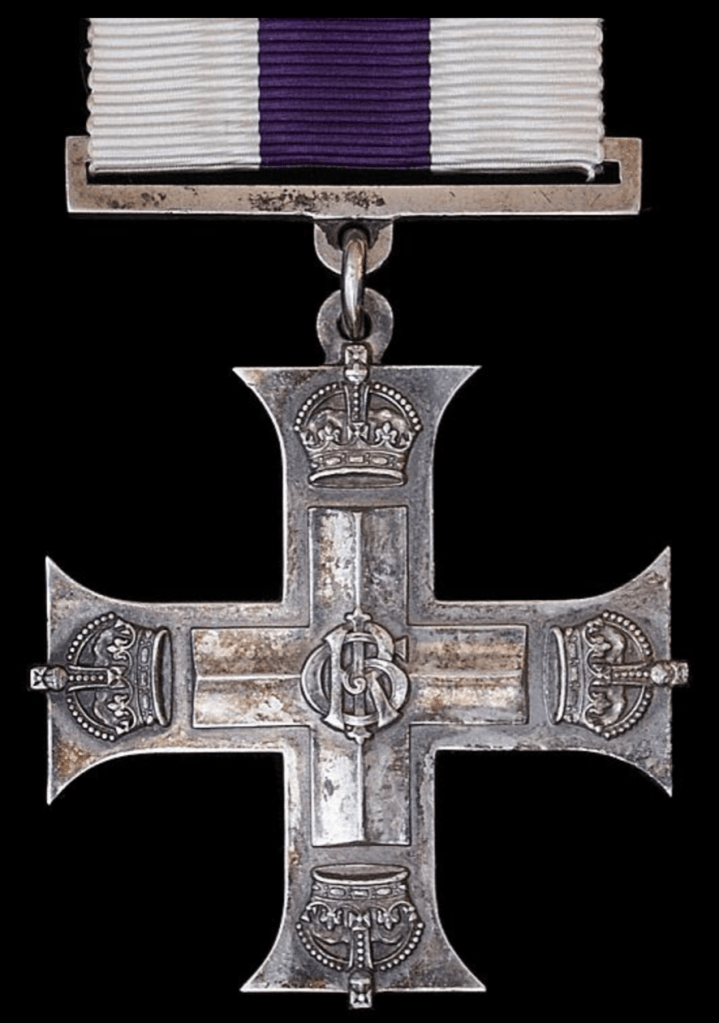
A King George V style Military Cross and ribbon. Awarded for ‘an act or acts of exemplary gallantry during active operations against the enemy on land’ Night fell, and there were no further alarms, and we learned that the Austrians had given up any further hopes of breaking through, and we, with the Royal Berkshires, retook our original positions which we had held before the bombardment of the day before. I left our little trench and returned to join the signals who had been wondering where I had got to. Our dead had been collected and laid out in rows prior to being taken back to Granezza for burial there.
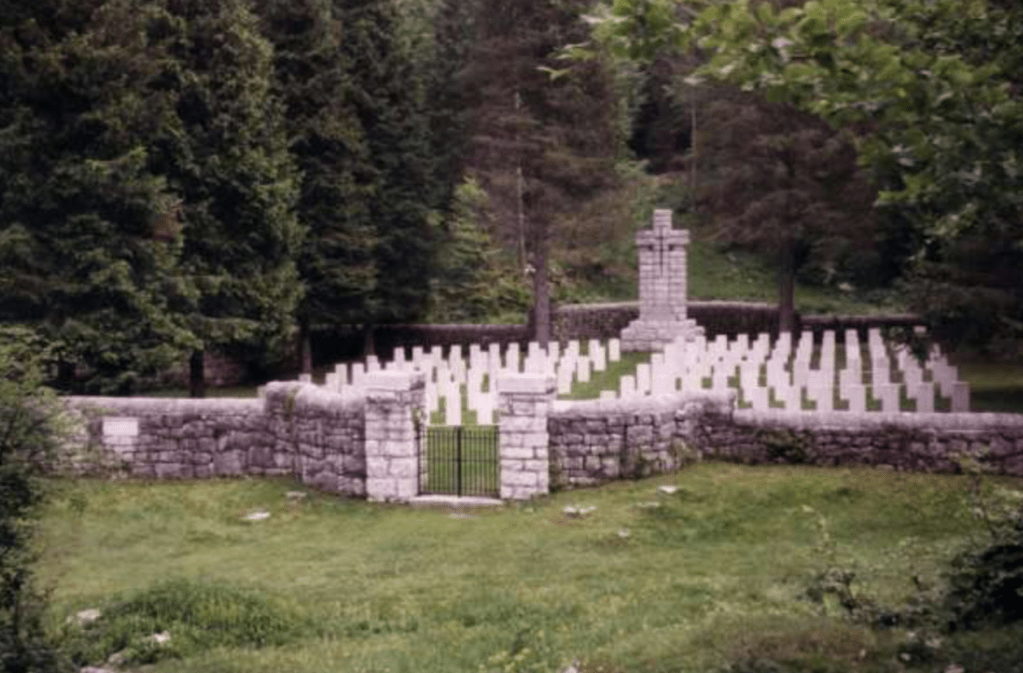
Granezza British Cemetery, province of Vincenza, Italy As we lined up to march back to support lines we were pleased to see that our Divisional General had come to inspect us. Major General Fanshaw had always been a popular figure, and his name was known and respected by all the regiments under his command. He praised us for our stubborn resistance under attack and congratulated us in preventing the enemy breaking through, for it was later discovered that the Austrians had intended to drive us off the mountains and to take control of the whole of the Plain of Lombardy. Despatches from the General Officer Commander-in-Chief (Italy) and G. O. C. in C. (British Troops), General Diaz, and Italian Army Despatch (in all of which the Oxford and Buckinghamshire Light Infantry were specially mentioned) indicated the ambitious nature of the enemy’s objectives. Our losses on that day were 6 officers and 48 other ranks killed, and 2 officers and 85 other ranks wounded, while 39 other ranks were taken prisoner during the first wave of the attack on the front-line.
We marched out of the front-line back past the blackened Handley Cross to a camp behind Divisional Headquarters, where we were to find our already depleted numbers further lessened by an attack of what we called Mountain Fever, probably some kind of influenza which later on raged through the British Isles causing untold misery. Sixty-seven of our men were taken to hospital but returned after a fairly short time there.
Editor’s note: The 1918 influenza pandemic (colloquially known as ‘Spanish Flu’ was the most severe pandemic in recent history. It was caused by an H1N1 virus with genes of avian origin. Although there is not universal consensus regarding where the virus originated, it spread worldwide during 1918-1919. It infected 500 million people around the world, including people on remote Pacific islands, and even in the Arctic. Probably 50 million, and possibly as many as 100 million people died. At the time, this was three to five percent of the Earth’s population. The nickname ‘Spanish Flu’ came about because wartime censors attempted to minimise reports of illness and mortality in Germany, Great Britain, France and the United States. However, the press in neutral Spain were free to report the epidemic’s effects without restriction, thereby giving the false impression that it originated there.
That night I was on telephone duty. Out of the line, officers could speak to one another, whereas in the line, only Morse could be used on the Fullerphone, which transferred direct current (DC) into indirect (or alternating) current (AC), and thus prevented the enemy picking it up on their listening-in posts. The phone rang and I answered it – the caller was the Divisional General who wished to speak to Colonel Bartlett. I called up Colonel Bartlett and put him through to the General. I then listened in to see that everything was going all right. The first words I heard made me keep the earphones to my ear, for the General said, “Oh Colonel Bartlett, I want you to recommend your Corporal Stratford for the Victoria Cross”. There was a slight pause, and Colonel Bartlett answered, “I am afraid I regard the Victoria Cross too highly for me to make such a recommendation. No doubt others have been awarded the VC for deeds comparable with that of Corporal Stratford, but I cannot let that influence me. No, I shall recommend Corporal Stratford for the Distinguished Conduct Medal.” I dropped the earphones, and waited until their conversation was finished. This was a story not to be told to anyone, for if it leaked out, only I could be responsible for it. Besides which I felt that Corporal Stratford must never know how near he had been to winning the VC, because the disappointment would have been too great. The Italians also honoured him by awarding him the Italian Silver Medal for Valour.
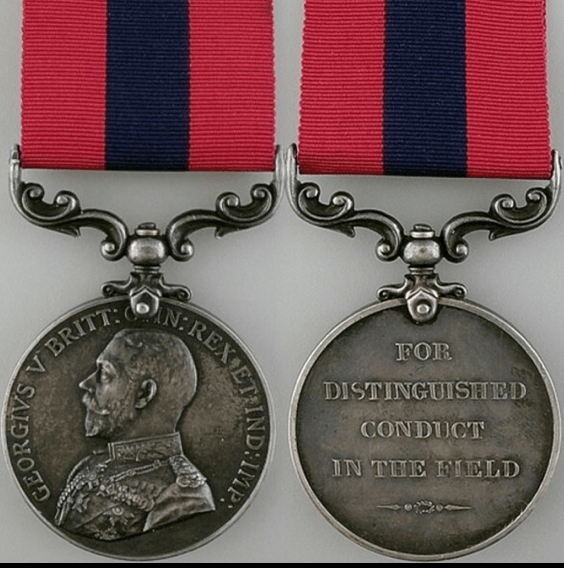
The King George V style Distinguished Conduct Medal 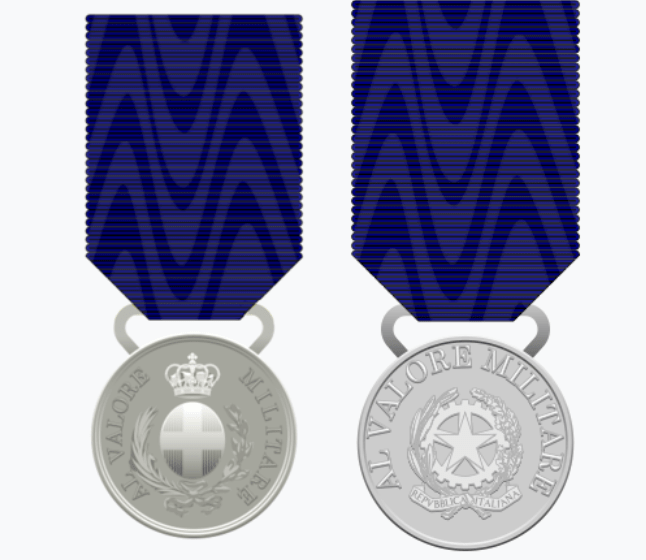
Italian Medaglia d’argento al valor militare, the Silver Medal of Military Valor (Royal version & Republican version) Before the Austrians launched their attack on the morning of the 15th June 1918, a patrol from the Durham Light Infantry on our right had been out in ‘No Man’s Land’. When the bombardment started they rushed to the nearest point in the British line, and so entered the spot where our A Company were entrenched. In charge of this patrol was a young lieutenant, and some weeks later I heard that he had been awarded the VC. There had been some strange stories of what went on in A Company that day. Captain Boyle was on leave at the time, and a junior officer was in charge, but he had been killed. Our A Company signals, with the exception of Henry had been taken prisoner, but Henry himself had been wounded and taken to hospital, finally finishing up in Marseilles, and it was some months later before he was fit to return to the battalion. Friends in A Company had told me that Henry was the one who should have been decorated but because he had been wounded he had been forgotten.

The Victoria Cross, awarded to those who display ‘…most conspicuous bravery, or some daring or pre-eminent act of valour or self sacrifice, or extreme devotion to duty in the presence of the enemy’. When Henry came back to the battalion, I asked him to tell me what had happened. He didn’t want to talk about it, but in the end he told me that this officer from the Durhams had run into A Company’s lines with his men, and had carried on running back to the rear lines to safety. “I stuck my bayonet into his chest” said Henry, “and told him that I would put it through him if he didn’t turn round and lead his men against the Austrians”. There was only one thing for him to do, and he did it, and with the aid of the rest of A company they held up the Austrian attack for some time, and the result was a fine piece of work for which someone recommended him for the VC. Henry, of course, was wounded in the meantime, and was carried away, and finally taken by ambulance to hospital. The young officer, I am sorry to say, did not live long to enjoy his Victoria Cross, for a month or two later he was killed in a skirmish with the enemy.
Editor’s note:I have researched the action to which Jimmy refers, however, out of respect for the young Lieutenant who was killed in the service of his King and country I don’t wish to name him here.
We rested for a week at a bivouac camp on the southern slopes of the mountain at Marziele. Here the weather was beautifully warm and fine, and we enjoyed ourselves lying out in the sun looking at the wonderful panorama below us. Seventy miles away we could see Venice and the Adriatic, while in front of us and to the right were the well known towns of Padova and Vicenza. Interspersed were the rivers Adige and Po, with small streams from the mountains running into them. An interesting experience then, though in these days of air travel, commonplace, was to look at the beautiful formations of cloud floating between us and the plains beneath. Sometimes they would rise higher, and then we would be enveloped in a mist, which put a stop to our enjoyment of the scene below.
After this week of bliss, we went once again down to the plains where we were joined by Sergeant Garrett and Corporal Launchbury. Both of them were rather annoyed by the fact that decorations had been awarded to many sections of the battalion after the Austrian attack, but no mention had been made of the signallers part in performing their duty at that time. Whipper tackled the Adjutant about it and expressed his regret that the signallers had been overlooked. I had been asked by him to give him an account of what I had done, and I told of getting in touch with Brigade, together with Joe King, by daylight lamp. He asked me what messages I had sent and what had been received. Who else he spoke to, I don’t know, but I heard afterwards that the Adjutant had said he was sorry but the recommendations had gone in and the battalion had received its quota. In passing, I might say that Colonel Bartlett gained a bar to his DSO, and Major Pickford added a DSO to his MC.
Lake Garda.
It was not long after this that I was called to the orderly room, together with a signaller from B Company, whose name I forget, and was told I had been granted a week’s holiday on Lago di Garda. We drew some of our accumulated pay, and entrained for Vincenza, and from there proceeded to Sermione on the southern shore of the lake, the north of which I believe was in the hands of the Austrians. Wandering around Sermione, it was interesting to read on tablets, let into walls, what a number of famous English poets thought of the beauty of the town and the lake. This, to me, was a wonderful week, away from all drills and duties, waited on at meal times by orderlies whose work it was to look after our interests. Lake Garda, at that period of my life, was the most beautiful thing I had seen, and the memory of those days in the sun has ever remained with me. The water was deep blue, and where we bathed each morning we could see the bottom of the lake to a depth of twenty feet or so. Large steamers sailed across the lake each day going from one town to another, and it seemed impossible to realise that a world war was going on.
One day my friend and I decided to hire a rowing boat and visit the town of Riva on the opposite side of the lake. If I have the name correct, this was the largest town on the lake, and we spent the afternoon looking round the various beauties of the place before returning to our boat to row back again to Sermione. The sun was still hot and there was not a cloud in the sky, so when we got to a spot somewhere in the middle of the lake, I decided to strip and have a swim round the boat for a few minutes. I hadn’t been long in the water when a boat manned by Italian fishermen came towards us, their many oars dipping in and out of the water at great speed. As they reached us they all cried, “Tempesta, tempesta!”, and went on their way as fast as they could towards the shore. To us it seemed as if they were playing a practical joke, but there wasn’t any particular reason for it, and so I climbed back in the boat, got dressed, and we rowed to Sermione without anything untoward happening. The sky was still blue, the lake calm, and the sun went peacefully down in the west – no storm appeared to spoil our evening.
It was not until several years later that I came across an article in a magazine giving a description of the beauties of Lake Garda. awards the end of the chapter, the writer said, “Lake Garda is one of the deepest lakes in Europe. At times, out of a blue sky, sudden storms occur for no obvious reason, and anything on the lake at the time is in great danger of being very badly smashed about”. This then was the reason these Italian fishermen were afraid, both for themselves, and for us – there must have been some slight indication in the atmosphere to warn them that a storm might occur. Fortunately for us they were wrong in their forecast.
Asiago.
Our holiday over, we rejoined the battalion back on the mountain, and it was just about this time that I did something of which I always felt rather proud. Headquarters signals had their station in a hut in which we all ate and slept. Close by was one of these escape tunnels which I have mentioned previously as great feats of Italian engineering. Signal lines were connected to a place inside the tunnel as well as to the one we ordinarily manned in our hut. The tunnel station was to be used only when there was great danger from shell fire outside. The signaller on duty in the hut, however, had to stay there with his telephone until final communication had been established with Brigade, and the four companies, inside the tunnel. Charlie King happened to be on duty one day, and the rest of us were sitting or lying around doing nothing in particular, when suddenly a terrific amount of shelling took place, and our position was decidedly unhealthy. There was a general rush for the safety of the tunnel, and as they all went out, I realised that Charlie would be left on his own. Although I was pretty scared, I decided that the least I could do was to stay with him. It was not long before the station inside the tunnel was in working order, and Charlie was told he could now leave the hut and take over under cover. Charlie King was perhaps, after Henry, the one person I liked best of all amongst the signallers, and I felt glad I had not let him down. Although he never mentioned it, in any shape or form, I always had a feeling that he always remembered what I had done.
Plain of Lombardy.
Before we came up the mountains on this occasion, we stayed in a little village down on the plaines. Here, as always, when out of the line, we did our parades in the morning, and if not on telephone duty, had the afternoons free. The weather was extremely hot, and just outside the village we discovered a stream which came racing down from the mountains to join one of the larger rivers in the Plain of Lombardy. Where we were, it was about a foot deep and as clear as crystal. The bed consisted of small boulders securely embedded in the soil, and the water dashed against these on its merry journey south. Here we would lie for hours on end, our arms embracing the boulders, for the stream was too rapid for us to stay still without support, and enjoy the bliss of feeling clean and almost free from those horrible lice which had been our unwelcome companions since we left the shores of Britain. In this village besides using the telephone, we were able to get in touch with Brigade by using a heliograph, and I still have a photograph taken by one of the villagers of our little station outside the local church. From this spot we actually started off a message to Oxford itself. I believe that after it was received by Brigade, it was sent on to Division, who had it transferred to the ordinary Italian Postal Service, and so on to England.
Leave.
Towards the end of August, I was told that my turn had come at last for me to go home on fourteen days leave. At this time we were once again on the plateau, and I had the doubtful pleasure of travelling down the mountains in an army lorry. As the road sloped down, it went by a series of hairpin bends, which the lorry could not take in one turn, and so it would stop on the edge, reverse, and then proceed along the next stretch of straight road, when the whole procedure would be repeated at the new corner. As we looked over the side we could see the remnants of other lorries not so fortunate as ours, which had made a mistake and toppled over the edge. It wasn’t a very good beginning to a leave, but luck and good driving brought us to the plains once again, and I was taken to the nearest railway station to begin an eight day journey to Liverpool, which I hadn’t seen for over eighteen months.
We passed through the Mont Cenis tunnel into France in the now familiar horse trucks, and my only recollections of the journey were to see the name Paris on one of the stations we stopped at, and to live with a number of soldiers from Lancashire, and not to understand a word they said when they were speaking to one another. To them, Liverpool was not in Lancashire, so it was not to be expected that their broad dialect was part of my native tongue. The boat trip across the Straits of Dover was peaceful and uneventful – so much different from the one I had undertaken when I first crossed to France. I put up in London for the night at the famous Services Hotel near Waterloo Station, and took an early train to Liverpool the next morning.
I was glad to be home once again, but tragedy was soon to come to us all after I had been back only a few days. Before we learnt of this I was invited to play for the Sefton Cricket Club against an army side, through the good offices of a friend of my father, Frank Edwards, who, from time to time, had sent welcome parcels of cigarettes out to me. I made a few runs, and performed sufficiently well to be congratulated by one of the greatest personalities of the Sefton Club, Teddy Roper. I was invited to play again the following Saturday, but owing to the sad tidings of my brother’s death in France, I had to let the Sefton Club know later that I couldn’t play.
It was a day or two after this cricket match that we heard that Gerald had been wounded badly in the abdomen, and had been taken to hospital. Then came three letters, one from an officer, a second from a sergeant, and a third from a particular friend, saying how sorry they were that Gerald had been killed. The following day brought another letter written by Gerald himself in hospital and dated after the other three, to say he had been wounded but hoped to be in Blighty soon. This letter raised our hopes, but they were dashed a day or so later when a letter came from the Catholic Chaplain in the hospital to say that Gerald had died on the 10th of September 1918, on the day he wrote the letter. Thus in those few days it was as though Gerald had died twice. Gerald was my Mother’s favourite son, and she never got over his death, at the age of nineteen. My elder brother, John, who had married the previous year, had been wounded when serving with the Grenadier Guards, and after a few months back in England, had returned to France. It was a common saying that this war caused more suffering to the Mothers of England, than it did to their children who were serving abroad. The soldiers, sailors, and airmen, knew of their periods of danger, and took joy in the occasions when they were free to relax, but those at home experienced the dread of any possibility of losing their loved ones during the whole time they were away.
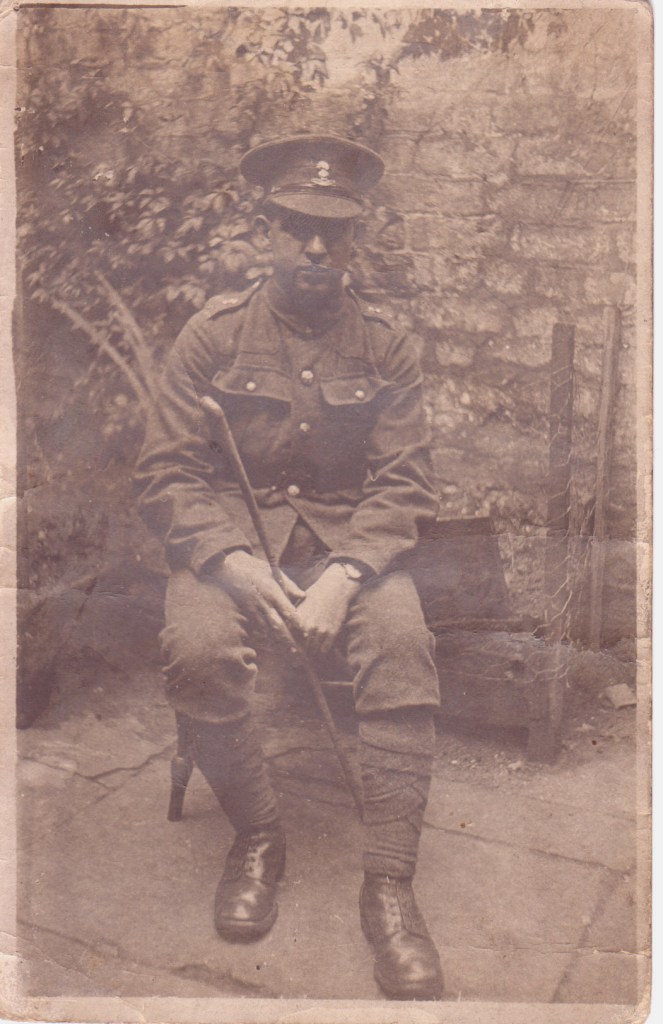
Jimmy’s younger brother, 26379 Private Gerald Killikelly (28th April 1899 – 10th September 1918), 7th Battalion, Royal Irish Regiment. My leave came to an end, and I said a sorrowful goodbye. My last recollection was, when walking through Lime Street to reach the station, a woman came up to me and said, “Are you going back to the battle front?” I said I was, and she almost cried and said, “God bless you and look after you”. It was a moment I carried back with me, and the incident remained with me during the years to come.
The battalion was still on the plateau when I returned. Waiting for me was a letter from my old school friend, Harry Goff, who was serving in France. He wrote to say how sorry he was to hear of Gerald’s death.
Not very long afterwards Whipper Garrett came to me one morning and said, “You haven’t been on duty during the night, have you Jimmy? I want you to go with Fred Grimshaw and join the scouts who are going on to the plateau to see if the rumour that the Austrians have retired and left the town of Asiago is correct. Take a drum of lacquered wire with you and a D III telephone.” Grimmer was one of the linesmen of HQ Signals, and I was responsible for the sending and receiving of any messages. We joined the scouts, who were a select body who kept Headquarters supplied with information of any movements of the enemy, and had their own observation post in the front-line. They made sorties at night in order to pick up any knowledge which would be of use to our commanding officer. In the Second World War, I suppose they would correspond to the Intelligent Corps, but in the First World War each battalion had its own little band of an officer, sergeant, and half a dozen men.
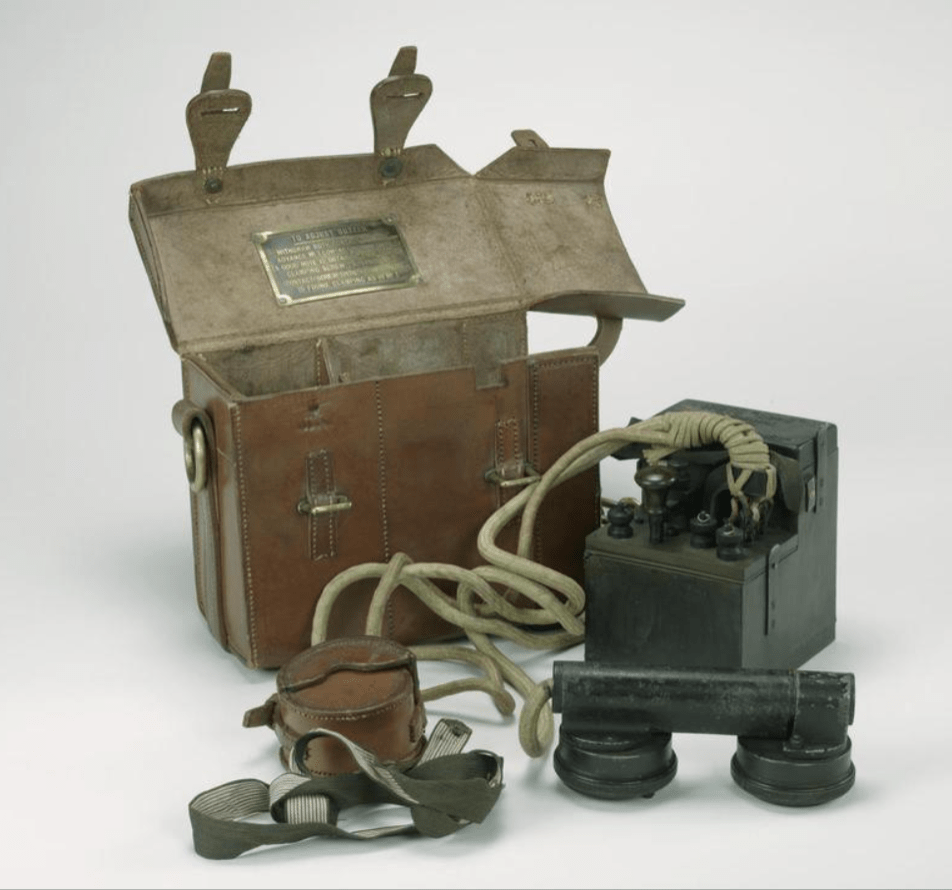
D mk. III field telephone set Editor’s note: The Telephone D Mk III was a portable telephone set designed for field use. The complete telephone consisted of leather case containing an instrument case together with a hand-set and a separate head receiver. The instrument case was divided into two compartments, one containing two cells (batteries) of the “S” or “X” size and the other, under an ebonite hinged lid, was the buzzer. On the upper side of the hinged lid were fitted a sending key, terminals for connecting the hand-set and head receiver and terminals for connecting the set to line and earth leads.
Under Lieutenant Foster and Sergeant Howells, we two signallers joined three other scouts on October 26th, and passed through the wire in front of our line and entered No Man’s Land. We unrolled our drum of signal wire as we proceeded, fastening it to any suitable spot, to prevent it being broken, for this wire was very thin indeed, and only used in special circumstances such as these, and then discarded after it had served its purpose. We reached Asiago without incident, and carefully entered the town, peering round corners, listening for noises, and examining any likely places where men could be hidden. It wasn’t exactly a pleasant job for we were pretty certain that we had been observed on our way to the town. Asiago had been badly battered about by our guns and the church in the centre of the town was just a ruin. The Austrians must have had a very rough time holding their position on the plateau, for they were under observation all the time during daylight. Why they did select such a front after their attack the previous year, beats all comprehension
Anyway there was no trace of any Austrian in the town of Asiago, and Lieutenant Foster wrote out a message to that effect, and I duly sent it to HQ. The reply shortly afterwards was a bit of a shock. “Carry on until fired upon”. We walked out of the town, and spreading ourselves out, made our way towards the group of mountains on the other side of the plateau. We had got a fair distance away from the town, we signallers still reeling out the wire, when a burst of machine gun fire whistled round about us. We threw ourselves down on the ground, and pressed ourselves as close to mother earth as we could, while the bullets seemed to be digging in at our feet. After a time the hail of lead stopped, and we lay where we were for some considerable time. Then Lieutenant Foster told us to crawl back towards our lines until we could find some better cover. None of us, amazingly enough, had been touched, and when we reached a favourable spot, Lieutenant Foster wrote out a message, telling of the machine gun fire, and giving an indication of where it had come from. I sent this off and waited anxiously for a reply. This came in due course, “Retire to Asiago town and await further instructions.” This we gladly did, and found ourselves as comfortable a resting place as possible in the shattered town.
When darkness came we realised that we hadn’t much to congratulate ourselves upon, for the Austrians must have thought that, by this time, Asiago had been taken over, and they proceeded to give us what they had had to put up with during the past few months. We had chosen a fairly good shelter, and apart from the lack of sleep, we didn’t come to any harm. Next morning A Company did take over, and some artillery men came to see the damage they had caused with their guns. “Where’s the bloody church chum?” asked one of them, and when we took them to it, and showed them the remnants of the church, he exclaimed, “Good old D Battery”, an answer to those who said the British didn’t fire on churches.
We had had nothing to eat for over twenty hours and were glad to retrace our steps to the battalion. Our line had by this time been rendered useless by the feet of those crossing the plateau, so we left it there to be a nuisance to anyone walking over it. When we got back there was a letter waiting for me to tell me that Harry Goff had been killed in France on October 3rd. I wasn’t in a good condition to receive such bad news after the experience of the last twenty-four hours, and I’m afraid I took this rather badly. Fortunately I was dog-tired, and fell fast asleep, and when I woke up and had something to eat, I felt better, and was able to to take it all in.
Two days later we joined the French on our right and attached the Austrian positions on the mountains on the other side of the plateau. There was a fairly stiff resistance as the Berkshires tried to go through the Val D’Assa, while we as a battalion, climbed higher up to try to surround the enemy from above the valley. Seloc Coles, Bunny Hunnyball, and I were given the job of trying to keep forward and Brigade positions in touch by using the Austrian lines of communication, but this wasn’t a great success. High up in the mountains we three followed the Austrian signal wires, tapping in at various points, and though at a few points we could get some faint response from our signals, there was little else we could do, and so in the end we decided to make our way forward in the hope of making contact with our section once again. We three appeared to be the only people moving at the height to which we had ascended, but we came upon evidence of previous Austrian occupation in the shape of heavy artillery at various points, all the guns having had their breaches removed to make them useless to their captors.
At one point we reached what appeared to have been a corps headquarters. It must have been evacuated in a great hurry, for if we had been able to have carried away the valuable instruments and material left behind, we would have had a small fortune. What we did discover, and this was more to the point, was a cask of fresh water, and trusting that the Austrians, unlike the Germans, would not have poisoned the water, we made a welcome brew of tea from our iron rations, and broke into our bully beef and biscuits, for we had been without food for some considerable time. From this position, high up in the mountains, on the following day, November 4th, we had a grandstand view of prisoners being taken down the Val D’Assa in their thousands, and during an interlude, watched a convoy of motor cars bearing the white flag, taking the token of surrender to our Army Headquarters. This was a wonderful sight, and after that we pressed on with all speed to see if we could join our companions with the battalion. Before that happened, however, we had another experience. As we came down the slopes of the mountain, we were suddenly confronted with hundreds of Austrian soldiers, smashing their rifles by hitting the ground with them. When they saw us three, they stopped their destruction, and then gave us a cordial welcome. They made us sit dow, and brought us cups of coffee, and lumps of toffee – apparently they had come across a store of coffee and sugar, and were making the most of their find. It was a strange situation – the vanquished entertaining their victors.
After this we pressed on and entered the Val D’Assa from which we descended into a plain, and came across the battalion encamped outside the well known town of Trento, after a journey of some twenty-five miles, ascending and descending. Here we were to wait until the Italian soldiers arrived, so that they could have the honour of ‘capturing’ the town. When they did arrive – in trucks – waving to us and shouting, “Buona Guerra Fini” (editor’s note: literally Great War Ended), they only received scowls and rude answers. We had found the Austrians much more to our liking than the Italian soldiers. In the camp, we were guarding some 120 Austrian officers, of whom quite a number could speak English, and I am sure they must have been amazed at the friendly atmosphere in which they were now placed. When they heard we were the Oxford Regiment, they asked if we all belonged to the University – we regretfully renounced the claim. They also told us that they never wished to fight the English, but the Germans, with their propaganda, had described the British as beasts, and warned them that if ever they were taken prisoner, they would be brutally murdered. We stayed in the camp acquiring souvenirs – Italian daggers – Austrian revolvers, new and complete with ammunition – these I brought back to Frank Edwards as thanks for his cigarettes, to add to his collection of war trophies.
After about four days outside Trento we began our march back to the plains, a journey of 50 miles. At Asiago we were met by our band and continued in triumph to Granezza where we stayed the night. The following day, 11th November 1918, a day we heard afterwards to be that on which the Armistice with the Germans was signed, saw us start a journey on which we carried all we possessed – two blankets, wooly jerkin – the lot – and said farewell to the mountains. Owing to the congestion of troops we did our usual two days journey to Thiene in on day. Going down the mountain with ‘Charlie’ on our backs was almost as bad as climbing up, and we finished up in Thiene after doing 25 miles thoroughly worn out – the 11th November had brought us little pleasure, except for the fact that our mountain climbing was now over. On the 12th November we continued our march to Valle di Sopra, which later proved to be our last resting place, and we were to learn that our marching days were over.
In Valle di Sopra we set up headquarters, and as it was quite a small place, the companies were spread out into little villages outside, about one kilometre away. The signal station was in a first floor room of a house, and our beds were spread round the centre of the floor occupied by a table, chair, and telephone. We were, as usual, in contact with Brigade and the four companies, and the war being over, conversation was allowed on the telephone. After our midday meal we used to meet all the other signallers in an estaminet and have a drink together. On one occasion some quarrel broke out, and Henry and I (Henry had by this time returned to A Company from the hospital in Marseilles) decided to get out and leave them to it. At the side of the road was a wayside railway, and every so often a train would leave for a town some eight kilometres away. When we got outside the estaminet , there was the train waiting, so we decided to get on it and travel to this town to see what it was like. When we got there we found there were no troops of any kind in the place, and after wandering round we went inside a cafe. There we bought some cognac and sat at a table drinking. After a time we thought it a good idea to get back to the battalion, but when we reached the spot where we hoped to get the train, we were told that the last rain had left at 1630. There didn’t seem any point then in returning at once, and so we went back to the cafe, and ordered some more cognac. At 2100 we felt it was time to make a move, so we began our trek back to Valle di Sopra, a walk of 8 kilometres or 5 miles. When we reached the village where A Company were stationed, Henry left me and I continued alone. It was 2300, long after lights out, and as I walked along, I wondered what I should say if I were stopped by the Military Police, and asked what I was doing. I looked up at the trees at the side of the road, and saw the telephone line passing through the branches, so I thought that would be a good excuse – there had been a break in the line, and I had been sent out to find it. However, I met no one, and finally reached the house in which our signal station was, to find it in darkness. I entered the room, switched on the light (all the Italian villages had electricity) and found everyone in bed. My bed was made, and as I got undressed my friends asked me where I’d been. “I’ve been on the A Company line”, I said. They pretended to be deaf, and asked again. “I’ve been on the A Company line”, I repeated. At length I got into bed and all was peace, but a moment later the telephone rang. The rule was that the station was closed at 2300, and no calls were answered after that time. But that night the rule meant nothing to me, and I jumped up and answered the phone, while the rest sat up and held their breath. The call was from the Brigadier General who wished to speak to Colonel Bartlett. I spoke to them both, put them through, and when they had finished I shut the station down again. The rest of the chaps sank back in bed with a sigh, marvelling at me.
To pass the time away before we were sent back to England, an inter-company football competition was instituted. One day I took the correct time round to Captain Boyle – this was done each day – and he asked me to come back to the company to play in this competition, and he would give me a stripe. I told him I did not want to leave HQ and was quite happy there, but though he asked me again, I still refused. It so happened that HQ company was drawn against A Company and when the match was played Captain Boyle was on the line. Each time I got the ball he shouted, “Kill that little so and so – he should be playing for you, not against you”. Anyway, I wasn’t hurt, and thus came my last association with Captain Boyle, who, though he shouted and fumed, was always a person I looked up to as a very brave leader. A few months previously he had been awarded the MC during a raid on the Austrian trenches, and I’m sure he, for one, deserved his decoration.
Christmas was not celebrated with the gusto of the previous year, and I have little recollection of the day, except hearing some tipsy soldiers singing ‘O come all ye faithful’ and loudly proclaiming ‘O come let’s bash the door in’ when they came to the chorus. The Catholic Church in Valle di Sopra always had a sung Mass each Sunday, and I can always picture a little orchestra of three or four violins in an alcove, providing the music instead of an organ. If I happened to be on duty on a Sunday morning, someone would always come along and say, “Do you want to go to church Jimmy? I’ll do your job”. Little things like that made me feel how lucky I had been to follow Tom Hartney into the Oxfordshire and Buckinghamshire Light Infantry.
Before the end of the year, I was paraded to return to England, for teachers were being given priority in the demobilisation that followed the armistice. I seem to remember being at one end of the Mont Cenis Tunnel in 1918, and coming out at the other in 1919. I reached England in quite a short time, and was sent to Oswestry in North Wales to complete my exit out of the army, and reached Liverpool on 3rd January 1919. A month’s leave was then awarded to me, and I ceased to be a member of HM Forces on 1st February 1919.
A certificate of disembodiment on demobilisation reached me later giving me the rank of Acting Corporal, the wrong year of my birth, but saying I was entitled to wear two blue chevrons for my overseas service. It denied, however that I had any specialist qualifications, when I did proudly possess a certificate, acknowledging me to be a signalling instructor. Finally, I was told to rejoin at a place called Chisledon in case of emergency.
The Years That Followed.
Although that part of my life as a soldier ended on the 1st February 1919, I feel that I should make some mention in conclusion of my association with the battalion after hostilities had become in the past. I have mentioned that my friendship with Henry has remained to this day, and this, combined with a strong feeling of pride in the regiment, and an ever remaining thankfulness of having been lucky enough to be numbered with some grand fellows, made it easy for me to join in any functions connected with the 1/4th when the war was over.
I attended the rejoicings of peace day with my fellow Oxfords, meeting so many old friends, and in the early years afterwards, renewed these friendships when I spent holidays with Henry in the south of England. One outstanding reunion was when a party of some three dozen made a battlefield pilgrimage to France and Belgium, visiting those places in which we had held the line.
The spirit of the battalion is shown by the regular attendant of the 1/4th Old Comrades Association at the Reunion Dinners in Oxford, which began in 1921, and except for the war period 1942-46, have continued uninterruptedly. Many important members of the battalion have officiated as Chairman at these dinners, Colonel Ovey, Colonel Bartlett, Captain Sherrington, Colonel Sir Bertram Long, Lord Bridges, Major Ley, etc. etc. It was the custom after the first few dinners for the officers and other ranks to share the honour every alternate year. Thus I greatly appreciated being invited to take the chair at a recent dinner, and it was not long afterwards that Henry, too, received his due reward for the long support he had given to the Association.
Addendum.
History of the Oxfordshire and Buckinghamshire Light Infantry.
Jimmy’s regiment was officially formed in 1881 when the 43rd and 52nd Regiments of Foot were combined as a result of the then Secretary of State for War Hugh Childers reforms, these renamed the numbered regiments of foot and county militia regiments of the British Army. In actual fact, the Regiment can trace its history back a further 140 years.
The 43rd Regiment of Foot was first raised in 1741 as Thomas Fowke’s Regiment of Foot. It saw its first actions in North America during the Seven Years War (1754–1763) fighting the French as part of General Wolfe’s force that captured Quebec. In 1751 the Regimental naming system was simplified, instead of naming after the current colonel each Regiment was assigned a ranked number according to the precedence therefore the Regiment became the 43rd Regiment of Foot. It was deployed to the West Indies in 1762 and took part in the capture of Martinique, St. Lucia and Havana.
The 52nd was first raised in 1755 by Colonel Hedworth Lambton as the 54th Regiment of Foot but was re-numbered as the 52nd in 1757. The 43rd then returned to North America during the American War of Independence (1775-1783) and was joined by the 52nd, fighting at the Battles of Lexington and Bunker Hill the 52nd returned to England but the 43rd continued to fight until the siege and surrender at Yorktown in 1781. In 1782 all British Regiments without Royal titles were awarded county titles in order to aid recruitment from that area therefore the Regiments became the 43rd (Monmouthshire) Regiment of Foot and 52nd (Oxfordshire) Regiment of Foot. The 52nd served for nine years in India from 1783, fighting during the Second and Third Anglo-Mysore Wars at the Siege of Cannanore, the battle of Seringapatam, Bangalore and Arakere, the assault on Savandroog and assault on Pondicherry.
The 43rd returned to the West Indies during the French Revolutionary Wars (1792–1802) and once again captured Martinique and St. Lucia, but were defeated at Guadaloupe in 1794. In 1803 both Regiments were re-trained and re-fitted as a Light Infantry unit and joined the 95th Regiments to form the first Corps of Light Infantry. Light Infantry provide a skirmishing screen ahead of the main body of infantry in order to delay the enemy advance. The 43rd was part of a force which captured the entire Danish Fleet at the Battle of Copenhagen (1807). In 1795 the 52nd were deployed to capture the Dutch colony of Ceylon (now Sri Lanka).
During the Peninsular War both Regiments fought at the Battles of Vimiera, Corunna, Busaco, Fuentes d’Onor, Ciudad Rodrigo, Badajos, Salamanca, Vittoria, Pyrenees, Nivelle, Nive, Orthes, Toulouse and Peninsula. Both also took part in the unsuccessful Walcheren Expedition (1809) during the War of the Fifth Coalition (1809), where the Regiment suffered greatly from Walcheren fever (thought to be a combination of malaria and typhus). The 52nd returned to the Peninsular to fight at the Battle of Waterloo (1815).
The 52nd was then on garrison duties in Canada from 1823 until 1845 with a brief spell in Barbados in 1842. After a period of 15 years of garrison duties on the home front, the 43rd was once again in action in Canada from 1836 suppressing the Lower Canada Rebellion (1837-1838), when armed rebels tried to establish the independent republics of Quebec and Ontario. In 1851 the 43rd went on to served in South Africa during the Cape Frontier Wars (1811-1858), when the native Xhosa tribes rose in armed rebellion against continuing European rule. Both Regiments went on to serve during the Indian Rebellion of 1857 fighting at the Battle of Delhi. From 1863 the 43rd took part in the New Zealand Land Wars (1845-1872), storming the Gate Pah and the assault on fort Te Ranga.
In 1881 the 52nd and 43rd were amalgamated as part of the Childers Reforms which restructured the British army infantry Regiments into a network of multi-battalion Regiments of two regular and two militia battalions, to become the Oxfordshire Light Infantry. The newly formed Regiment went on to serve in the Tirah Expedition (1897–1898) on the North-West Frontier and the Second Boer War (1899–1902) fighting at Paardeberg as well as two World Wars.
In 1908 the Regiment was re-titled as the Oxfordshire and Buckinghamshire Light Infantry. In 1958 the Regiment was merged with The Rifle Brigade (Prince Consort’s Own) and the Kings Royal Rifle Corps to form The Green Jackets Brigade. In 1966 these three Regiments became the three battalions of the Royal Green Jackets and in 2007 were further merged with the Devonshire and Dorset Light Infantry, The Light Infantry and The Royal Gloucestershire, Berkshire and Wiltshire Light Infantry to become The Rifles.
The Regiment During the First World War
Since 1815 the balance of power in Europe had been maintained by a series of treaties. In 1888 Kaiser Wilhelm II was crowned ‘German Emperor and King of Prussia’ and moved from a policy of maintaining the status quo to a more aggressive position. He did not renew a treaty with Russia, aligned Germany with the declining Austro-Hungarian Empire and started to build a Navy rivalling that of Britain. These actions greatly concerned Germany’s neighbours, who quickly forged new treaties and alliances in the event of war. On 28th June 1914 Franz Ferdinand the heir to the Austro-Hungarian throne was assassinated by the Bosnian-Serb nationalist group Young Bosnia who wanted pan-Serbian independence. Franz Joseph’s the Austro-Hungarian Emperor (with the backing of Germany) responded aggressively, presenting Serbia with an intentionally unacceptable ultimatum, to provoke Serbia into war. Serbia agreed to 8 of the 10 terms and on the 28th July 1914 the Austro-Hungarian Empire declared war on Serbia, producing a cascade effect across Europe. Russia bound by treaty to Serbia declared war with Austro-Hungary, Germany declared war with Russia and France declared war with Germany. Germany’s army crossed into neutral Belgium in order to reach Paris, forcing Britain to declare war with Germany (due to the Treaty of London (1839) whereby Britain agreed to defend Belgium in the event of invasion). By the 4th August 1914 Britain and much of Europe were pulled into a war which would last 1,566 days, cost 8,528,831 lives and 28,938,073 casualties or missing on both sides.
The Regiment raised 18 Battalions and was awarded 59 Battle Honours and 2 Victoria Crosses losing 5,880 men during the course of the War.
1st Battalion
04.08.1914 Stationed at Ahmednagar as part of the 17th Brigade of the 6th (Poona) Division.
07.11.1914 Deployed to Mesopotamia.
29.04.1916 Captured at Kut al Amara.
Jan 1916 A Provisional Battalion formed from reinforcements at Wadi as part of the 28th Brigade of the 7th Indian Division.
June 1916 Deployed to defend the Lines of Communication.
06.07.1916 Provisional Battalion became the 1st Battalion
19.10.1917 Transferred to the 50th Brigade of the 15th Indian Division.
31.10.1918 Ended the war at Hit N.W. of Baghdad, Mesopotamia.
2nd Battalion
04.08.1914 Stationed at Aldershot as part f the 5th Brigade of the 2nd Division.
14.08.1914 Mobilised for war and landed at Boulogne which engaged in various actions on the Western Front including;
1914
The Battle of Mons and the subsequent retreat, The Battle of the Marne, The Battle of the Aisne, First Battle of Ypres.
1915
Winter Operations 1914-15, The Battle of Festubert, The Battle of Loos.
1916
The Battle of Delville Wood, The Battle of the Ancre, Operations on the Ancre.
1917
The German retreat to the Hindenburg Line, The First Battle of the Scarpe, The Battle of Arleux, The Second Battle of the Scarpe, The Battle of Cambrai.
1918
The Battle of St Quentin, The Battle of Bapaume, The First Battle of Arras 1918, The Battle of Albert, The Second Battle of Bapaume, The Battle of Havrincourt, The Battle of the Canal du Nord, The Battle of Cambrai 1918, The Battle of the Selle.
11.11.1918 Ended the war at Villers Pol, France.
3rd (Reserve) Battalion
04.08.1914 Stationed at Oxford and then moved to Portsmouth.
Oct 1917 Moved to Dover until the end of the war.
1/4th Battalion Territorial Force
04.08.1914 Stationed at Oxford as part of the South Midland Brigade of the South Midland Division and then moved to Writtle near Chelmsford.
30.03.1915 Mobilised for war and landed at Boulogne.
May 1915 The formation became the 145th Brigade of the 48th Division which engaged in various actions on the Western Front including;
1916
The Battle of Albert, The Battle of Bazentin Ridge, The Battle of Pozieres Ridge, The Battle of the Ancre Heights, The Battle of the Ancre.
1917
The German Retreat to the Hindenburg Line, The Battle of Langemarck, The Battle of Polygon Wood, The Battle of Broodseinde, The Battle of Poelcapelle.
Nov 1917 Deployed to Italy to stiffen Italian resistance to enemy attack after a recent disaster at Caporetto.
1918
The Division held the front line sector at the Montello and then moved west, to the Asiago sector and then engaged in fighting on the Asiago Plateau, The Battle of the Vittoria Veneto in Val d’Assa.
04.11.1918 Ended the war near Trent, Austria.
1/1st Buckinghamshire Battalion Territorial Force
04.08.1914 Stationed at Aylesbury as part of the South Midland brigade of the South Midland Division then moved to Writtle near Chelmsford.
30.03.1915 Mobilised for war and landed at Boulogne.
May 1915 The formation became the 145th Brigade of the 48th Division which engaged in various actions on the Western Front including;
1916
The Battle of Albert, The Battle of Bazentin Ridge, The Battle of Pozieres Ridge, The Battle of the Ancre Heights, The Battle of the Ancre.
1917
The German Retreat to the Hindenburg Line, The Battle of Langemarck, The Battle of Polygon Wood, The Battle of Broodseinde, The Battle of Poelcapelle.
Nov 1917 Deployed to Italy to stiffen Italian resistance to enemy attack after a recent disaster at Caporetto.
1918
The Division held the front line sector at the Montello and then moved west, to the Asiago sector and then engaged in fighting on the Asiago Plateau, The Battle of the Vittoria Veneto in Val d’Assa.
04.11.1918 Ended the war near Trent, Austria.
2/4th Battalion Territorial Force
Sept 1914 Formed at Oxford.
Jane 1915 Moved to Northampton and joined the 184th Brigade of the 61st Division and then moved to Chelmsford.
Mar 1916 Moved to Salisbury Plain.
26.05.1916 Mobilised for war and landed at Havre and engaged in various actions on the Western Front including;
1916
The Attack at Fromelles (unsuccessful diversionary tactic during the Battle of the Somme).
1917
The Operations on the Ancre, The German Retreat to the Hindenburg Line, The Battle of Langemark, The German counter attacks.
1918
The Battle of St Quentin, The Actions at the Somme Crossings, The Battle of Estaires, The Battle of Hazebrouck, The Battle of Bethune, The Battle of the Selle, The Battle of Valenciennes.
11.11.1918 Ended the war S.E. of Valenciennes, France.
2/1st Buckinghamshire Battalion Territorial Force
Sept 1914 Formed at Aylesbury.
Jane 1915 Moved to Northampton and joined the 184th Brigade of the 61st Division and then moved to Chelmsford.
Mar 1916 Moved to Salisbury Plain.
26.05.1916 Mobilised for war and landed at Havre and engaged in various actions on the Western Front including;
1916
The Attack at Fromelles (unsuccessful diversionary tactic during the Battle of the Somme).
1917
The Operations on the Ancre, The German Retreat to the Hindenburg Line, The Battle of Langemark, The German counter attacks.
22.02.1918 Disbanded at Germaine with remaining personnel transferred to the 25th Entrenching Battalion.
3/4th & 31st Buckinghamshire Battalion Territorial Force
May & April 1915 Formed at Oxford and Aylesbury and then moved to Weston-super-Mare.
08.04.1916 Became the 4th (Reserve) and 1st Reserve Bucks. Battalions.
01.09.1916 Moved to Ludgershall the 4th absorbed the 1st as part of the south Midland Reserve Brigade territorial Force and then moved to Cheltenham.
Mach 1917 Moved to Catterick and then Seaton Delaval, Northumberland and remained there until the end of the war.
5th (Service) Battalion
Aug 1914 Formed at Oxford as part of the First New Army (K1) and then moved to Aldershot to join the 42nd Brigade of the 14th Division and then moved to Cranleigh, Guildford.
Feb 1915 Moved to Salamanca Barracks, Aldershot.
21.05.1915 Mobilised for war and landed at Boulogne and engaged in various actions on the Western Front including;
1915
The Action of Hooge, part of the first flamethrower attack by the Germans, The Second Attack on Bellewaarde.
1916
The Battle of Delville Wood, The Battle of Flers-Courcelette.
1917
The German retreat to the Hindenburg Line, The First Battle of the Scarpe, The Third Battle of the Scarpe, The Battle of Langemark, The First Battle of Passchendaele, The Second Battle of Passchendaele.
1918
The Battle of St Quentin, The Battle of the Avre.
27.04.1918 Reduced to cadre at Isbergues near Aire.
16.06.1918 Returned to England as part of the 16th Division;
The Final Advance in Artois.
20.06.1918 Absorbed by the 18th Gloucester’s at Clacton.
6th (Service) Battalion
Sept 1914 Formed at Oxford as part of the Second New Army (K2) and then moved to Aldershot to join the 60th Brigade of the 20th Division.
Mar 1915 Moved to Larkhill, Salisbury Plain.
22.07.1915 Mobilised for war and landed at Boulogne after trench familiarisation and training engaged in various actions on the Western front including;
1916
The Battle of Mount Sorrel, The Battle of Delville Wood, The Battle of Guillemont, The Battle of Flers-Courcelette, The Battle of Morval, The Battle of Le Transloy.
1917
The German retreat to the Hindenburg Line, The Battle of Langemarck, The Battle of the Menin Road Ridge, The Battle of Polygon Wood, The Cambrai Operations.
1918
The Battle of St Quentin, The actions at the Somme crossings, The Battle of Rosieres.
15.02.1918 Disbanded at La Clytte and remaining personnel transferred to the 2/4th 5th Battalion and 14th Entrenching Battalions
7th (Service) Battalion
Sept 1914 Formed at Oxford as part of the Third New Army (K3) and then moved to Codford St. Mary to join the 78th Brigade of the 26th Division.
April 1915 Moved back to Oxford and then on to Fovant and Longbridge Deverill.
21.09.1915 Mobilised for war and landed at Boulogne.
26.11.1915 Embarked for Macedonia from Marseilles arriving at Salonika and engaged in various actions against the Bulgarian Army including;
1916
The Battle of Horseshoe Hill.
1917
The Battles of Doiran.
1918
The Battle of Doiran and the Pursuit to the Strumica Valley.
30.09.1918 Ended the war east of Strumica, Macedonia.
8th (Service) Battalion (Pioneers)
Oct 1914 Formed at Oxford as part of the Third New Army (K3) and then moved to Codford St. Mary attached to the 26th Division and then moved back to Oxford.
25.01.1915 Became a Pioneer Battalion of the 26th Division and then moved to Sutton Veny.
19.09.1915 Mobilised for war and landed at Havre.
25.11.1915 Embarked for Salonika from Marseilles and engaged in various actions against the Bulgarian Army including;
1916
The Battle of Horseshoe Hill.
1917
The Battles of Doiran.
1918
The Battle of Doiran and the Pursuit to the Strumica Valley.
30.09.1918 Ended the war near Strumica, Macedonia.
9th (Reserve) Battalion
Oct 1914 Formed at Portsmouth as a service battalion of the Fourth New Army (K4) as part of the 96th Brigade of the 32nd Division.
10.04.1915 Moved to Wareham and became the 2nd Reserve Battalion and the 96th Brigade became the 8th Reserve Brigade.
01.09.1916 Became the 36th Training Reserve Battalion.
10th Battalion Territorial Force
01.01.1917 Formed in West Mersea from the 83rd Provisional Battalion of the 216th Brigade of the 72nd Division.
Jan 1917 Moved to Bedford and then Ipswich.
21.11.1917 Left the 72nd Division and disbanded.
11th (Garrison) Battalion
31.07.1918 Formed in France from the 2nd Garrison Battalion.
1st Garrison Battalion
Sept 1915 Formed at Portland
Feb 1916 Deployed to India where it remained.
2nd (Garrison) Battalion
July 1916 Formed at Portland and then deployed to France
13.07.1918 Became the 11th (Garrison) Battalion.
Gerald Killikelly.
I didn’t want to end this book without saying a few words about Jimmy’s younger brother Gerald. After all, it was my interest in him that started this project. Gerald was born on the 28th April 1899, in Fisher Street Liverpool to James and Mary Killikelly. Like Jimmy, Gerald attended the St. Francis Xavier School in Liverpool. After completing school, Gerald worked as a clerk in the office of William Johnson and Company, a Liverpool Fruit merchant until he enlisted in the Royal Dublin Fusiliers in 1917. Gerald’s original service number was 30228, however, he was evidently transferred to the Royal Irish Regiment at some point, his service number becoming 26379. Gerald’s transfer probably occurred on the 26th June 1918, as the 7th Battalion Royal Irish Regiment was reinforced by 500 men from the Royal Dublin Fusiliers on this date. By all accounts, Gerald was a gentle and serious boy, and like his older brother, apparently a talented football player. He was injured whilst serving with the 7th Battalion Royal Irish Regiment on the 4th September 1918 later dying from his wounds on the 10th September. The circumstances around Gerald’s injuries may never be known with certainty as the majority of service records for Private soldiers from the First world War were destroyed during the Blitz of the Second World War. What little records survive, approximately 40%, are in poor condition and are known as ‘the burnt records’, unfortunately, information concerning Gerald is not among them. What is known however, is that the 7th Battalion were relieved of front-line duty on the 2nd September 1918, two days before Gerald’s injury, and went into reserve at Dranoutre, where they remained until the 14th September, four days after Gerald’s death. Because of this, it is reasonable to assume that his injuries may have been sustained by artillery fire. It is upsetting to me, knowing that Gerald died only two months before the armistice and that he was probably in reserve, behind the front-line at the time of him being injured.
Gerald is buried at the British cemetery at Arnèke, which is located approximately 50km from Calais in northern France. The cemetery was established by the 13th Casualty Clearing Station which moved to Arnèke from the Proven area in October 1917. It was joined by the 10th and 44th Clearing Stations in April 1918. The cemetery was used by these hospitals until the end of May, and again from July to September 1918 by the 62nd (1/2nd London) Clearing Station. In November it was used for a short time by the 4th and 10th Stationary Hospitals. A few French soldiers were buried from clearing stations in April 1918 and French units buried in Plots IV and V at the north-west end of the cemetery, mainly in May and June 1918.
Arnèke British Cemetery contains 435 Commonwealth burials of the First World War and five from the Second World War. There are also 126 French and five German war graves.
I visited Arnèke on a bitterly cold, Winter’s day in January of 2010 to pay my respects at Gerald’s grave, it is a bleak place, set in gently rolling farmland. It was an emotional visit, and I feel sadness for Gerald, one of so many young lives not fully lived. I take some comfort however, that Gerald’s sacrifice, and that of his many comrades, is remembered every year on Remembrance Sunday. Lest we forget.
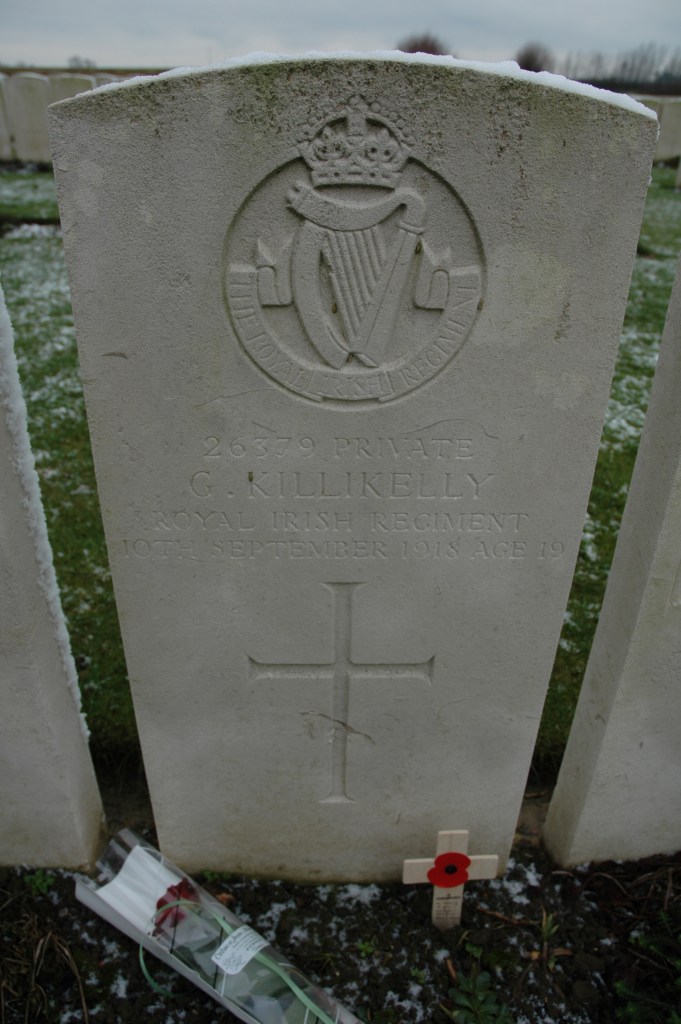
The last resting place of Gerald Killikelly, Arneke, Northern France 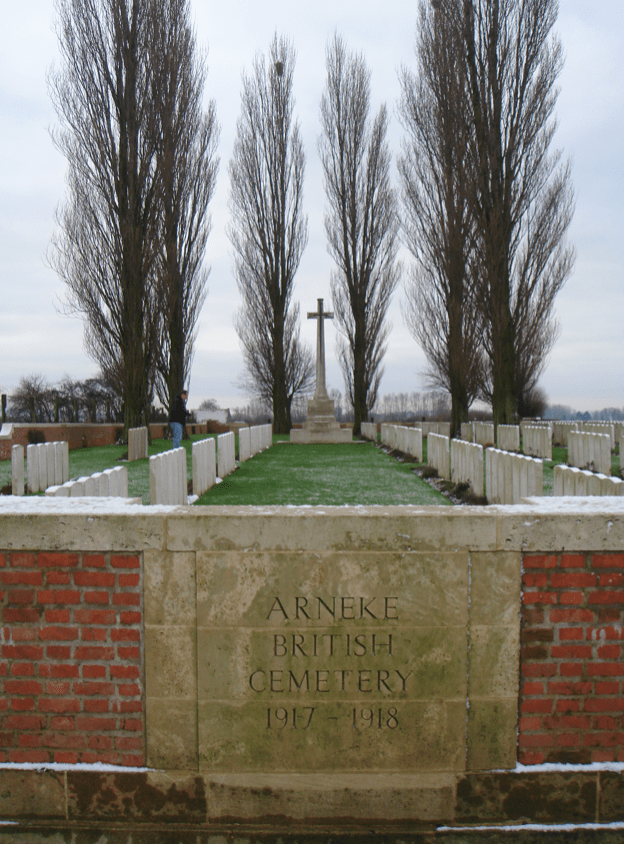
Arneke British Cemetery 
Paying my respects to my Great Uncle on a cold Winter’s day at Arneke Benemerenti Medal.
While I have deliberately focused on the chapters of Jimmy’s memoirs concerning his First World War service, I wanted to draw this book to a fitting close by showing the images below of his Benemerenti Medal which was awarded to Jimmy to commemorate his later life and career.
The Benemerenti Medal is a medal awarded by the Pope to members of the clergy and laity for service to the Catholic Church. Originally established as an award to soldiers in the Papal Army, it is a civil decoration now but may still be awarded to members of the Pontifical Swiss Guards.
The Benemerenti Medal was first awarded by Pope Pius VI (1775–1799) as a military decoration. In 1831 under Pope Gregory XVI (1831–1846) a special Benemerenti medal was struck to reward those who fought courageously in the Papal Army at Ferrara, Bologna, and Vienna.
In 1925, the concept of awarding this medal as a mark of recognition to persons in service of the Catholic Church, both civil and military, lay and clergy alike, became acceptable. Members of the Swiss Guards may receive it for three years of faithful service.
Jimmy was awarded this decoration for his long service to the Catholic Church by Pope John XXIII.
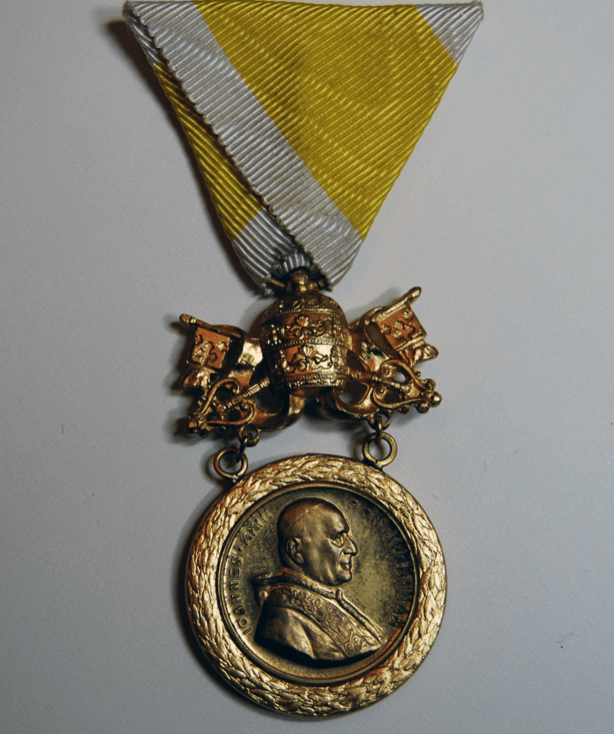
Jimmy’s Benemerenti Medal 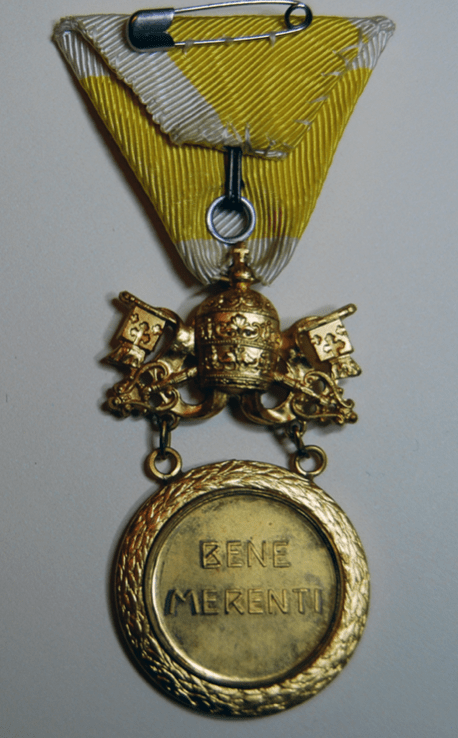
Jimmy’s Benemerenti Medal (reverse side) -
Hello World!
Welcome to WordPress! This is your first post. Edit or delete it to take the first step in your blogging journey.
-
Subscribe
Subscribed
Already have a WordPress.com account? Log in now.
 "Just a Number" The War Memoirs of 202101 Acting Corporal James Killikelly